An extremely rare baby white turtle has been shown to the world for the first time. The tiny red-eyed reptile
The white tortoise is one of two Galapagos tortoisesgiant tortoises (Chelonoidis niger) that recently hatched at the Tropiquarium Zoo in Servion, Switzerland. The pair of eggs were laid by a 100-kilogram (220-pound) female on February 11; an albino hatchling hatched on May 1, and its darker brother was born on May 5. Each tortoise hatched at birth weighing just 50 grams (1.9 ounces). Both babies were raised in incubators by zoo staff. Once they were healthier, they were reunited with their mother at the zoo in June, according toReuters.
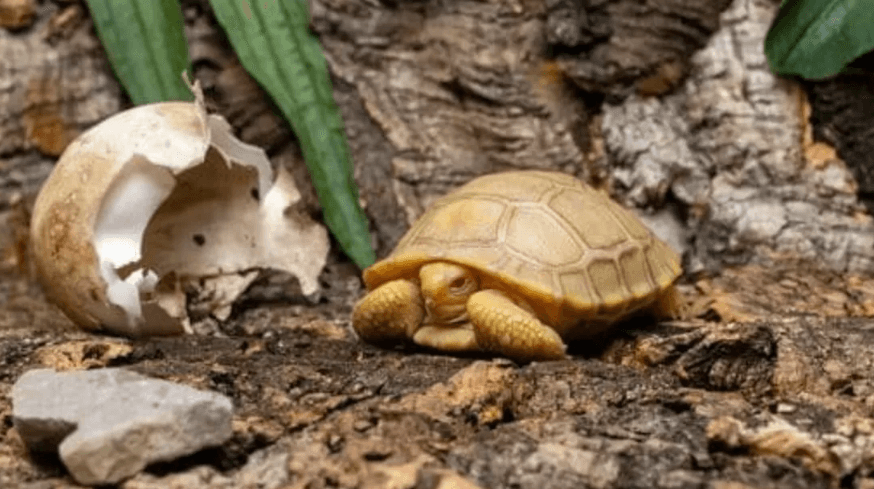 Albino turtle.
Image courtesy of:
Tropiquarium Service
“We were surprised to find"This is the first time in the world that an albino Galapagos tortoise has been born and kept in captivity," the zoo said in a statement. "There are no documented cases in the wild, they added. The odds of an albino tortoise being born are five times lower than the odds of a human being being born with an albino tortoise (1 in 20,000 people).
It is unclear how long the hatched albino will be able to survivelive. Galapagos giant tortoises are the largest tortoises on Earth and can live for over 100 years in the wild. However, albinism can make them more susceptible to damage from the sun’s ultraviolet rays. They are also prone to other health complications, such as decreased vision and hearing problems. They are also more visible to predators. This means that animals with albinism often die before they can pass on their genes. That’s why they are so rare. But if properly cared for in captivity, tortoises can live relatively healthy lives.
Read more
Elon Musk's Noah's Ark Will Take One Million People to Mars
Astronomers from Japan have found an unknown structure in the galaxy
Saber of unknown origin found in Greece. Scientists puzzled by a strange artifact