What is Proxima Centauri?
Proxima Centauri is a red dwarf star in the star system
Proxima Centauri is located about 4.244 light years from Earth, which is 270 thousand times the distance from Earth to the Sun.
Its actual diameter is about 7 times smallerdiameter of the Sun and only 1.5 times the diameter of Jupiter. The mass of Proxima Centauri is about 8 times less than the mass of the Sun and 150 times more than the mass of Jupiter.
Proxima Centauri is a member of the Alpha Centauri AB system and orbits the system's common center of mass with a period of about 550,000 years.Proxima is currently at a distance of 12,950 AU.(1.94 trillion km) from Alpha Centauri AB.
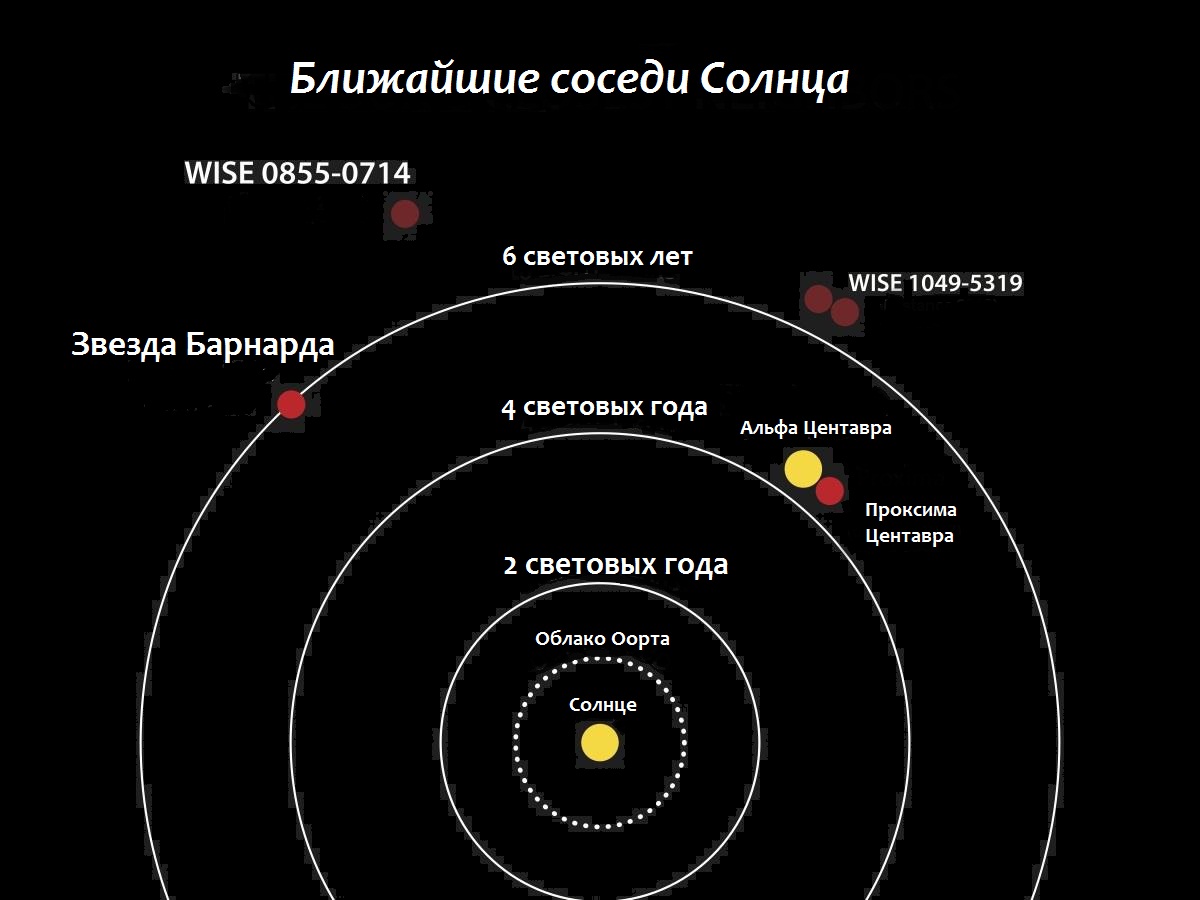 The closest environment of the Sun
Observation history
In 1917, the Dutch astronomer John Wuthmeasured the trigonometric parallax of the star and confirmed that Proxima Centauri is approximately the same distance from the Sun as Alpha Centauri. It was also determined that Proxima Centauri was the star with the minimum measured luminosity (at the time).
In 1951, American astronomer Harlow Shapley claimed that Proxima Centauri was a flaring star.Comparison with photographs taken earlier revealed that the star shows a slight increase in brightness in about 8% of the images; At that time, thisThe fact allowed it to be considered the most active flaring star.
The star's relative proximity allows careful observations of its flare activity.
In 1995, X-rays were less thanlarge-scale solar-like flares were observed by the Japanese satellite ASCA. Since then, Proxima Centauri has been the subject of most X-ray observatories, including XMM-Newton and Chandra.
Since Proxima Centauri has a significant southern declination, it can only be observed south of 27° C.Red dwarfs like Proxima Centauri are too faint to be visible to the naked eye.Even from the stars Alpha Centauri A and Alpha Centauri B, Proxima Centauri is visible as an object5th magnitude.
In April 2020, the New Horizons space probe surveyed Proxima Centauri and Wolf 359 to measure parallax based on 46 astronomical units.
- Planetary system
In 2017, the ALMA submillimeter telescope in Chilewas able to register thermal radiation in the Proxima Centauri system, which, possibly, comes from the asteroid belt, similar to the Kuiper belt in the solar system. There are also several more asteroid belt candidates and a planetary candidate located at the edge of the first belt.
Back in 1998, the Hubble Space Telescope's spectrograph detected the planet at a distance of 0.5 AU.from Proxima Centauri, but subsequent searches did not confirm this result.The search for planets orbiting Proxima Centauri has been unsuccessful and has ruled out the possibility of brown dwarfs and massive planetsbeside her.
Accurate measurements of its radial velocity excludedalso the possibility of the existence of super-lands in its habitable zone. Revealing smaller bodies requires the use of new instruments - for example, the James Webb Space Telescope, which is scheduled to launch in 2021.
In 2016, the European Southern Observatory confirmed information about the existence of the Earth-like planet Proxima Centauri b in the habitable zone of Proxima Centauri.
In 2018, after analyzing the dataradio interferometer ALMA, astronomers led by Meredith McGregor of the Harvard-Smithsonian Center for Astrophysics found that in March 2017, Proxima Centauri increased its brightness a thousand times in 10 seconds (this is 10 times brighter than the most powerful solar flares in a similar range).
 Clearest photograph of Proxima Centauri captured by the Hubble Space Telescope
This flare was preceded by another, weaker flash that lasted less than 2 minutes.Some scientists believe that the radiation doses received by Proxima Centauri b over millions of years should have rendered its surface lifeless (which does not negatethe possibility of life in the ocean, if any).
On the other hand, the presence of mechanisms of radiation resistance of some microorganisms makes it possible tohope for the possible evolution of hypothetical life on the planet, allowing it to adapt even to such harsh living conditions.Also, the MacGregor group considers it necessary to abandon theearlier assumptions about the presence of a gas and dust ring and other planetsaround Proxima Centauri.
In 2019, astronomers of the Turin Observatorythe discovery of another exoplanet candidate near Proxima Centauri was reported. The supposed exoplanet Proxima Centauri c may have a mass of 5.8 ± 1.9 Earth masses, and a semi-major axis of 1.5 AU. The period of the planet's revolution around Proxima Centauri in an elliptical orbit can be about 1900 days.
Because of its distance from its parent star, the super-Earth Proxima Centauri c is well outside the habitable zone and hasTo confirm the existence of this exoplanet, additional observations and measurements are needed with the HARPS instrument on the European Southern Observatory's 3.6-meter telescope in Chile and the European Space Agency's Gaia space telescope.
In the SPHERE (VLT) image, in addition to Proxima Centauri and the background stars, another object was found in an unexpected location, but it cannoise, as astronomers have not been able to completely remove the lightstars and background light, so ripples are visible throughout the image.
The existence of Proxima Centauri b was confirmed by scientists in 2020 using data from the ESPRESSO spectrograph. Very Large Telescope (VLT).Its mass was also specified - at least 1.173±0.086 Earth masses and the orbital period - 11.18427±0.00070 days.
In addition, an additional short-period signal was recorded in the ESPRESSO data, repeating with a period of 5.15 days, which couldProxima Centauri has another planet with a minimum mass of 0.29±0.08 Earth masses, located at a distance of 0.03 AU.of the mother star.
What signal did she emit?
A team of astronomers is working to analyze an unusual radio signal detected in early 2019 using the Parkes Telescope, a 64-meter radio telescope located in eastern Australia.
The signal appears to have come from the direction of Proxima Centauri, the closest star to our solar system, and its characteristics are more typical of artificial broadcasting than of a natural radio source.
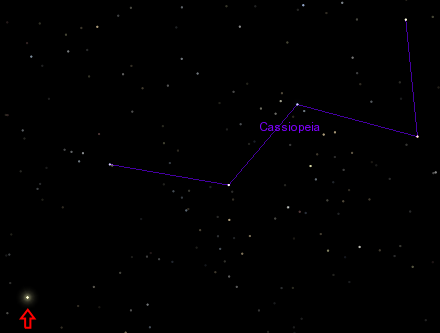 View of the Sun from the Alpha Centauri system in the Celestia program
- Who opened the signal?
Signal discoverers, researchers fromBreakthrough Listen, a large-scale extraterrestrial life search project, warn that while the signal has very specific qualities that distinguish it from typical natural radio emissions, it is most likely noise or interference caused by our own communication technology here on Earth, or not at all a natural phenomenon that has not been observed before.
- What was unusual about the signal?
As British The Guardian found out, “a narrow beamradio waves were recorded during 30 hours of observations with the Parks Telescope in April and May 2019. Note that the signal arrived at 980 MHz and did not repeat itself. In addition, the material speaks of a certain "shift" of the signal, which resembles the shift created by the movement of the planet.
The frequency of the signal shifts both up and down, which indicates an extraterrestrial origin. A narrow beam of radio waves was broadcast for 30 hours.
- Critical Assessment
Dubbed BLC1, the signal detected by astronomers was intriguing.However, when news of its discovery leaked to the press, the astronomers who discovered it were quick to point out that although the transmission originated fromsome technology, the technology probably belonged to us.
In the weeks since the news broke, researchers have done a great job, and they believe that while the signal is artificial, this is probably not the work of aliens.
As astronomers note, it is highly unlikely thata civilization capable of working with radio could have been practically in the vicinity of the Earth all this time without detection. It is worth noting that Proxima Centauri is located only 4.2 light years from our planet.
- How was the signal analyzed?
At the same time, the head of the signal analysis department, Sophia Sheikh, noted that the signal passed through "many filters" used to catch interference and natural phenomena.This is the first observation of such a signal since the "Wow!" signal was recorded in 1977.
What did the signal from Proxima Centauri resemble?
The "Wow!" signal is a strong narrowband radio signal recorded by Dr. Jerry Eyman on August 15, 1977, while working on the Big Ear radio telescope at Ohio State University.
Listening to radio signals was carried out withinthe SETI project. The characteristics of the signal (transmission bandwidth, signal-to-noise ratio) corresponded (in some interpretations) to those theoretically expected from an extraterrestrial signal.
Amazed at how accurate the specs arethe received signal coincided with the expected characteristics of the interstellar signal, Eiman circled the corresponding group of symbols on the printout and signed the side "Wow!" ("Wow!"). This signature gave the name to the signal.
As one possible explanation, the possibility of a weak signal being randomly amplified is proposed; However, on the one hand, this still does not excludeOn the other hand, it is unlikely that a signal so weak that it would not be detected by the ultra-sensitive Very Large Array radio telescope could be picked up by the Big Ear even after such amplification.
Other assumptions include the possibility of the radiation source rotating like a beacon, the periodic change in the frequency of the signal, or its one-time occurrence.There is also a version that the signal was sent from a moving alien starship.
Future research of Proxima Centauri
Due to its proximity to Earth, Proxima Centauri wasit was proposed to fly around as part of an interstellar flight. Proxima is currently moving towards Earth at a speed of 22.2 km / s. In 26,700 years, when it approaches a distance of 3.11 light years, it will begin to recede.
When using conventional, non-nuclear propulsioninstallations, the flight of the spacecraft to Proxima Centauri would require thousands of years. For example, the Voyager 1 probe, whose speed is 17 km/s relative to the Sun, could reach Proxima in 73,775 years if it were moving in the direction of this star.
A slowly moving probe would have several tens of thousands of years to catch up with Proxima Centauri near its point of closest approach, after which only observe how it recedes.
A nuclear pulse engine would allow such an interstellar flight within a century, which has inspired a number of projects such as Orion, Daedalus and Longshot.
The Breakthrough Starshot project aims toto reach the Alpha Centauri system in the first half of the 21st century, using microprobes traveling at 20% the speed of light and propelled by light pressure from ground-based lasers of about 100 gigawatts.
The probes would fly by Proxima Centauri to take photographs and collect data on the composition of its planets' atmospheres. Transferring the collected information to Earth would take 4.22 years.
Read more:
Unknown animals resembling sponges found in the ice of Antarctica
The Brunt shelf in Antarctica is collapsing at a speed of 5 meters per day
Abortion and science: what will happen to the children who will give birth