What does “we are made of stardust” mean? And what is it?
Scientists suggest that the Universe is between 13 and 14 billion, all
At the beginning of the universe, only hydrogen existed andhelium. Stars began to form from clouds of dust and gas that collapsed under the force of gravity. They act like a nuclear reactor, converting hydrogen to helium, helium to carbon. Man is one example of carbon life, like everything we know.
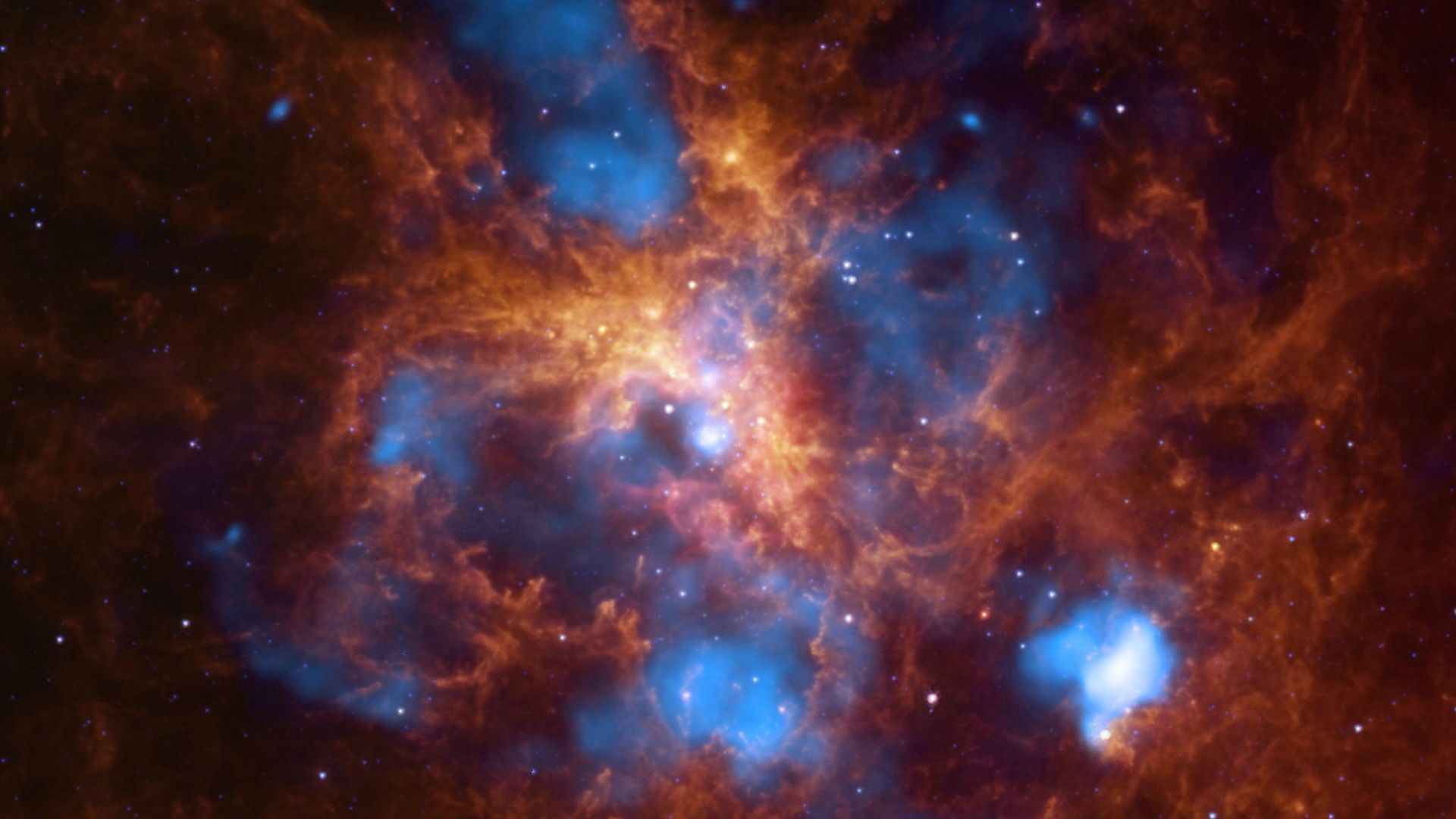 The Tarantula Nebula is a large star-forming region in a nearby galaxy.
When the stars come to an end, theyswell, shedding the outer layers. If the star is heavy enough, it will go supernova. These are mainly large and ancient stars. They leave behind tiny granules - stardust as they die and explode. Studying these granules has given scientists clues about how stars formed in the Milky Way and confirmed the theory that humans are composed of stardust.
And what elements does a person consist of?
The key elements for life on Earth, often called the building blocks of life, can be abbreviated asCHNOPS.
CHONis a mnemonic acronym for the four most common chemical elements in living organisms: carbon (C), hydrogen (H), oxygen (O) and nitrogen (N). In turn, the acronymCHNOPS, which stands forCarbon (carbon),Hhydrogen (hydrogen),Nitrogen (nitrogen),Oxygen (oxygen),Phosphorus (phosphorus) andSulfur (sulfur), represents the six most important chemical elements, whose covalent combinations make up the majority of biological molecules on Earth.
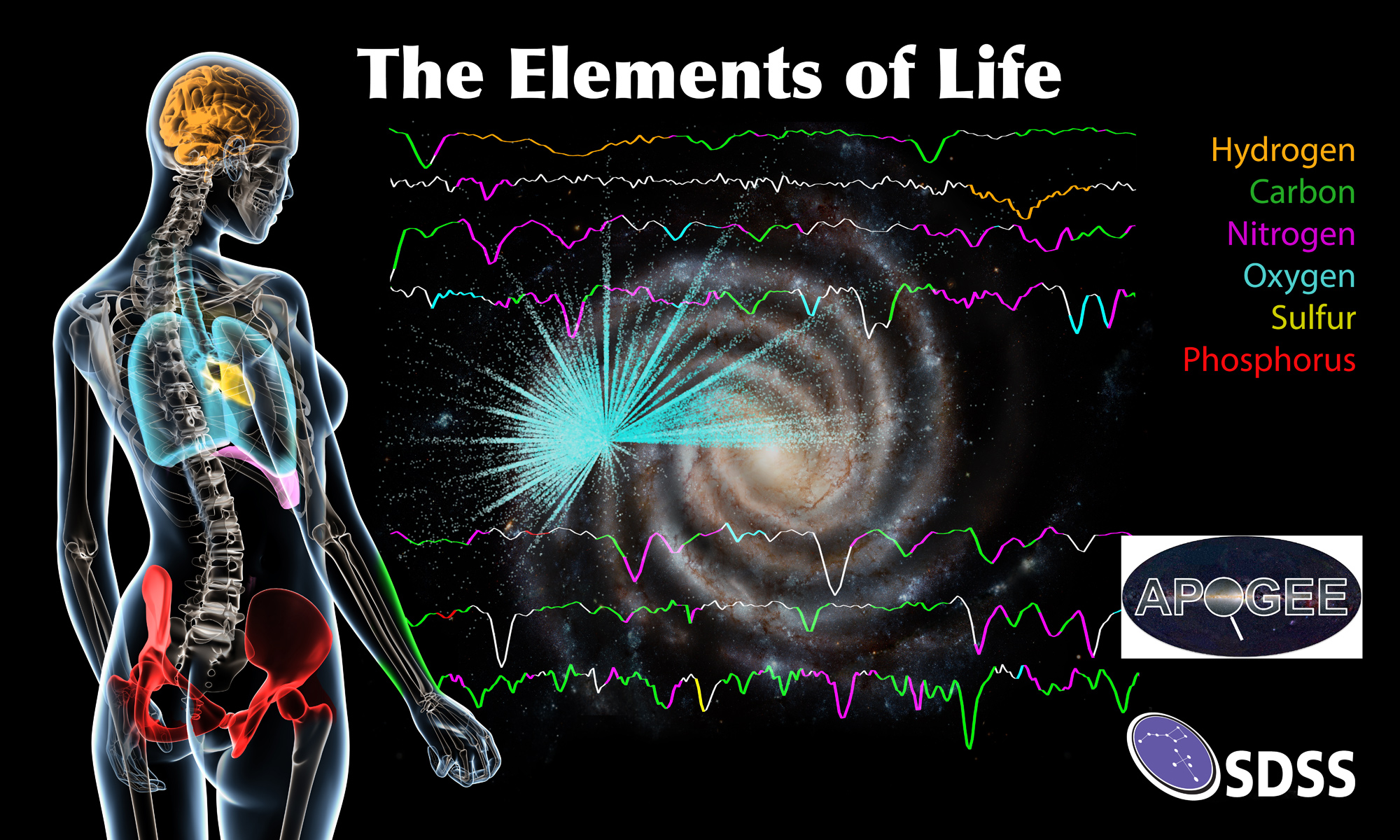
Sulfur is used in the amino acids cysteine andmethionine. Phosphorus is an essential element in the formation of phospholipids, a class of lipids that are the main component of all cell membranes, as they can form lipid bilayers that store ions, proteins and other molecules where they are needed to perform cell functions and prevent them from penetration into areas where they should not be. Phosphate groups are also a necessary component of the nucleic acid backbone.
In a 2017 study, scientists cataloged the abundance of these elements for the first time in a huge sample of stars.
Confirmation of the theory
A meteorite that fell to Earth near Murchison, Victoria, Australia in 1969 was studied in detail in 2017.
He has accumulated stardust for billionsyears he spent in space before he fell to Earth. The results of a 2017 study showed that the granules absorbed a lot of cosmic rays. The oldest grains are dated to about 7 billion years ago, and most are from 4.6 to 4.9 billion years ago, and a small handful are from 5.6 billion years ago. So, all interstellar particles found in the Murchison meteorite arose before the formation of our star and the solar system.
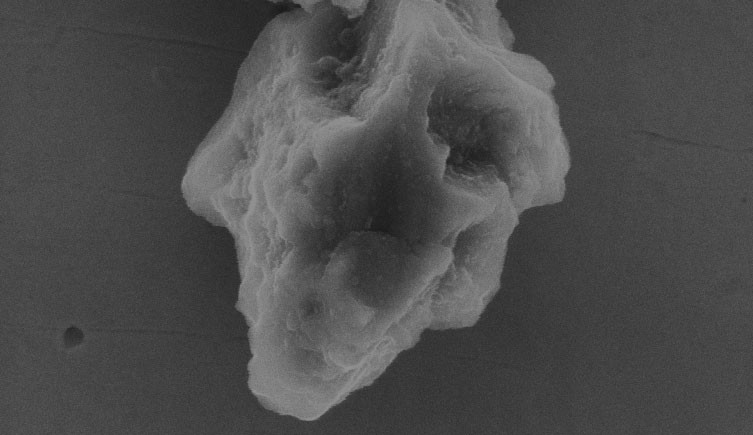 A single pre-solar grain seen with an electron microscope.
After studying the meteorite, scientists madeconclusion that star formation in the Milky Way was not constant. The relatively large number of particles dating back to 4.6–4.9 billion years ago suggests that these grains arose during intense star formation.
So what does this all mean for you and me?In fact, all the material we're made of is dying stars. There is even a small amount of stardust in man, the alleged beginning of the universe 13.8 billion years ago.
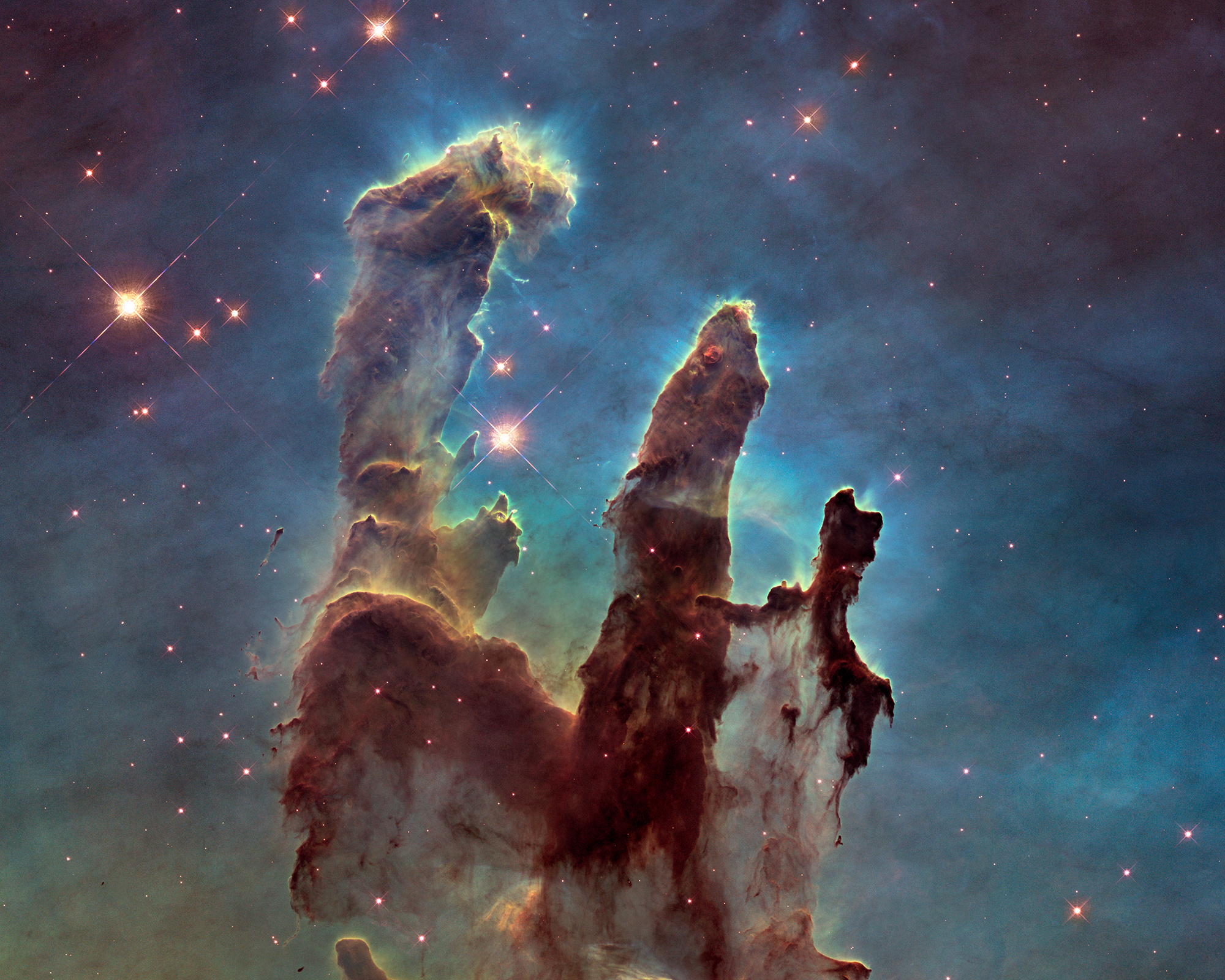 "Pillars of Creation"The height of the pillars depicted is five light years. The colors highlight the emissions of several chemical elements. Oxygen emissions are colored blue, sulfur — orange, and hydrogen and nitrogen green. © NASA/ESA/HHT
In fact, a 2017 study proved this.The APOGEE Galactic Evolution Experiment analyzed the composition of 150,000 stars using spectroscopy. The study found that humans and the Milky Way are made up of 97% of the same atoms.
Recently, scientists have gone even further in the study of this issue.
New exploration of the Earth's carbon layer
At the University of Michigan, scientists conducted an interestingresearch that is associated with one of the hypotheses of human origin. It is unusual, but until it is proven that it cannot have a right to exist, scientists are looking for evidence that a person could have originated from stardust.
Researcher Ji Li is one of the authors of this study. He believes that mostcarbon, which is on Earth, appeared on the Blueplanet from the interstellar medium. This material may and still exist in the space between stars and galaxies. The scientist believes that the formation of a carbon "layer" on Earth occurred after the protoplanetary disk was formed. At that time, clouds of various compounds, including dust and gas, surrounded the young Sun. They could also contain the building blocks of planets.
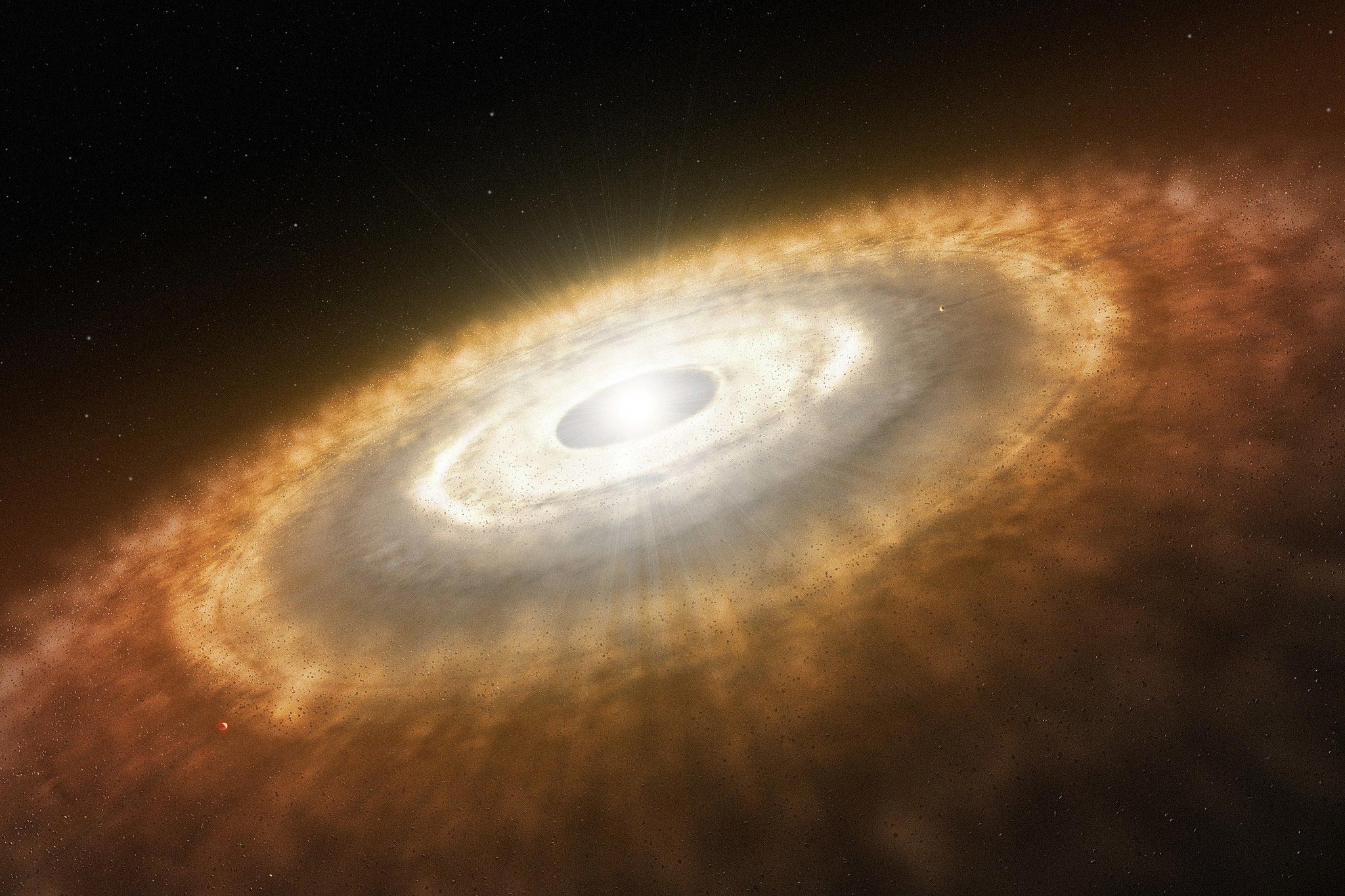 The artist's impression of a young star surrounded by a protoplanetary disk in which planets are formed. Credit: European Southern Observatory.
Carbon could be isolated into solid particles,this happened within one million years after the formation of the sun. That is, in fact, carbon, which is considered the basis of life on Earth, has made an unprecedented journey to our planet. One of the versions of scientists says that carbon could have formed on Earth. Its basis could well have been the planets that were present in the gas of nebulae, and then it sank onto the rocky planet in the form of a sediment, in which there were molecules.
 Credit: NASA
A number of scientists from around the world agreed onthe opinion that these molecules could carry carbon, but they could not be suitable for building the Earth, since as a result of evaporation it does not condense back into a solid. Lee noted that this model of condensation has been used by science for many years. And this model supported the theory that during educationSunsall the planet's elements evaporated, and as the disk cooled, some of these gases condensed and supplied chemical ingredients to the solids. But not carbon.
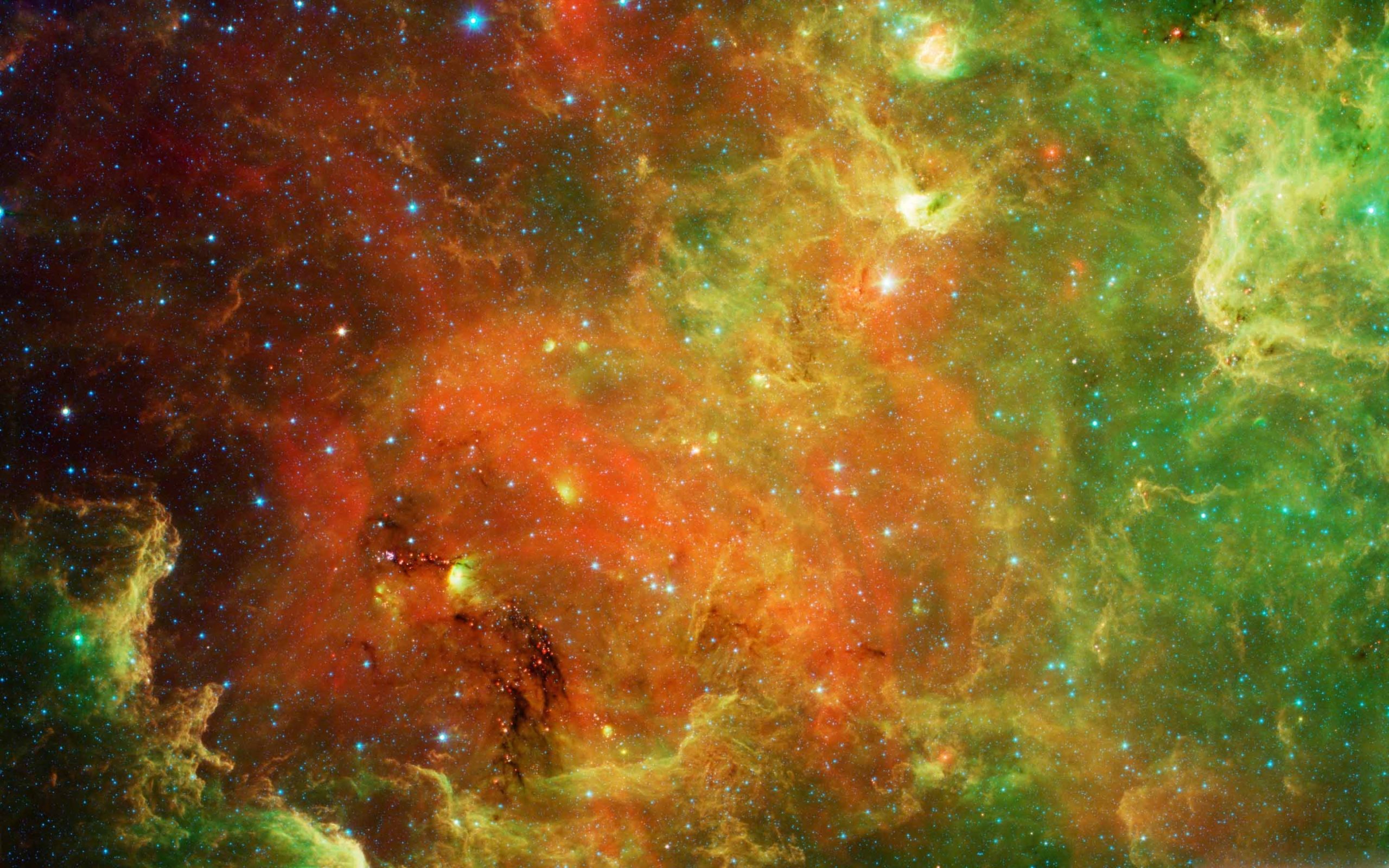 This image of the North America Nebula from NASA's Spitzer Space Telescope in 2011 shows a cluster of young stars (about a million years old) © NASA / JPL-Caltech
It couldn't condense back into organicshape, and because, as the new study suggests, significant amounts of Earth's carbon was inherited from the interstellar medium, avoiding evaporation by one hundred percent. It could penetrate the Earth's core and become one of the basic building blocksfirstforms of life on our planet. And, in fact, the version that man originated from interstellar dust in this interpretation has good reason to be an acceptable option.
Read more
The first accurate map of the world was created. What's wrong with everyone else?
Algorithm has discovered a new mysterious layer inside the Earth
Uranus has received the status of the strangest planet in the solar system. Why?