What is the main difficulty
According to the definition of the World OrganizationHealth Care (WHO), a chronic disease is a long-term, usually slowly progressing, non-communicable disease that is not transmitted from person to person. More than 70% of deaths are caused by these diseases, and their treatment consumes from 50 to 80% of all healthcare costs in the world.
In Russia, according to Rosstat data for 2018,26.6% of citizens suffer from chronic diseases. Experts believe that the COVID-19 pandemic could only worsen these statistics, since routine medical care was not provided for a long time and people were left alone with their symptoms. This means that they will come to the doctor with an advanced disease that will be more difficult and expensive to treat.
 The COVID-19 pandemic could only worsen these statistics, since routine medical care was not provided for a long time and people were left alone with their symptoms.
However, even before the pandemic, medical carefor chronic patients was episodic in nature and was carried out mainly during periods of exacerbation of the disease, without an individual comprehensive approach, taking into account the high level of complications and the presence of “concomitant” chronic diseases. Interaction between specialists of different profiles was carried out
weak, coordination in providing patientsthere was practically no medical, rehabilitation, or preventive care. Control of treatment during periods of remission of the disease, as well as the implementation of the treatment plan, also left much to be desired.
Little has been done for prevention, timelydetection and early treatment of the disease, to preserve the ability to work and maintain an optimal quality of life. Thus, the quality of medical care for chronically ill patients did not meet modern healthcare capabilities and regulated requirements.
How the pandemic helped
However, the pandemic served the chronicles well because it accelerated the introduction of continuous remote monitoring (telemonitoring).
Telemonitoring is the remote monitoring of health parameters using various medical devices and the transfer of this data through telecommunication channels to a doctor.
If in pre-Covid times many patients withchronic diseases visited the doctor every 3-6 months or when their health began to deteriorate, then patients connected to the remote monitoring system have constant contact and feedback with the doctor. They can quickly replace a non-working medicine, adjust the treatment regimen, prescribe additional diagnostic procedures or consult a specialist. In short, telemonitoring can prevent possible deterioration in health between doctor visits.
As an important advantage of continuousRemote monitoring is also called overcoming the so-called white coat syndrome. This is when a patient's blood pressure readings are higher in the doctor's office than at home.
There is an opinion that telemonitoring allowsto form in patients long-term adherence to therapy and, importantly, gives doctors new knowledge about the physiological and pathological conditions of the body. This knowledge and data can subsequently be used to develop products based on artificial intelligence technology, which will make it possible to make better predictions about the development of the patient’s condition and his response to a particular therapy.
Federal project
In 2022 in several regions of RussiaA pilot project is being launched, during which personal medical assistants will be tested: wearable medical devices, such as a glucometer and blood pressure monitor with Bluetooth.
First of all, personal medicalwill provide assistants to patients suffering from diabetes, arterial hypertension, and chronic heart failure. The pilot project is designed for two years. Based on its results, requirements will be formed for assistant devices for monitoring and transmitting information from them. During the experiment, conditions will be worked out for the development of medical decision support systems and artificial intelligence, as well as the possibility of producing domestic medical products for remote health monitoring.
On March 31 of this year, the Innovation Promotion Fund launched a competition, according to the results of which developers of personal medical assistants will be able to receive a grant of up to 30 million rubles for R&D.
It is planned that by 2024 at least 10% of patients at risk will be provided with personal medical assistants, and by 2030 - more than 50%.
Problems and solutions
Such low rates can be explained, among other things,some technological and organizational barriers. Today, there are many wearable medical devices and devices for home use on the market from different manufacturers. However, an integral requirement for them is registration with Roszdravnadzor as a medical device. This requires significant investment and time.
Each such gadget often comes withown software, separate mobile application. However, medical centers sometimes do not have specialists who could configure this equipment properly and make it convenient for the doctor to receive and, most importantly, analyze data from several gadgets in one place. Patients themselves also lack knowledge to use these devices. Older patients often do not have a smartphone, which is necessary to install a mobile application. And the quality of communication in many parts of the country does not stand up to criticism.
Some people give up technologytracking biometric data, fearing for the safety of personal information. There are also many conservatives and skeptics among doctors who do not trust new technologies.
Most of the listed obstacles learnedovercome the domestic software and hardware complex "TeleMedHub". Using this piece of hardware alone, you can connect almost all wearable medical devices available in Russia today to the hub and transfer data from all of them to a doctor. At the same time, the device can be integrated directly into the medical information system in a public medical institution or in a private clinic. This means significant time savings for the doctor to work with data and freeing up additional time to communicate with the patient.
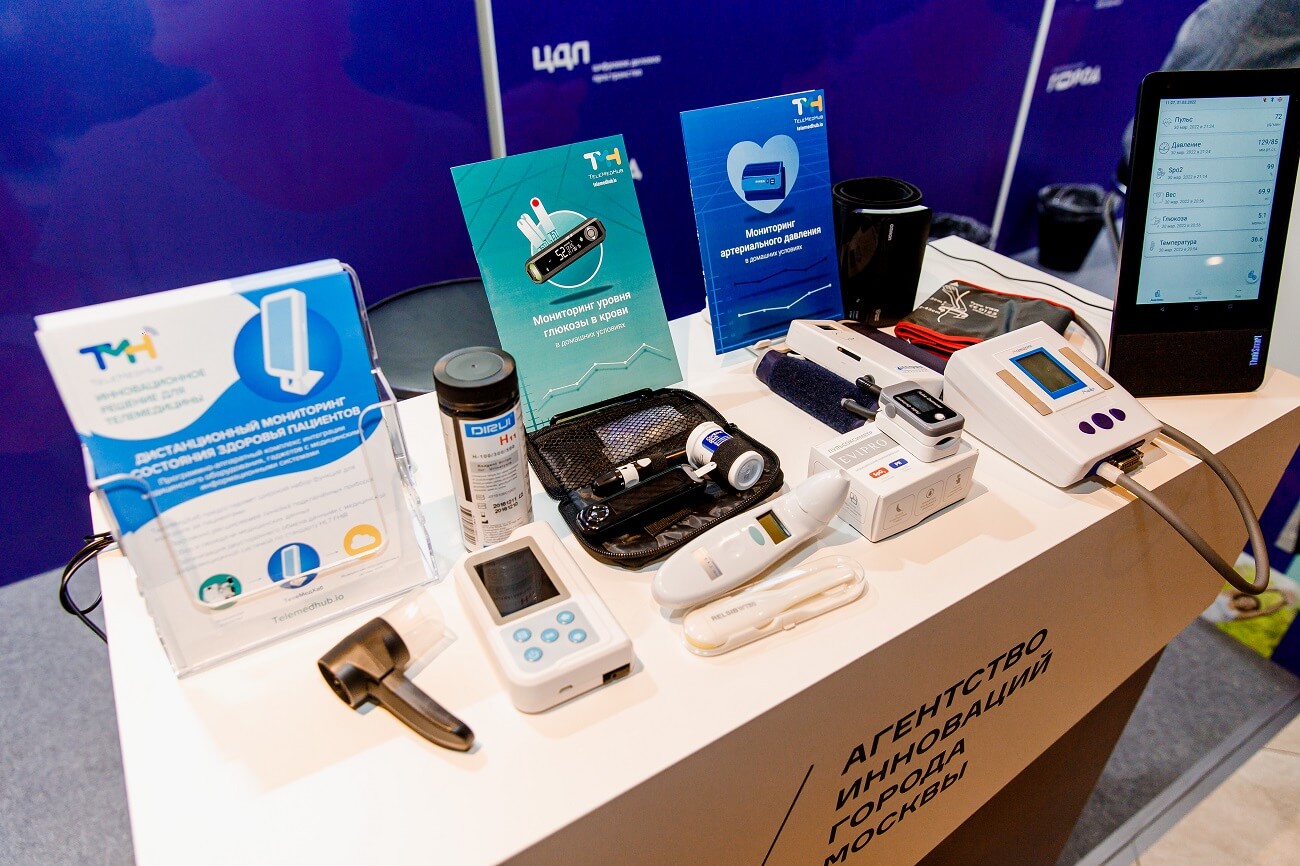 "TeleMedHub"
In July-August 2021, as part of a pilotproject on the basis of the State Novosibirsk Regional Clinical Hospital of War Veterans, a study was conducted on remote monitoring of blood pressure, glycemia and thermometry using TeleMedHub.
Hospital specialists noted the simple interface,which allows the patient to independently conduct the study, and spending a small amount of time on it. In addition, the equipment, whose weight is very insignificant, is convenient to use at home.
TeleMedHub makes it possible to use over30 different medical devices monitoring various physiological parameters and patient conditions, and this number is constantly growing. In addition, neither the patient nor the doctor requires a smartphone to connect to it.
What's next
Currently, variousprojects on telemonitoring of health status. For example, the SberHealth service provides remote monitoring of patients with COVID-19, influenza, ARVI and chronic diseases. The voice robot calls patients, conducts a health survey, and analyzes the responses. The collected data is transferred to the application and displayed in the “Health Diary”, which can be viewed by the patient and the doctor. If deviations from the norm are detected, the patient automatically gets a consultation with a specialist by phone or in the application.
"Onkonet" based on "TelePat" conducts telemonitoringcancer patients, and the resident of Skolkovo “Distance Medicine” - hypertensive patients (MegaFon and MTS have applications for this category of patients). There is every reason to believe that the range of services in this area will expand, because life expectancy will increase, and chronic diseases are not going away and are even getting younger. According to a recent Publicis ProHealth survey, 68% of Russians aged 18–24 said they suffer from them.
So far, the lack of public awareness oftechnologies and unavailability of prices constrain the growth of the remote monitoring market, but in the future it will definitely become a familiar and effective tool in the management of chronic patients and patients from high-risk groups.
Read more:
There is another “planet” inside the Earth: how it saved nascent life
Nuclear fusion no longer needs millions of degrees: how the new method works
New study refutes light energy transfer theory