Archaeologists and volunteers have discovered a stone with a mysterious inscription and drawings of birds that belong to the Picts of Scotland
Picts (English)The Picts were a union of Celtic-speaking peoples who lived in the north-east of modern Scotland during the late Iron Age of Britain and the Early Middle Ages. The main sources of information about the culture of the Picts and the territories they inhabited are Pictish stones. Scientists have studied just one of them.
Roman historians call them “paintedpeople” because of their supposed war paint and tattoos (“picti” is the Latin word for “paint”). At the same time, the Picts are known for successfully resisting Roman conquest.
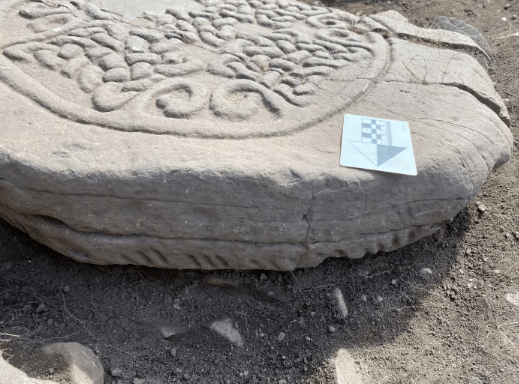 This image shows a close-up of the Ogham alphabet inscription on a Pictish cross slab. Image courtesy of Murray Cook/Stirling Council
After the Roman Empire leftFrom the British Isles in the 5th century AD, Pictish society developed into a permanent but unstable monarchy that sought to protect its territorial boundaries. Early missionaries from Ireland converted many Pictish kings to Christianity in the mid-6th century AD. Then, at the Battle of Dun Nechtain in 685 AD, they drove the Britons out of Scotland and created a mini-empire that lasted until around 900 AD and the arrival of the Vikings.
But the recently discovered cross slab,found in the Old Kilmadock cemetery near Doune, Scotland, complicates this “folding” story. This region was historically a buffer zone between the Picts and the Romans, and later the Britons. The cross slab is the first to be found there. “This means that the inhabitants began to think of themselves as Picts,” the scientists explain.
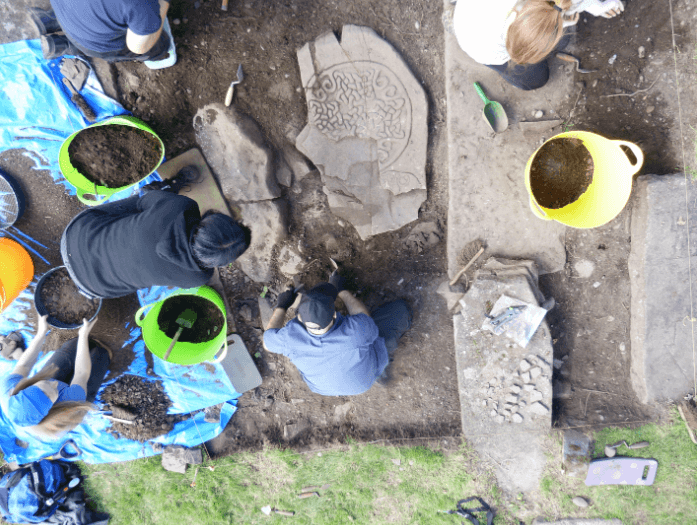 Archaeologist Murray Cook (below center) excavates fragments of the slab.
Image courtesy of Murray Cooke/Council of Stirling
Carved stones from early medieval Scotlandare relatively common, but a recently discovered stone from Old Kilmadock Cemetery, which has yet to be fully excavated, has three intriguing features: a rounded top, animal decorations and an inscription in the medieval Ogham alphabet.
The height of the stone from Old Kilmadoc is119cm, and width - 82cm. In size and shape it is similar to a large tombstone. Experts, however, believe that it could serve multiple functions.
Read more:
Archaeologists have officially confirmed the legends from the Bible
The grave of the "priestess" of Aphrodite was found: scientists showed what they found there
Scientists have seen what is on the territory of the Mayan capital. The find surprised them.
</ p>