The Russian company Promobot, a manufacturer of service robots and a Skolkovo resident, has created a special version
Development and testing lasted a whole year - fromJanuary 2020. The microphone array consists of eight microphones that function as the outer ear in the human body. With their help, the robot detects noise at a distance of up to 2 m from it, the detection range is 360 degrees, like a human. The algorithm provides capture of analog data from microphones, their conversion, echo cancellation and data transmission. The program "separates" human speech from noise - just like the inner ear works in our body. Then the algorithm recognizes phrases, thanks to which the robot enters into a dialogue. Unlike voice assistants, which react only to clear speech of a person, Promobot reacts to all the noise - and already “inside it” it looks for a human voice, both for children and adults.
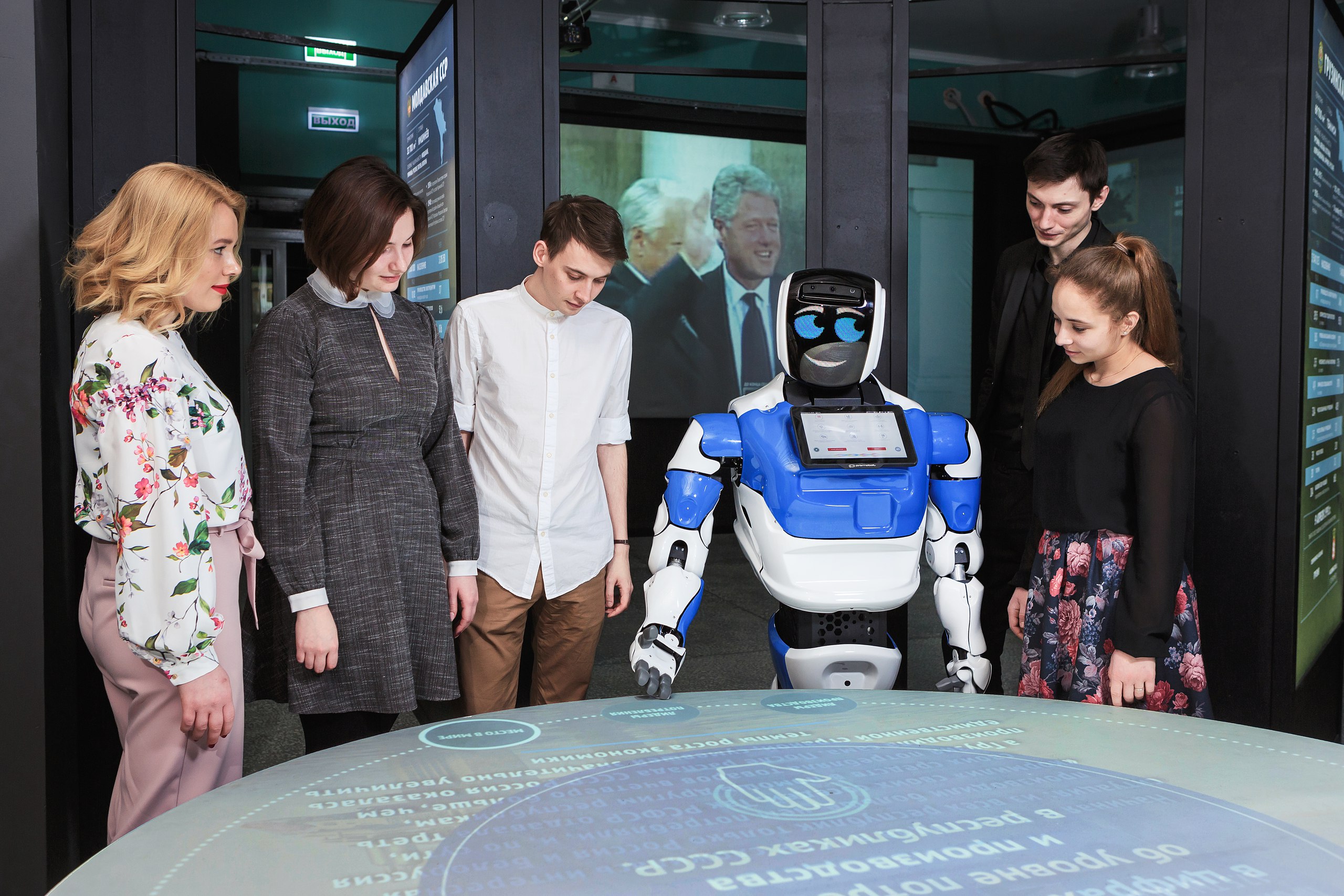 Photo: Promobot
Unlike other systems, speech recognitionPromobot practically does not depend on distance: over the year, the percentage of recognition at a distance of 1 m from the robot has grown from 25 to 75% - three times. This is the highest indicator in the world for service robots, and, according to the developers, it brings the microphone array as close as possible to the human ear.
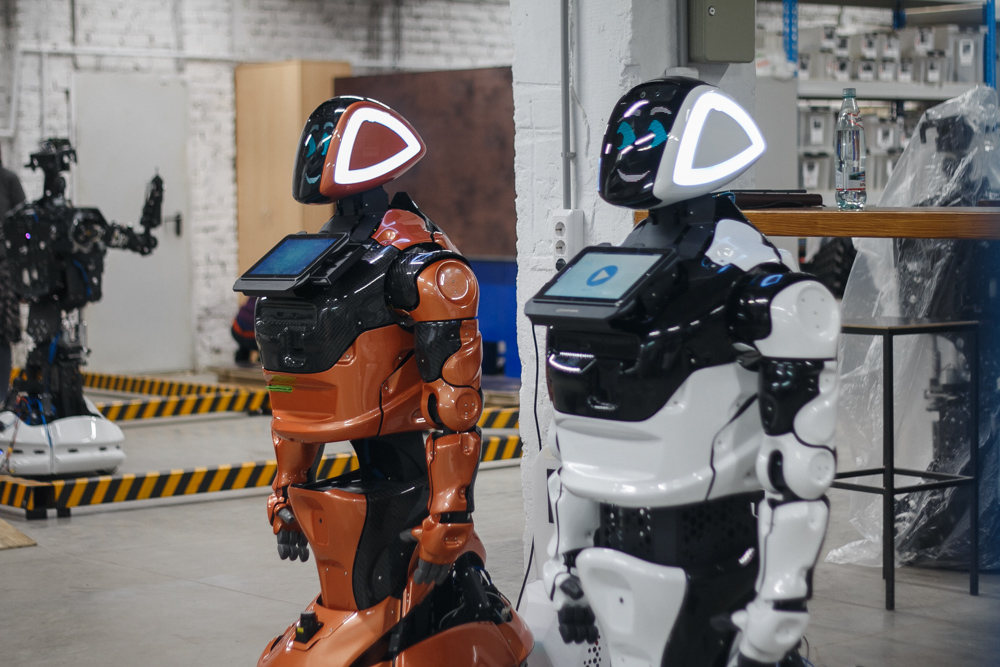 Photo: Promobot
“Features of speech recognition in the servicerobotics is that our devices operate in crowded areas. Microphones in smartphones, headphones and smart speakers are personal devices; they are designed to work only with the owner, often only at home, says Oleg Kivokurtsev, development director at Promobot. “Unlike a smartphone, the robot works in difficult, noisy environments—an airport and a shopping center. He must not only hear a person’s speech - this is not so difficult, but also process it and recognize it, just as the human ear does. This is exactly what our team has been working on for the last year.”
The device was patented in the fall of 2020. Chinese robot manufacturers have become interested in the microphone array - the Russian company plans to start selling the device in January 2021.
Read also
A meteorite fell on an Indonesian house. Its owner became a millionaire
Neurons in the human brain and the network of galaxies are similar
Due to plate movement, the Pacific Ocean floor is now deep under China