Engineers from the Massachusetts Institute of Technology have created a robotic heart that can be
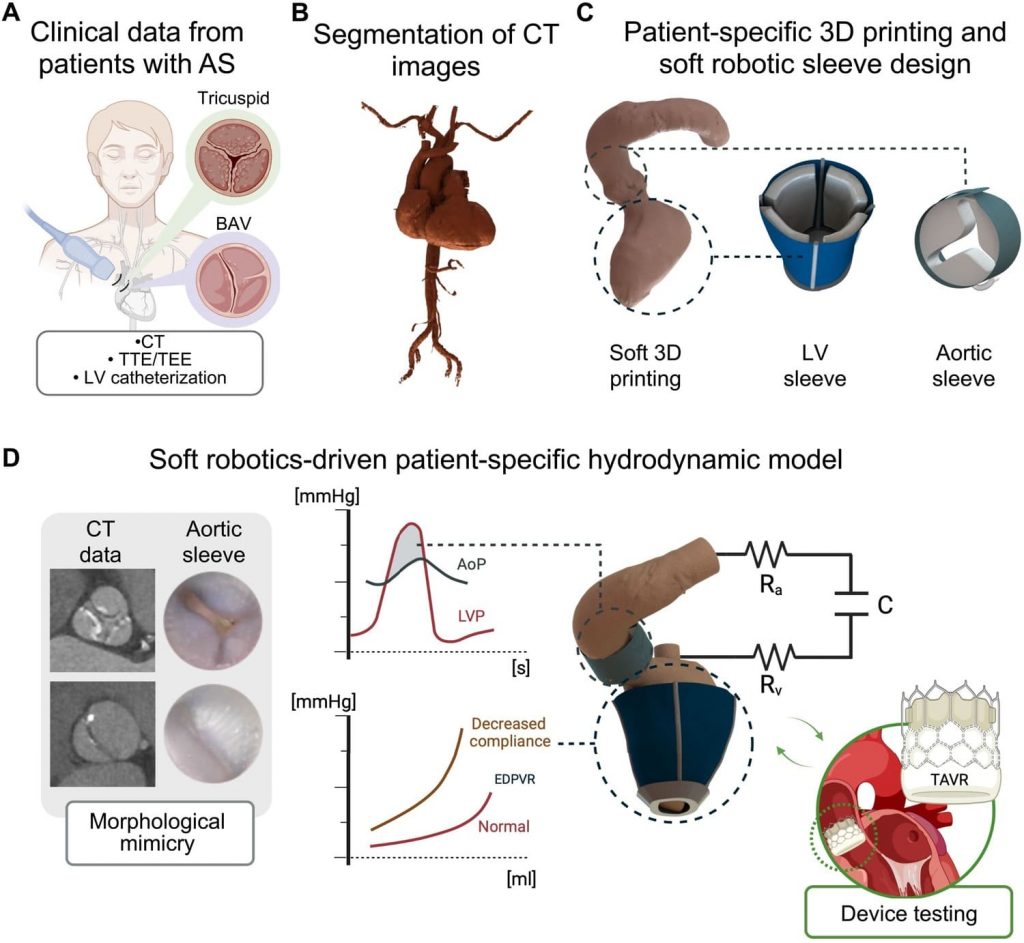 Technology for creating a copy of the heart and testing on a model heart valve. Image: Luca Rosalia et al., Science Robotics
Size and shape of the central element of the circulatory systemsystems may vary from one person to another. These differences are especially pronounced in people living with heart disease: impairments in certain functions lead to overcompensation in other parts, which “take on” someone else’s work.
Engineers use medical imagingpatient's heart to build a computer three-dimensional model. They print the finished model using special polymer-based inks. The result is a soft, flexible shell whose exact shape conforms to the patient's own heart. Similarly, the aorta is printed - the main artery that carries blood from the heart to the rest of the body.
3D heart model. Video: Luca Rosalia et al., Science Robotics
To simulate the work of the heart, engineersmade special sleeves, similar to blood pressure cuffs, that wrap around a printed heart and aorta. The underside of each sleeve resembles bubble wrap with a precise design. When the sleeve is connected to a pneumatic system, researchers can adjust the escaping air to rhythmically inflate the sleeve's bubbles and contract the heart, mimicking its pumping action.
The developers believe that doctors canuse the model to select the optimal treatment for the patient. For example, for the treatment of aortic stenosis, they can test on this model which of the implantable valves will work best for a particular patient.
Read more:
Found "impossible" planet. She defies modern science
Physicists have shown what happens when two black holes collide
Biologists explain why no life has yet been found on Mars
Cover image: Melanie Gonick, MIT