The SOHO satellite observatory, developed by the European Space Agency and NASA, recorded
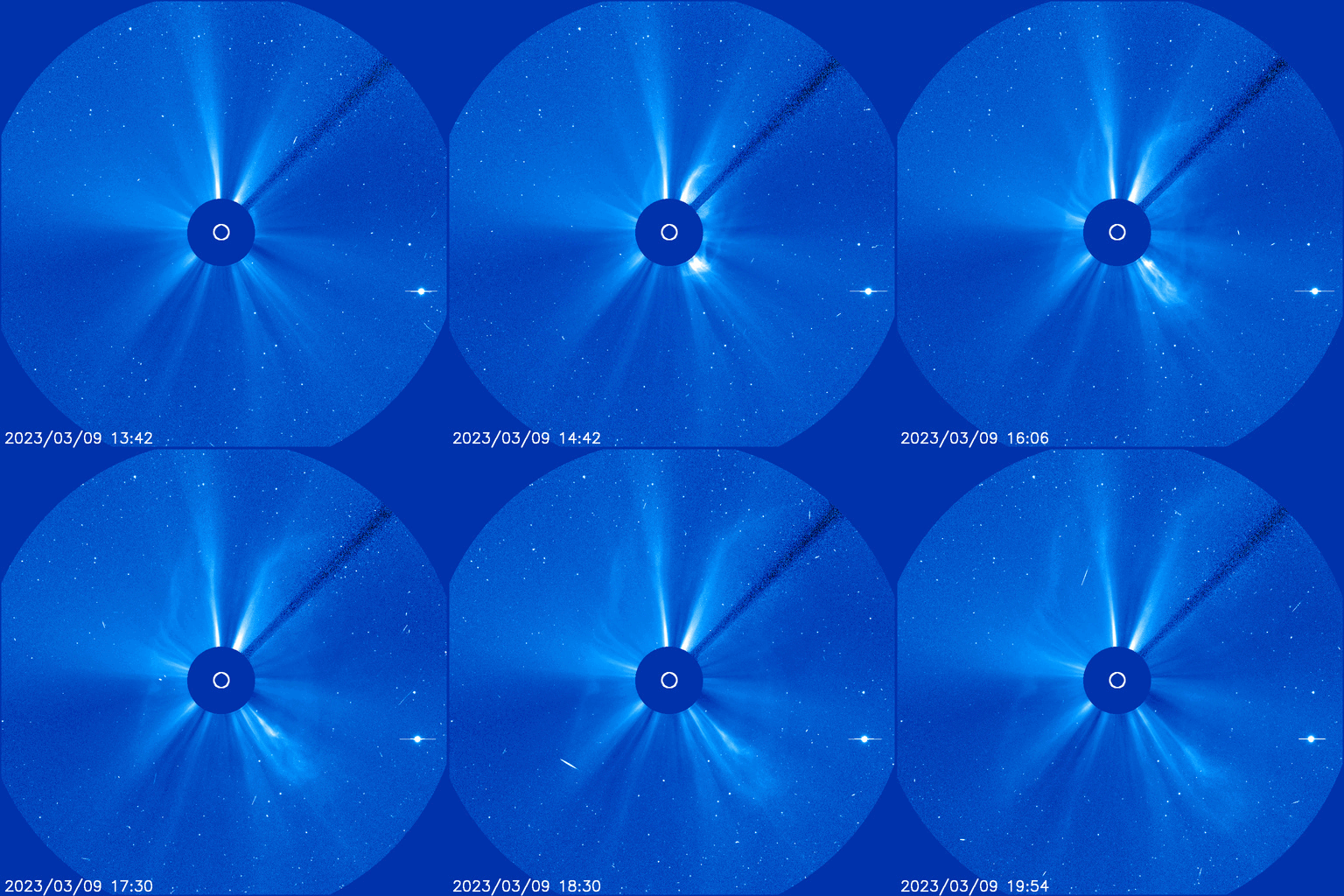 Coronal Mass Ejection on the Sun. The bright object at the right edge of the image is Jupiter. Image: SOHO
Coronal mass ejections (CMEs) are hugebubbles of coronal plasma pierced by intense magnetic field lines that are ejected by the Sun over several hours. A large ejection may contain a billion tons of plasma, the particles of which are accelerated to several million km / h.
Outwardly, most CMEs look like ringssmoke or a halo (halo) surrounding the source of the emission. Spaceweather.com portal experts note that on March 9, the ejection occurred on the far side of the Sun, which is not observed by terrestrial observatories, and therefore it will be difficult to understand the reason for its unusual shape.
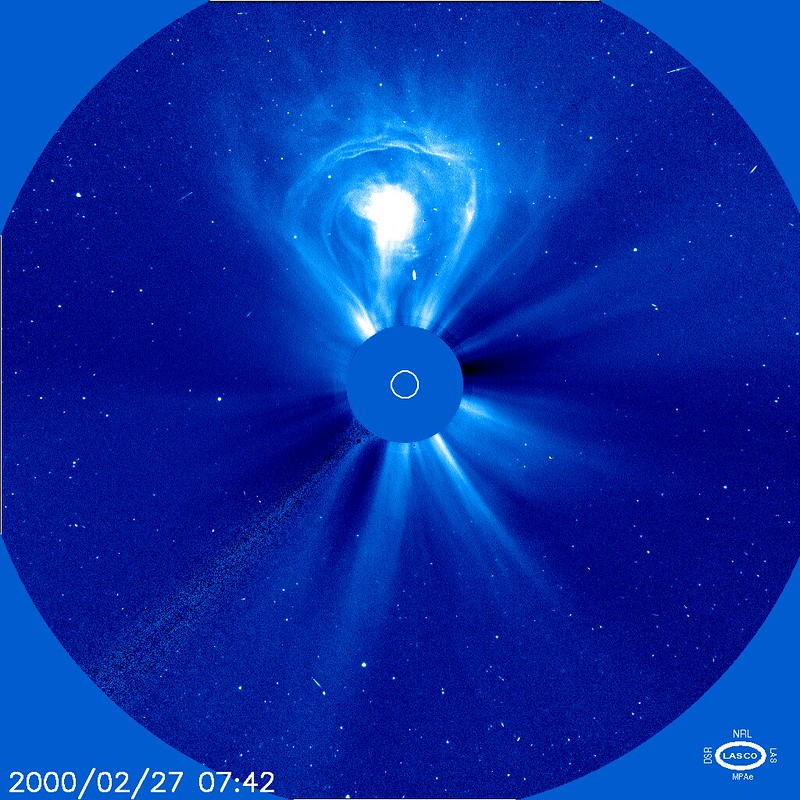
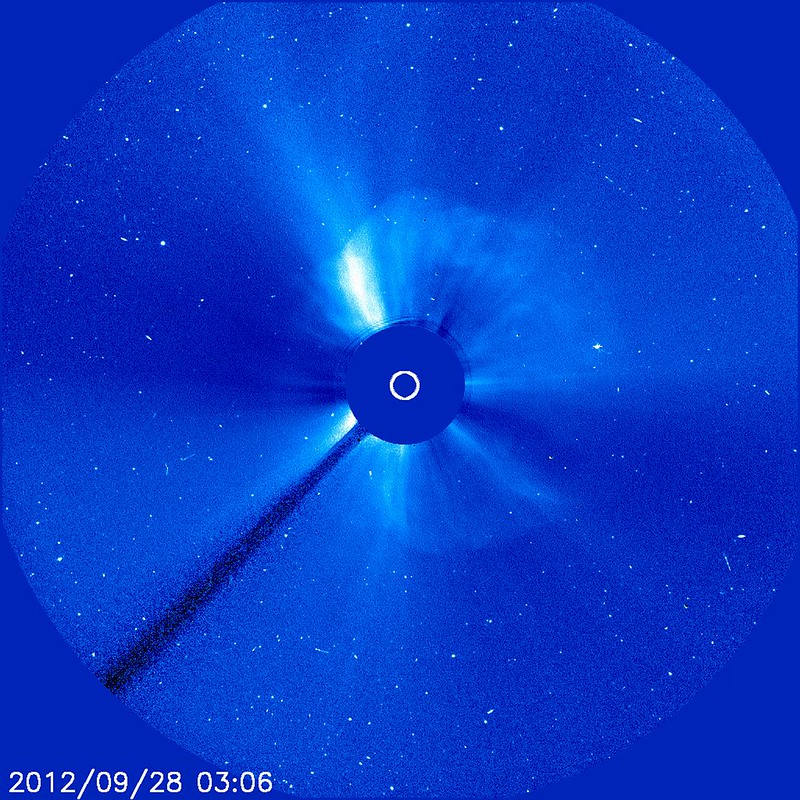
Classic MCU shape: smoke ring (left) and halo (right). Images: NASA Goddard Space Flight Center
The accelerated particles ejected by the CME acton the Earth's magnetosphere and can cause magnetic storms a few days after the release (it takes time for the material to reach the Earth). But, since this flash occurred on the far side of the Sun, the particle stream will pass away from the Earth and will not affect our planet.
The sun is approaching the middle of an 11-year cycleactivity. As we approach the peak of activity, which will take place in 2024-2025, the number of flares and CMEs will continue to increase. Already, researchers are recording a significant increase in solar activity: in February 2023, the average number of sunspots on the Sun exceeded 100 for the third time since 2014 (the last maximum).
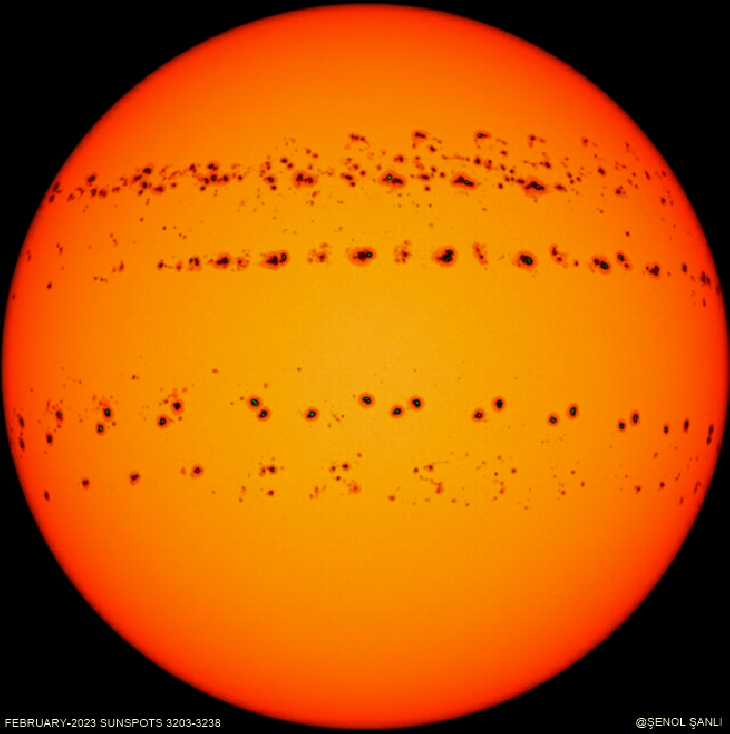 A composite image from sunspots observed in February 2023. Image: Senol Sanli
Read more:
A treasure with 1,000 coins was accidentally found on a farm: what could they buy
Named a vitamin that protects the brain from dementia
It turned out which men are the most fertile: their sperm is 50% better than the rest
Cover image: Solar Dynamics Observatory, NASA