Soft tissue and skin decompose easily, which is why most dinosaur fossils are
The discovery of this fossil has set manyquestions, scientists say. It was previously thought that soft tissues would not be preserved if they were damaged prior to burial. For the skin to survive, the dinosaur had to be buried almost instantly. However, the petrified skin of the ancient animal clearly showed signs of bites and cuts inflicted by a predator.
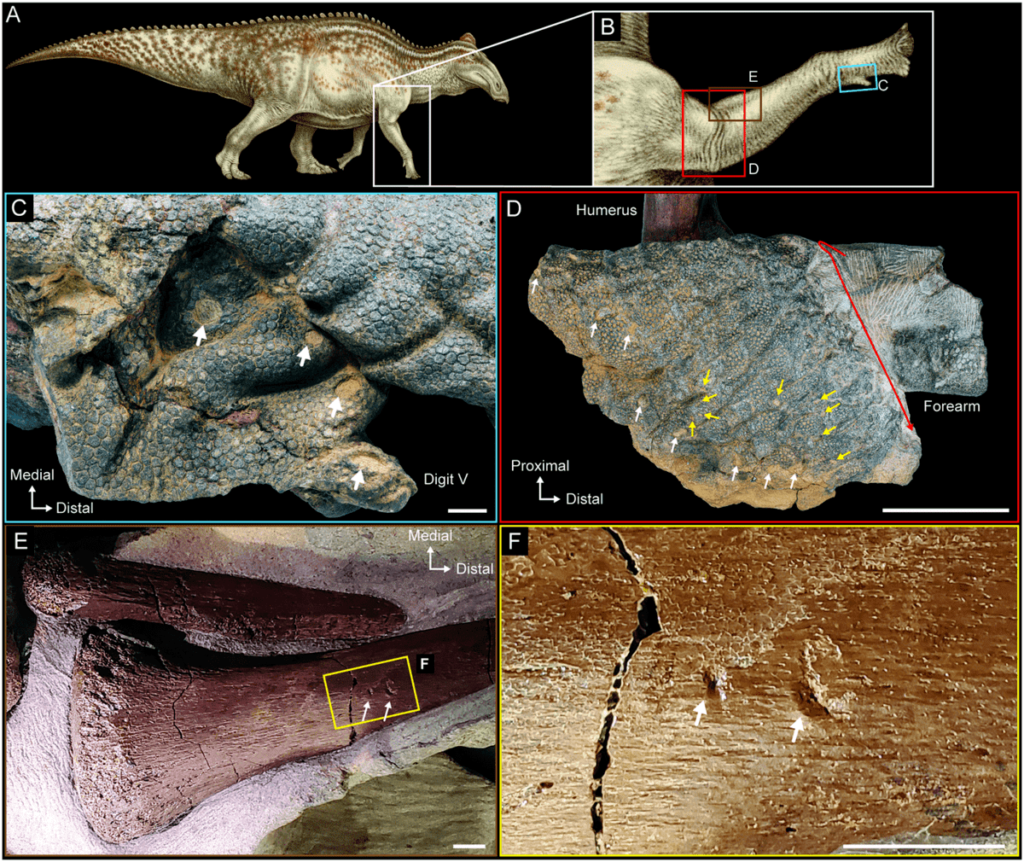 Dinosaur remains with bite and cut marks. Image: Stephanie K. Drumheller et al., PLOS One
Scientists believe that the violation of the integrity -"piercing" - the skin allowed the gases formed in the process of decomposition of the internal organs to come out. As a result, the outer shell was less affected by decay and survived until the moment when the remains were covered with soil and preserved.
During the analysis, the researchers showed thatbite marks on the arm of a hadrosaur belong to an ancient relative of the crocodile. What animal caused him scratches, scientists do not know. It is also unclear whether the injuries caused the dinosaur's death or whether they were formed by scavengers after the death of the fossil reptile.
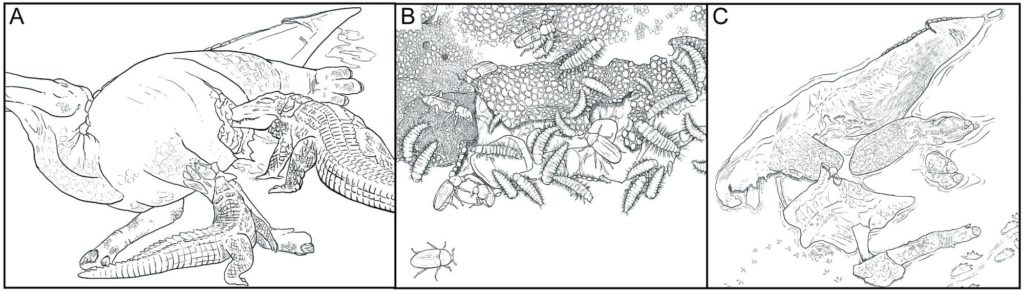 The supposed process of skin mummification. Image: Stephanie K. Drumheller et al., PLOS One
Read more:
Black hole 'spit out' torn star three years after swallowing
Unusual structures found on the edge of the solar system. Only the Voyagers have been there.
Living organisms have made Mars uninhabitable