Geologists from Harvard University studied 65 currently known fossil samples
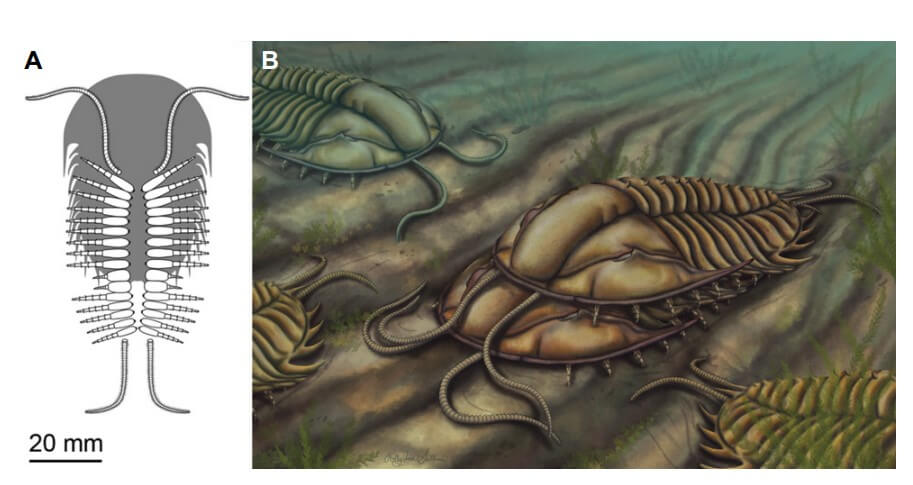 Mating reconstruction. Source: Losso, Ortega-Hernández, Geology
The researchers note that, in contrast toexoskeleton, appendages (antennae, legs and gills) are generally poorly preserved because they are not fortified with calcium. In order for these body parts to survive, unique conditions are required. For example, such conditions are created in the Burgess Shales in Northern Colombia. Examining one of the exhibits found in this place, the authors of the work found peculiarly modified legs, similar to fasteners, in the middle part of the fossil's body.
This specimen is truly unique in that itwell enough preserved to show details of limbs converted to clasps but broken so that we actually see these reduced limbs that would otherwise be covered by a dorsal exoskeleton. Ironically, if the specimen had been better preserved and had a complete exoskeleton, we wouldn't have as much information about its limbs as we do now.
Sarra Losso, study co-author
Scientists have measured individual parts of the reducedappendages and compared them with other elements of this and other known representatives of this species. The study showed that such elements have a unique morphology known only from this specimen. To understand the purpose of these appendages, scientists examined other living arthropods.
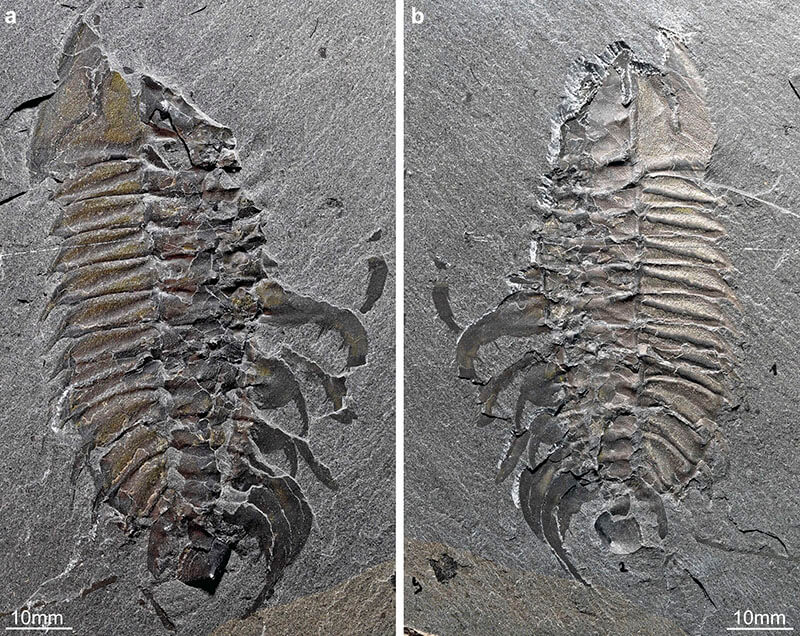 Trilobite fossil. Source: Losso, Ortega-Hernández, Geology
Similar elements have been found in horseshoe crabs.Scientists note that horseshoe crabs, although not closely related to trilobites, are often used as modern analogues because they look similar to these fossils. During spawning, male horseshoe crabs use their clamps to grab and fasten the female so that the male's reproductive system is properly positioned to fertilize the eggs released by the female.
"We knew it couldn't be related tochewing, because the appendages are not near the head or mouth, but in the middle of the body, adds Losso. - The discovery shows sexual dimorphism in trilobites, which is expressed only in appendages. We now know more about trilobite reproduction."
Read more
Look at the "silent" drone with a new generation of ion propulsion
Uranus is a very strange planet. We explain why astronomers want to send a probe to it
Scientists propose to revise the foundations of quantum physics and show where they do not work