Researchers from the University of California, Los Angeles have developed a small sponge that can
The immune system is a powerful line of defensefrom pathogens and diseases. Regulatory T cells (Treg) ensure that it does not mistakenly attack healthy cells in the body. The problem is that cancer alters this process and “uses” it to protect itself.
In previous studies, scientists have found waysreprogram Tregs into cancer-killing immune cells. While lowering Tregs can make cancer more vulnerable, systemically it can cause autoimmune complications. Now, scientists at the University of California, Los Angeles, have developed a new method to “delete” the altered T cells only in the area immediately around the tumor.
As a result, they developed a device thatcalled SymphNode. It’s essentially a biodegradable sponge about the size of a pencil eraser. It’s made from a hydrogel-like material called alginate. The sponge is filled with drugs that not only block Tregs, but also trigger other anti-cancer T cells. Once SymphNode is implanted near a tumor, the device begins to work, releasing the drug.
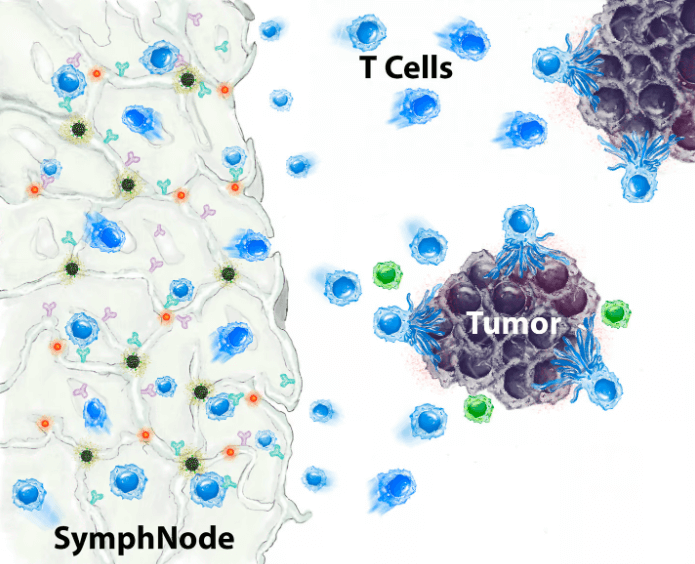 Schematic of the SymphNode device that T cells call to fight tumors. Illustration: Negin Majedi/Symphony Biosciences
Scientists tested the system on mice with cancerbreast cancer and melanoma. They achieved impressive results—SymphNode shrank tumors in 80% of mice with breast cancer and prevented metastasis in 100% of cases. However, all untreated control mice died within a few weeks after their cancer spread to the brain and lymph nodes.
Read more:
See the most powerful volcanic eruption on Jupiter's moon
A new kind of quantum entanglement has been discovered: photons "remember" the structure of atoms
The metallicity of the Sun turned out to be higher than it was thought: what astrophysicists learned