Anyone can name a star online using a special service. Now International
Why is the competition necessary?
The MAC is responsible for assigning names to all objectsin space, starting with constellations, comets and asteroids beyond the solar system. Although the organization names the planets itself, the next planet discovered will be named through public participation as part of the NameExoWorlds 2022 competition. It celebrates the 10th anniversary of the Astronomical Knowledge Project. According to a press release, the competition aims to invite “people around the world to connect cultures of different nations with distant worlds in space.”
“This is another way to connect people through astronomy,” said IAU President Debra Elmegreen.
What planets can be named?
The NameExoWorlds 2022 competition asks people to name 20 exoplanets. All of them are located outside the solar system.
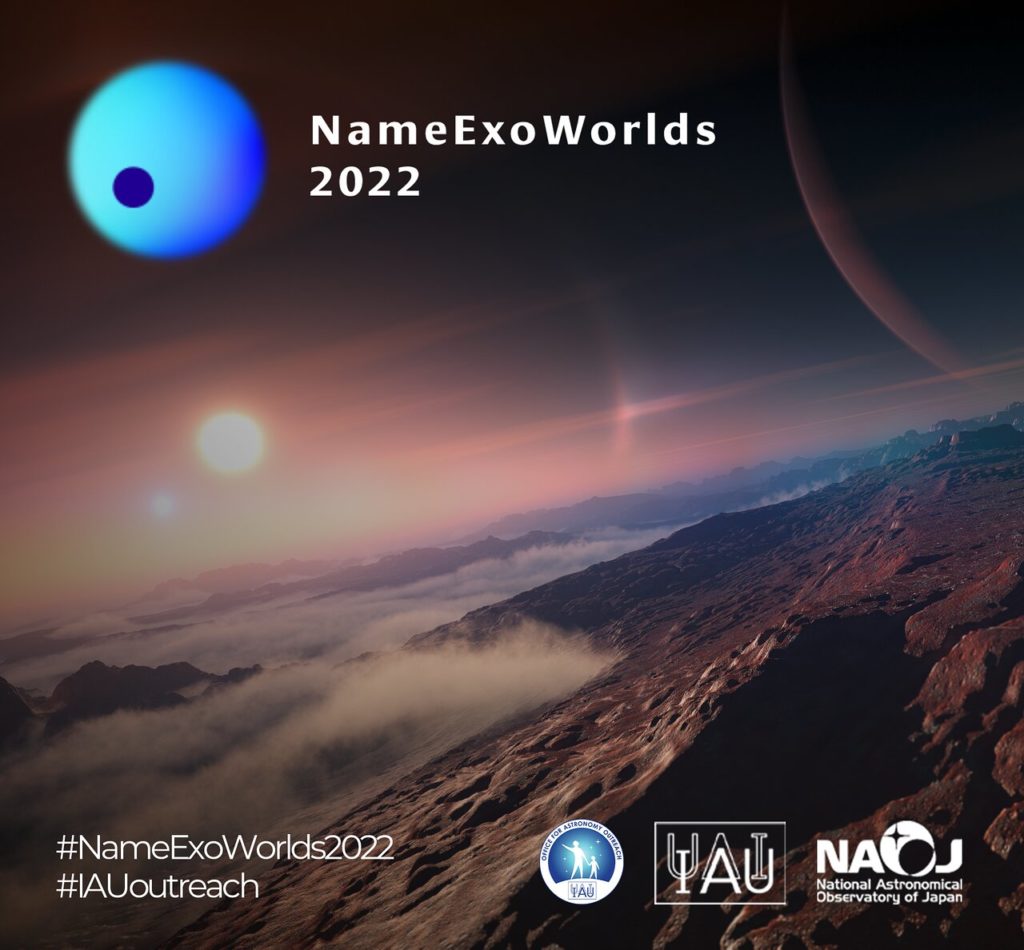 Image: iau.org
According to MAS representatives, they represent"of special interest" because they will be the first exoplanets observed by the James Webb Telescope. They will be detected using the transit method and direct visualization. Astronomy lovers will also name the star around which the exoplanet revolves.
What is the name of the planet?
The idea of the project of the International Astronomicalunion is for teams of students, teachers, astronomy enthusiasts and scientists to come together to name the planets. Proposed names “must refer to objects, people, or places that have a long-standing cultural, historical, or geographic significance worthy of being assigned to a celestial object,” IAU officials explain. At the same time, the names of stars and planets should also have a common theme.
What do we have to do?
Once the teams have decided on their names,they must create and host an exoplanet-related presentation, such as an event informing the public, in person or online, about exoplanets and their significance.
Teams must also submit their proposalin a written invitation in English of no more than 300 words and a video in the teams’ native languages of no more than three minutes.
 Image: ESA, NASA, M. Kornmesser (ESA/Hubble), and STScI
The selection of proposals will take place in two stages.At the first, the national selection committees will name the best proposal from each country, as well as two alternate candidates. At the second stage, the international committee will consider the options selected by the national commissions and select the winners.
Teams have until November 11 to submit their names. Voting will take place from December 16 to March 16, 2023, and the winners will be announced on March 20.
What names are prohibited?
For the options submitted to the competition there will beStandard International Space Union restrictions apply. For example, you cannot use names that have already been used for other celestial bodies; the names of real people (whether they are alive or dead), as well as places that were named in their honor.
Pet names are prohibited; tradingbrands, names that are protected by copyright laws; any neologisms, acronyms, abbreviations, compounds and combinations of several words.
Organization names are not acceptable; as well as any names that are associated or evoke associations with politics, religion and armed conflicts.
Have there been competitions like this before?
This is the third time the IAU has allowed the public to name an alien world. Previously, such competitions were held in 2019 and 2015.
IN2015the public has chosen names for 14 stars and 31 exoplanets that orbit them. In total, more than half a million people in 182 countries and territories took the decision.
 Image: iau.org
Voting ended on October 31, 2015. Those who submitted winning names were awarded a plaque commemorating their contributions to astronomy.
So, people named such objects as:
the star 14 Andromedae and its planet 14 Andromedae b;
the star 18 Delphini and its planet 18 Delphini b;
the star 42 Draconis and its planet 42 Draconis b;
the star 47 Ursae Majoris and its planets 47 Ursae Majoris b and 47 Ursae Majoris c;
the star 51 Pegasi and its planet 51 Pegasi b;
the star 55 Cancri and its planets 55 Cancri b, 55 Cancri c, 55 Cancri d, 55 Cancri e and 55 Cancri f.
IN2019 yearMore than 700,000 people voted.
 Image: iau.org
Representatives of Ireland used the namesmythological dogs (Bran, Tuiren) from the Irish legend "The Birth of Bran" for the planet HAT-P-36b (Bran) orbiting the star HAT-P-36 (Tuiren) in the constellation Canis Hounds.
A team from Jordan used the names of ancient cities and protected areas in the south of the country for the exoplanet WASP-80b (Vadirum) orbiting the star WASP-80 (Petra) in the constellation Aquila.
Representatives of Malaysia remembered the precious stones and used the Malay language for the exoplanet HD 20868 b (Baiduri), orbiting the star HD 20868 (Intan) in the constellation Fornax.
Names prepared by representativesBurkina Faso for the planet HD 30856 b (Nakambe) and its star HD 30856 (Muhun), refer to the local names of famous rivers. The system is located in the constellation Eridani.
Read more:
"James Webb" sent a photo of the collision of two huge galaxies
"Useless" bacteria on Earth will provide life to the colonists of Mars
On the pyramid in China found a portrait of the "king of ancestors". He ruled over 4,000 years ago
</ p>Cover photo: IAU/L. Calçada, CC BY-SA 3.0, via Wikimedia Commons
</ p>