Today, manufacturers are improving the water-repellent properties of smartphones, but this is still not complete.
A waterproof gadget works under water, for example, only for a certain time and at a specific depth, but a waterproof product is completely protected from it. And therein lies the big difference.
At the end of June, a federal court in Australia finedSamsung for $14 million for misrepresenting waterproof Galaxy smartphones. The press release mentions a group of Samsung phones with an IP68 rating, including the Galaxy S7, S7 Edge, Galaxy A5 (2017), Galaxy A7 (2017), Galaxy S8, S8 Plus, and Galaxy Note8, which are supposedly pool and sea compatible. The company acknowledged that if you put Galaxy smartphones in a pool or sea water, it will corrode the charging ports and turn off the device. And they need to be charged only after thorough drying.
The same thing happened in 2020 with the companyApple in Italy She was fined $15.3 million for misleading claims that the iPhone is waterproof. It was about all iPhones, from the eighth generation to the 11th.
Very often, phones break due to falling into water. In a 2018 US survey, 39% of respondents said they had dropped their devices in water.
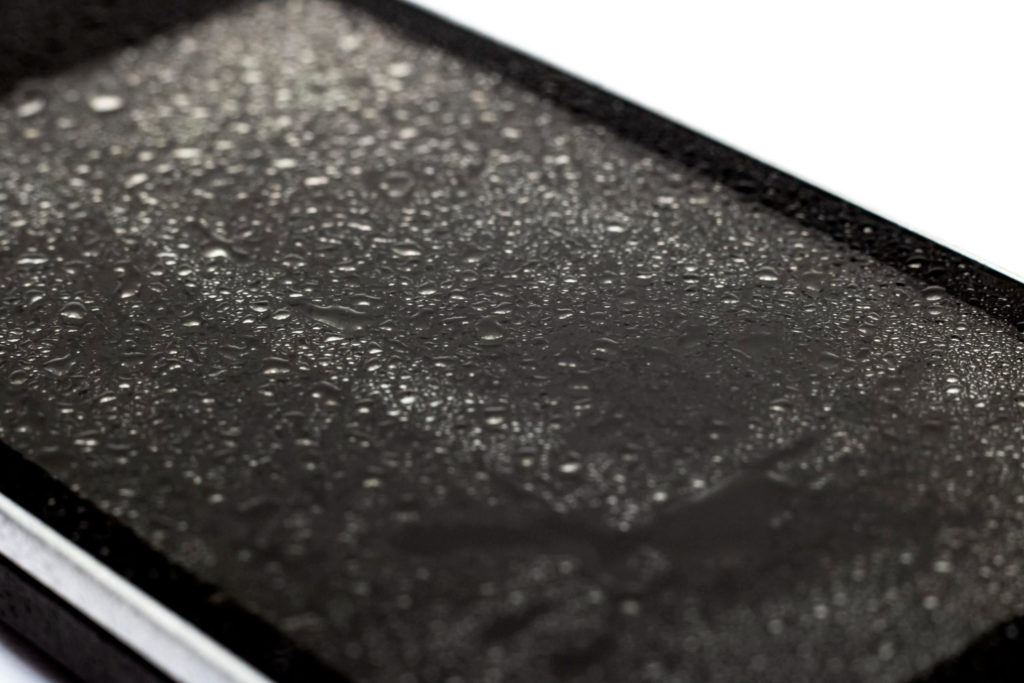 In a 2018 US survey, 39% of respondents said they had dropped their devices in water
So why don't we still have waterproof phones in 2022?
There is a rating system that is used to measure the resistance of devices to solids and liquids. This is called the ingress protection (IP) rating.
The IP rating consists of two digits.For example, there is a degree of protection IP68. Six means particulate protection on a scale from zero for no protection to six for high protection. Eight means protection from water on a scale of zero to nine.
But the criteria for assessing water resistancevary from manufacturer to manufacturer. For example, Samsung phones, which are IP68 certified, are waterproof when submerged in fresh water up to 1.5m for 30 minutes. These are Galaxy S20 FE and Galaxy S21. The company does not recommend using smartphones on the beach or in the pool.
An IP68 rated Apple iPhone can be used at a maximum depth of 6m for 30 minutes. iPhone XS and XS Max, iPhone 11, iPhone 12, iPhone 13.
However, both Samsung and Apple are unlikely to repair your smartphone under warranty if it is “damaged” by water.
In addition, IP protection testingcarried out under controlled laboratory conditions. In real life, the situation may be different, for example, while boating, swimming or diving, the speed, water pressure and alkalinity change. Therefore, measuring the level of water resistance of a phone is more difficult than it seems at first glance.
How do phones become waterproof?
To make your phone waterproof, you needseveral components and methods. As a rule, manufacturers first create a physical barrier around all entry points where dust or water can enter. These include buttons and switches, speaker and microphone jacks, camera, flash, screen, phone case, USB port, and SIM card tray.
These entrances are sealed with adhesive strips,tapes, silicone seals, gaskets, plastic and metal meshes, and waterproof membranes. After that, a layer of ultra-thin polymer nano-coating is applied to the circuit board of the phone, which helps repel water.
Still the phone's water resistance is everythingwill also decrease over time as components age and wear. Apple acknowledges that water and dust resistance are not permanent features of their smartphones.
Cameras aren't exactly waterproof, but some can withstand submersion much better than smartphones. This often happens because cameras, from a device point of view, are much simpler.
The smartphone has much morefunctionality, so its internal components are more sensitive, fragile and must be built into a small case. Because of all these factors, making a smartphone with the same level of waterproofing as a camera is doubly difficult.
The waterproof option of a smartphone also increases their price. According to the co-founder of Xiaomi, by about 20–30%.
 The waterproof option of the smartphone also increases their price, according to the co-founder of Xiaomi, by about 20-30%
How else can you make your smartphone waterproof?
Applying a water-repellent coating to the outer surface of the phone may increase the protection. Several companies are currently working on this technology.
In the future, for smartphones, they can create circuits on silicone material using laser writing methods, and additionally cover them with water protection on top.
But today there is no such thing asa waterproof phone. If your smartphone ends up at the bottom of the pool or toilet and won't turn on, make sure you take all the necessary steps to ensure it dries properly.
And to be 99% sure, it is better to buy a waterproof case.
Read more:
A black hole in the galaxy proved Einstein right. The main thing
Space destroys bones and changes their structure: scientists do not know how people will fly to Mars
Astronomers have calculated when the planets will change their orbits and chaos will come