During archaeological excavations during road work, archaeologists discovered a mysterious
It is reported that excavations were carried out at Bar Hill,where at the end of the first millennium BC. there was a Middle and Late Iron Age settlement (400 BC — 43 AD). The researchers note that frog bones are often found at ancient sites, but their number at Bar Hill has baffled scientists. Analysis of the bones showed that they all belong to local species of reptiles: the common frog and the common toad.
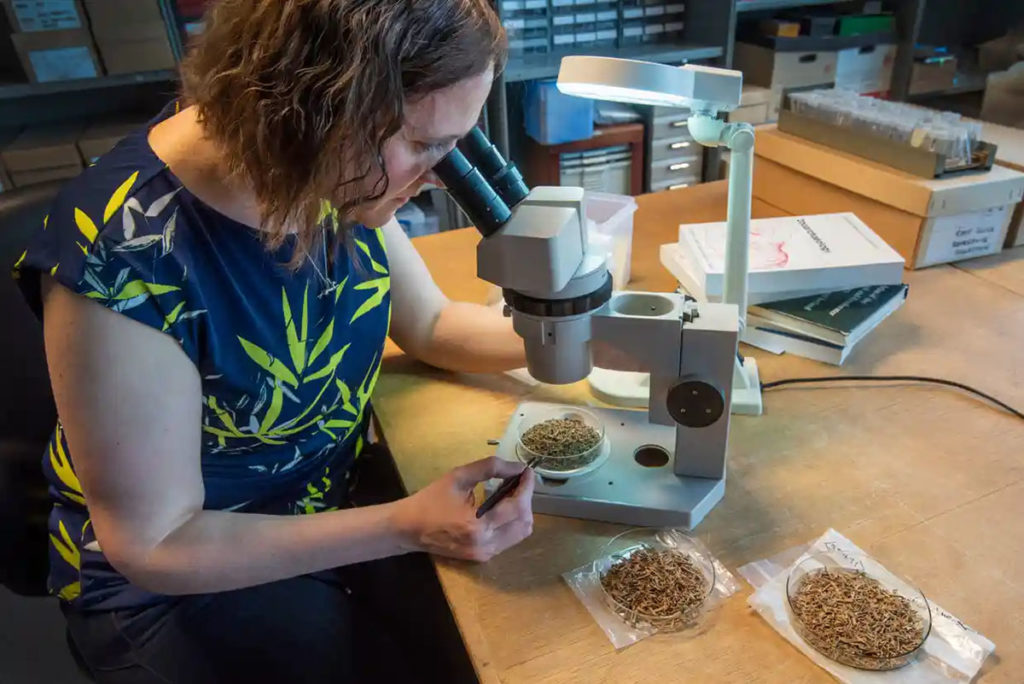 Zooarchaeologist Vicki Ewens analyzes frog bones found at Bar Hill. Source: Mola, AndyChopping
Researchers doubt that all these frogscould simply have been eaten by local residents. Although previous evidence has shown that amphibians were eaten during the Stone Age in Britain, there are no cuts or burn marks on the bones found to support this theory.
Traces were also found near the "burial place".charred grain. Archaeologists say that the locals processed the crop from beetles and aphids. Perhaps the frogs were attracted to these insects, the researchers suggest.
The alternative version is tragedy.Scientists believe that the reptiles could have fallen into a hole from which they could not get out during the spring movements in search of water for reproduction. In addition, severe cold or illness could lead to mass deaths.
Scientists continue to analyze the findings,found during excavations, both animal bones and artifacts of an ancient settlement. The researchers hope that these analyzes will help to understand what caused the mass pestilence of frogs.
Cover image: photo of the excavation site. Source: MOLA Headland
Read more
The Japanese dumped a giant turbine into the ocean to get endless energy from the current.
Hubble has found the first rogue black hole in our galaxy
Astronomers from Japan have found an unknown structure in the galaxy