A team of researchers from the University of Waterloo and Oregon Health and Science University
The researchers added material calledfucoidan, made from seaweed, to modify synthetic blood vessels. This substance has a structure similar to heparin, a drug used as an anticoagulant (preventing blood clots).
The smallest particles of fucoidan applied withusing the micropattern technique, promote the growth of vascular cells around the inner surface of the graft, significantly reducing the likelihood of blood clots.
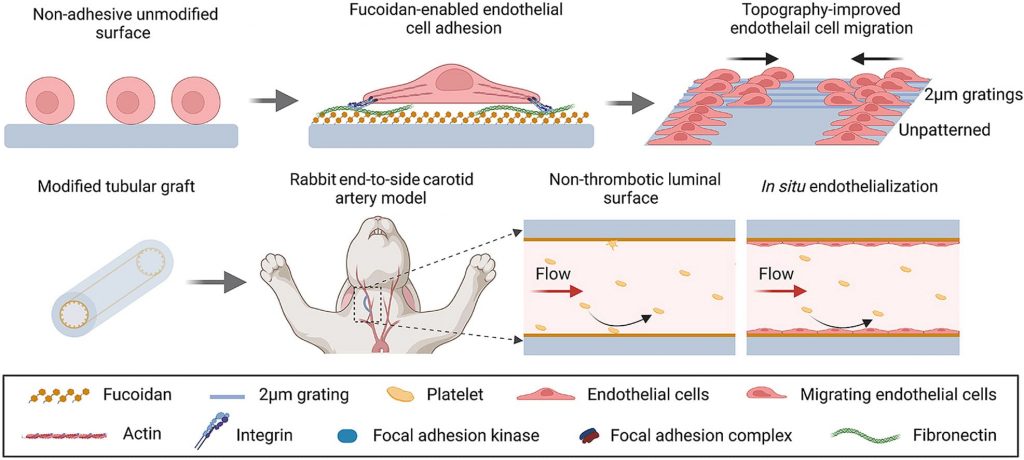 Scheme of modification (top) and change in blood flow after the installation of an artificial vessel in a rabbit. Image: Yuan Yao et al., Bioactive Materials
Bypass surgery is performed forrestoration of blood flow to the areas of the heart in case of blockage of blood vessels. Vessels taken from the patient themselves are considered the gold standard for such operations, but the limited availability of materials often requires the use of artificial vessels.
When synthetic graft material is notallows vascular cells to grow inside an artery or vessel, there is a high likelihood of blood clots forming, which can develop into a complete blockage or cause inflammation that restricts blood flow, the scientists explain.
The use of new material reduces the potential number of complications and the likelihood of recurrence of the blockage, requiring additional medical treatment or surgery.
Read more:
Restored appearance of a medieval woman who suffered from syphilis
Brain-eating amoeba is spreading in the US: is there a danger to Russia
The ancient mystery of the genome is revealed: what our DNA has been hiding for so many years