Aliens, if they exist, most likely inhabit rocky planets like our own, but new
Earth is the only one knowna functional model of a livable world. Therefore, it makes sense that astrobiologists hope to find evidence for the existence of aliens on rocky exoplanets similar to Earth. Indeed, the size of our planet, its chemical composition, temperature and position in the solar system make it favorable for life, at least for life as we know it.
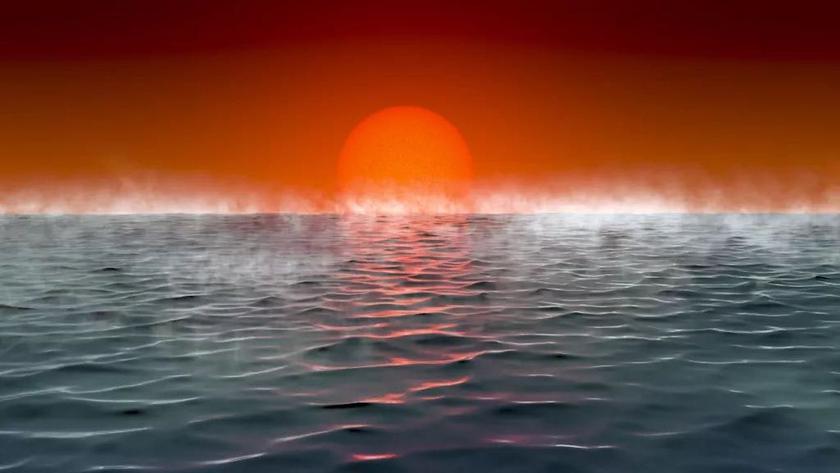
But, as new studies show,published in The Astrophysical Journal, an entirely new class of planets called the Hycean worlds may also be habitable. This type of planet does not exist in our solar system, but there are quite a few of them in the galaxy. In fact, this is what you would expect if Earth and Neptune had a child: the hyperoceanic planets are large and very warm, their atmospheres are filled with hydrogen, and they are covered by a huge planetary ocean.
В новой работе выдвигается теория о том, что giant planets are potentially habitable and that microbial life or even more complex life forms may exist in their oceans. Moreover, researchers led by Nikku Madhusudhan of the Cambridge Institute of Astronomy have proposed a set of biosignatures that astronomers should look for when studying these worlds, as well as a list of promising giant candidates that are nearby from a cosmological point of view.
A Lucky Feature of the Gytsean Worldsis that they exist in a larger habitable zone than what we are accustomed to. Also known as the Goldilocks zone, it is a band within a star system within which liquid water can exist on the surface of planets. A team of researchers has identified 11 candidate worlds orbiting nearby stars – they are all red dwarfs – which are considered promising targets for the search for biosignatures.
Source: space
Illustrations: Amanda Smith, Nikku Madhusudhan
</ p>