The Chinese Academy of Sciences has published the first test data from a trial run of the EP-WXT Pathfinder module. This
The images show the region of the galactic center -a dense zone at the core of the Milky Way, the Large Magellanic Cloud, and part of the Veil Nebula. All images were taken from orbit during the test launch of the module.
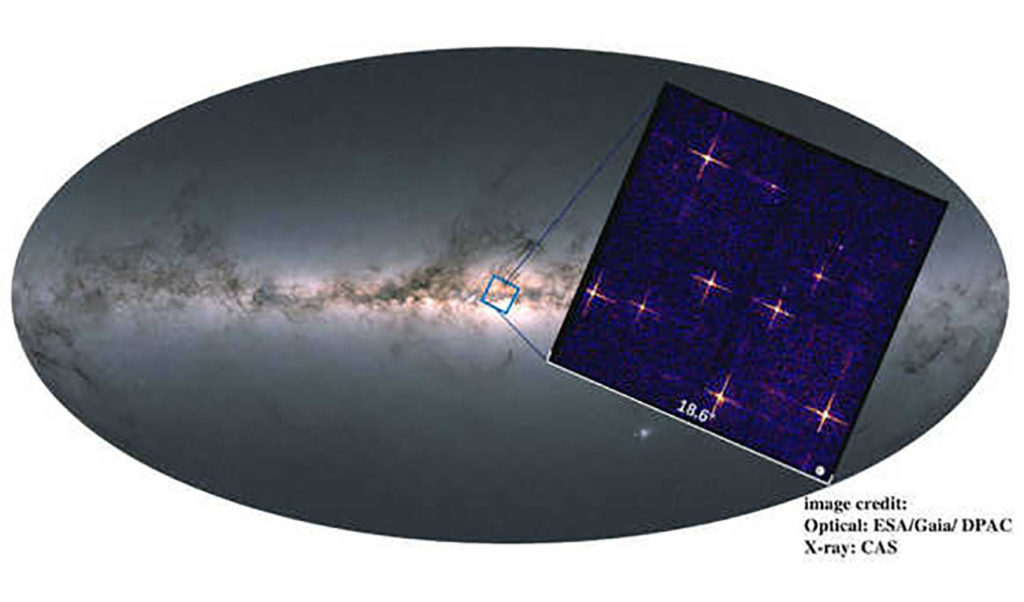 An 800-second time-lapse photograph of an observation of the center of the Milky Way superimposed on the observations of the Gaia mission. Image: CAS/ESA/Gaia/DPAC
The EP-WXT Pathfinder Test Module coversfield of view up to 340 square degrees (18.6°×18.6°). This makes it the first truly wide field X-ray focusing telescope. At the same time, thanks to modern technology called lobster-eye micropore optics, the field of view of the test module exceeds other focusing X-ray scanners by 100 times, the developers note.
During a test flight, Pathfinder conducteda total of four days of experimental observations in orbit and obtained reliable x-ray spectra and images based on real measurements. The future WXT telescope will consist of 12 of these modules, covering a field of view up to 3,600 square degrees wide.
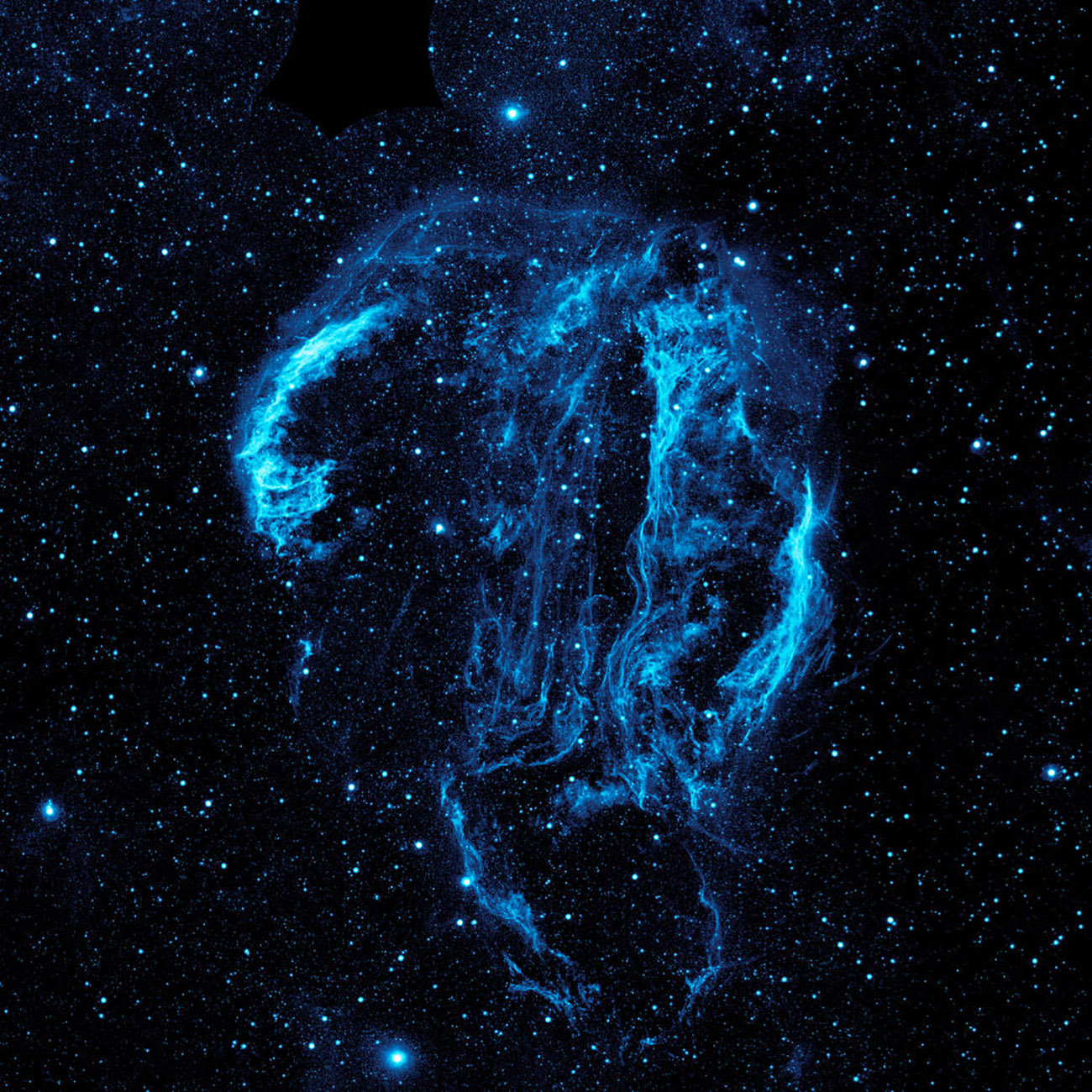
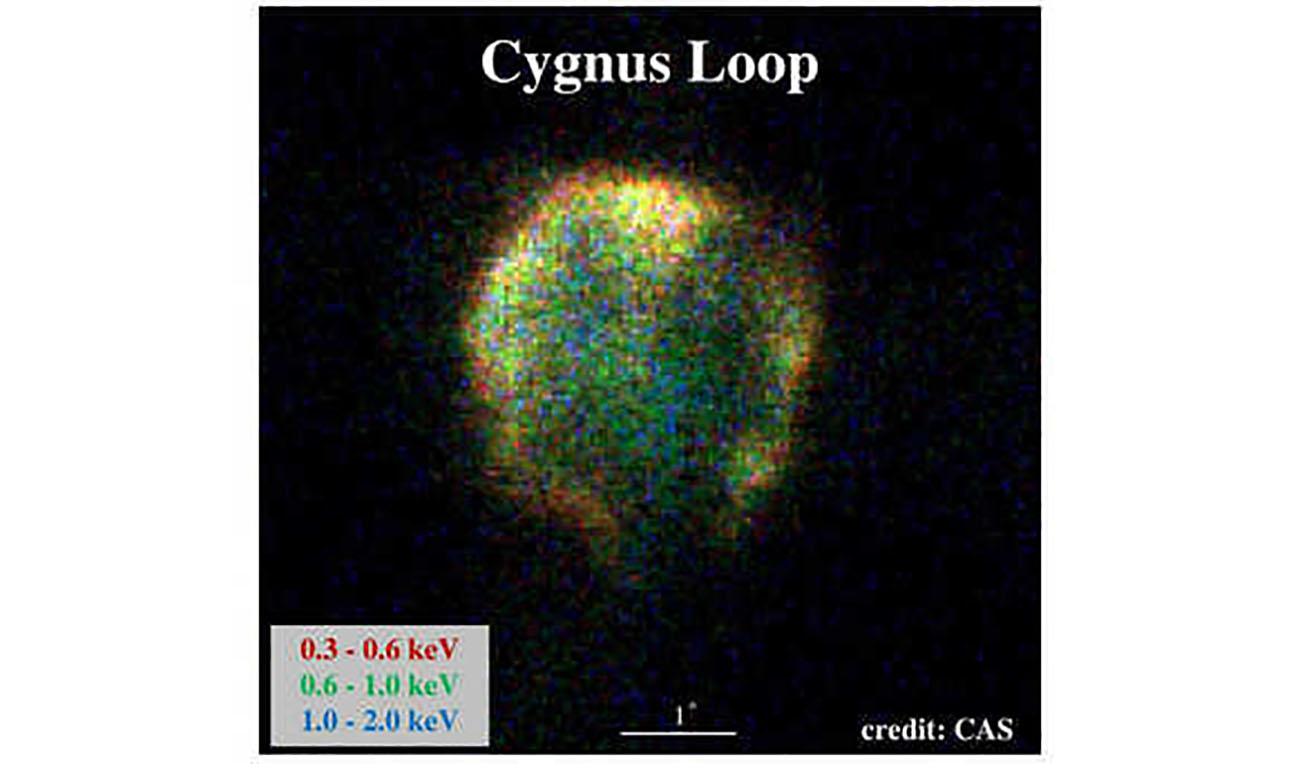
Veil Nebula. On the left is an optical image taken by the Galaxy Evolution Explorer, on the right is X-ray observation data. Sources: left - NASA/JPL-Caltech, right - CAS
The test flight demonstrates that evena single observation can cover X-ray sources from all directions within the region of the sky being observed, including stellar mass black holes and neutron stars. The observation also recorded an increase in the brightness of X-rays from a binary system containing a neutron star.
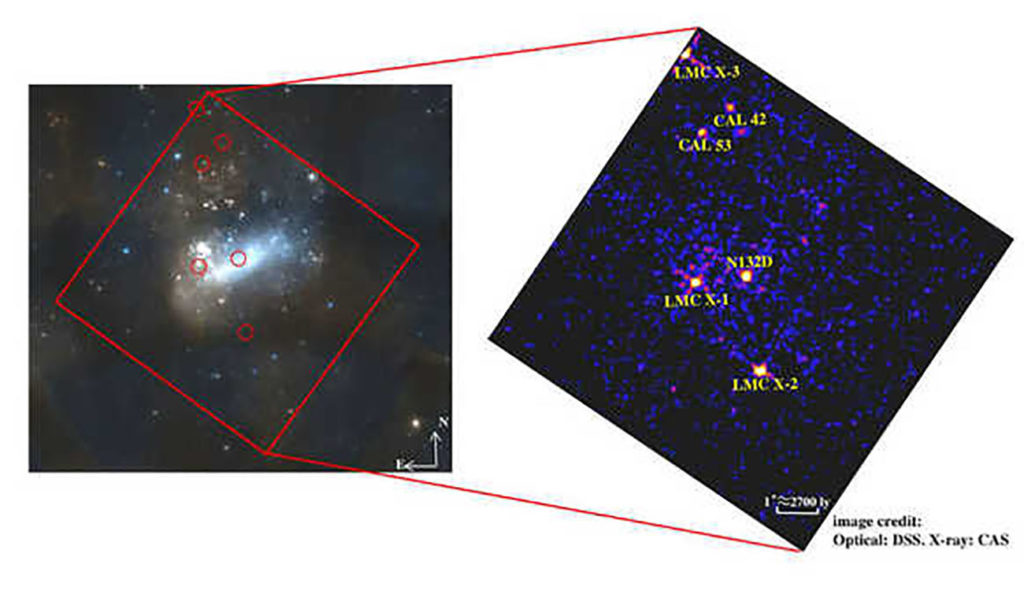 Preliminary X-ray data of the Large Magellanic Cloud (right) compared to an optical image (left). Source: CAS/DSS
The researchers conclude that the test flight confirmed the efficiency and correct operation of the device, which promises new discoveries after the launch of the finished telescope.
Read more:
Plant on Mars produces oxygen at the rate of an average tree
Physicists have cooled atoms to record temperatures. They are a billion times colder than outer space.
A small dinosaur "turned" into a gem. He is almost 100 million years old