Researchers from the Massachusetts Institute of Technology have developed modular transformable
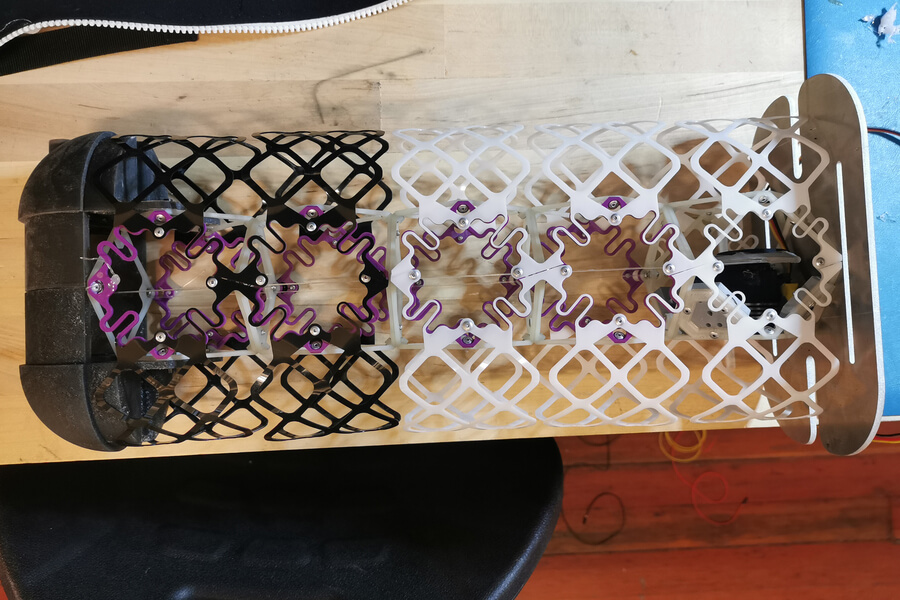 Five voxels connected together. Image: MIT
The proposed technology is based on latticeconstructs that researchers call voxels. These are hollow structures consisting of molded plastic parts with narrow spacers of complex shape. The structure of these elements is designed so that they are rigid and load-bearing in one direction, but soft in the other. This was achieved by mixing rigid and flexible components in different proportions.
The authors of the work note that smooth flexibilityThe surface of the hull allows you to control the flow, reduce drag and increase thrust efficiency, which leads to significant fuel savings when driving in the aquatic environment.
To demonstrate the technology, researchersdesigned and assembled two test robots. In the first device, voxels were connected in a long row, forming a meter-long serpentine structure. The body of the “eel” was assembled from four segments, each of which had five voxels and a mechanical drive in the center. It controls a wire attached to each of the two voxels on either side. The tension in the wire compresses the elements and causes the structure to bend.
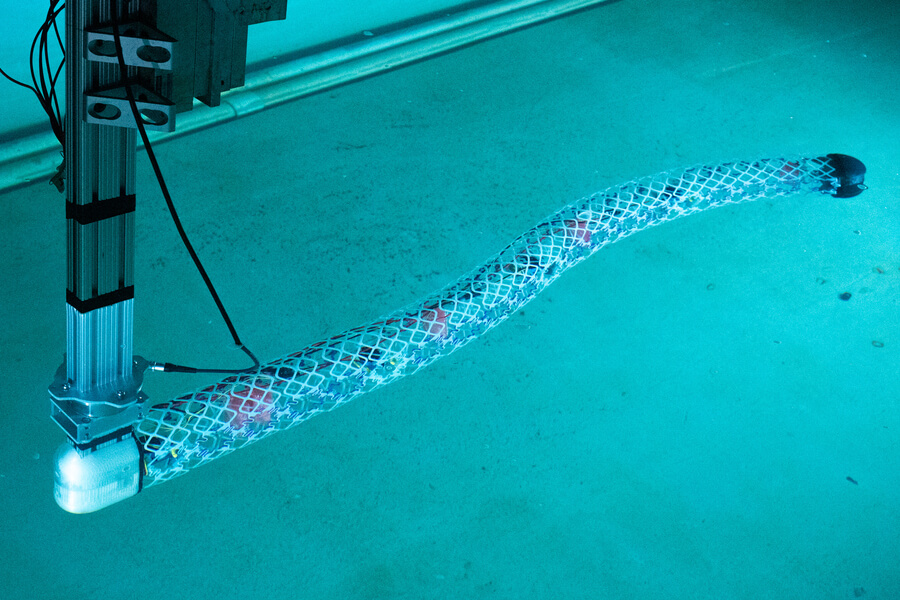
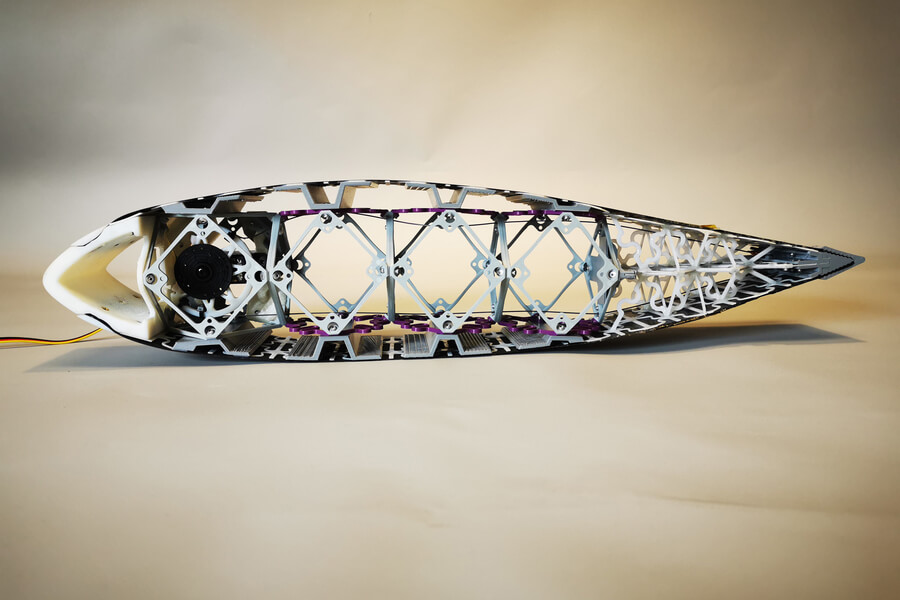
Sea eel and wing, assembled from voxels. Images: MIT
The engineers covered their kite with a ribbed carrierstructure and waterproof coating. Tests have shown that such a meter-long kite successfully generates thrust and can move in the water with wave-like movements. By assembling the same basic elements in a different sequence, the researchers made a hydrofoil capable of changing the shape of the profile and aerodynamic properties.
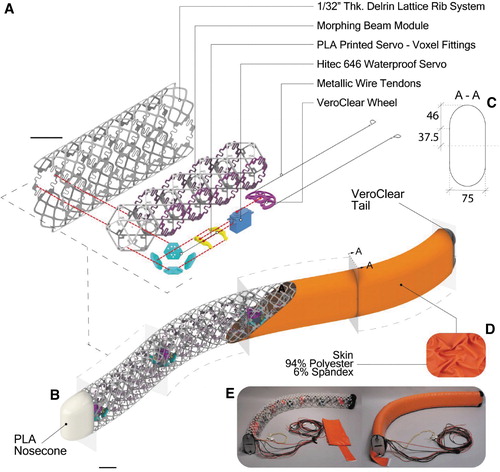
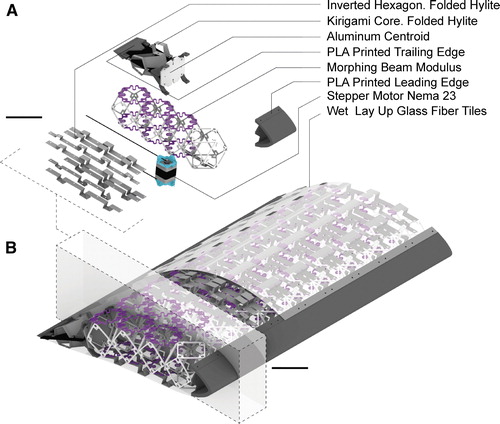
Internal structure of the robot eel (left) and wing (right). Images: Alfonso Parra Rubio et al., Soft Robotics
The authors of the development note:while the new robots themselves are not new, alternative designs rely on thousands of unique parts that are custom-made for a specific project. The proposed approach significantly reduces the time of manufacturing and assembling robots and robotic structures. For example, it can be used to develop and improve individual components of ships and submarines.
Read more:
Scientists transplanted human “brain” into rats and told what happened in the end
Two photos of the Earth with a difference of 50 years were compared at NASA: what scientists found
Found a rare planet, very similar to the Earth. She is close to us