Engineers from MIT Lincoln Laboratory and the University of Michigan
For labeling, researchers suggestuse structural-colored fiber. This fiber reflects infrared radiation only at a certain predetermined wavelength. Depending on what light the fiber reflects when scanned, processors will be able to determine the type of fabric.
The fiber is formed from a special blank,consisting of more than 50 alternating layers of acrylic and polycarbonate. Each layer is less than a micron thick, and the fiber drawn from the block of material becomes the same size as the normal yarn in the fabric. Although each individual layer is transparent, the combination of the two materials reflects and absorbs light, creating an optical effect. This is the same effect that gives butterfly wings their rich, shimmering colors, the scientists explain.
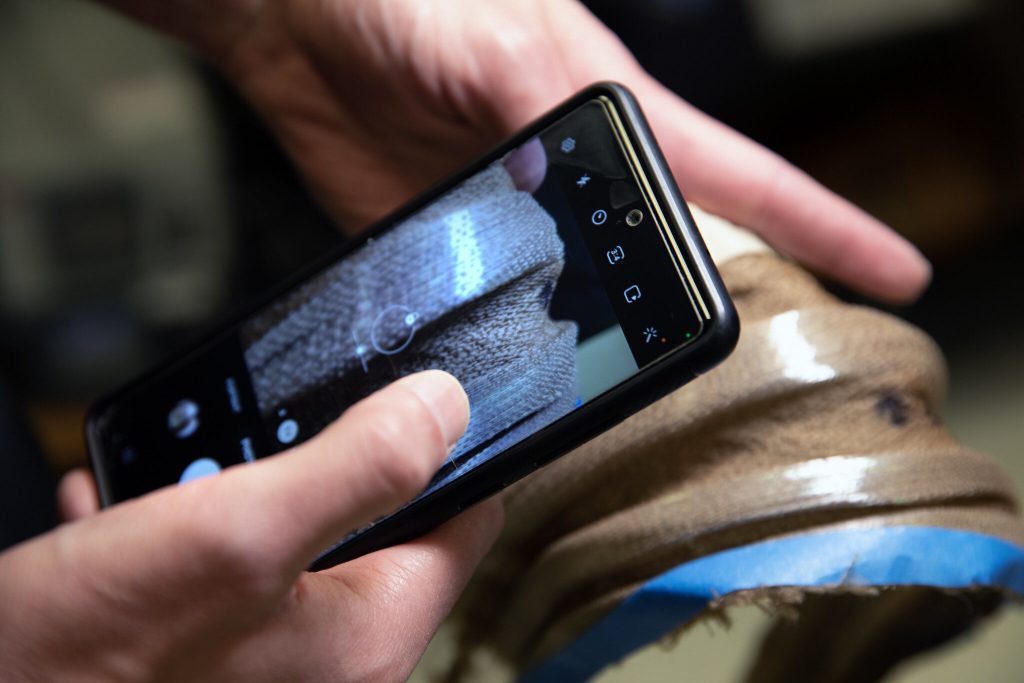 Reading an optical "barcode" woven into fabric. Image: Marcin Szczepanski, University of Michigan College of Engineering
By controlling the speed at which the fibers are drawn,researchers can "tune" them to reflect and absorb specific wavelengths by creating a unique optical barcode in each fiber. A different barcode can be assigned to certain types of fabric, the scientists explain. The fibers will be woven into fabrics as they are made, then used in clothing and eventually recycled.
Researchers note that reflectivethe fibers will make up less than a few percent of the fabric and will not be visible in normal light. In order to make them visible, you will need to use a special infrared detector. To do this, you can use technology that is already used to sort plastics in the recycling industry.
Textiles are sent to factoriesto sort by fabric type. Manual sorting is laborious and is made more difficult by worn or missing labels. More advanced fabric chemistry analysis methods are often not accurate enough to identify the materials in the fabric blends that make up most garments. The use of IR detectors will help simplify sorting and increase tissue recycling.
Read more:
One planet can put an end to life on Earth: how scientists have proven the fragility of the solar system
Treasure found that was hidden during the war almost 1,000 years ago
Notre Dame fire helps scientists unravel the secret of the cathedral's construction
Cover image: Marcin Szczepanski, University of Michigan College of Engineering