Scientists in Birmingham have unveiled a new beam-steering antenna that scientists say boosts
Beamforming and beam control are techniques that are used to shape and control the emitted beam of energy from a phased array antenna.
The experimental results were presented for the first time at the International Radio Science Meeting in the Atlantic and Asia-Pacific regions.The scientists showed that the device can provide continuous "wide-angle" beam control, allowing it to track a moving mobile phone user in the same way that a satellite dish rotates to track a moving object, but at a significantly higher speed.
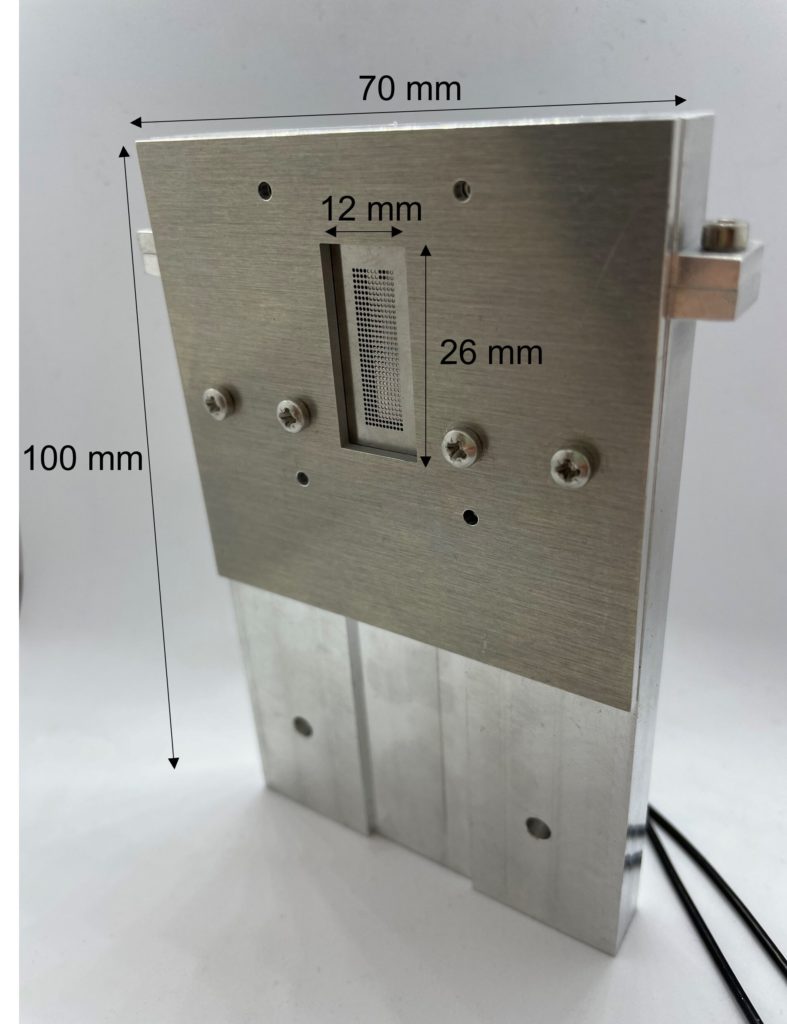 Beam-steered antenna technology has been developed to improve the performance of fixed base station antennas in 5G (mmWave) and 6G networks.
A source:
University of Birmingham
The technology that the researchers developedиз Инженерной школы Бирмингемского университета, уже продемонстрировала повышение эффективности передачи данных на частотах в диапазоне миллиметровых волн. В частности на частотах, определенных для 5G (mmWave) и 6G. Примечательно, что высокую эффективность там можно достичь лишь с использованием медленных антенн с механическим управлением.
For 5G mmWave applications, 26 GHz beam steering antenna prototypes have demonstrated unprecedented data transmission efficiency.
The device is fully compatible with existing5G specifications that are used today in mobile networks. In addition, the new technology does not require complex and inefficient power supply networks. They are typically required for deployed antenna systems. Instead, the scientists used a low-complexity system that increases productivity and is easy to manufacture.
Антенну с управлением лучом разработали как solution for a fixed base station antenna, for which current technologies show reduced efficiency at higher frequencies, limiting the use of these frequencies for transmission over longer distances.
Technology roughly the size of an iPhone usesa metamaterial made from a metal sheet with many regularly spaced micrometer-diameter holes. The drive controls the height of the cavity in it, the movements of the delivery micrometer. Depending on its position, the antenna will effectively concentrate the beam into a highly directional signal and then redirect that energy, simultaneously increasing transmission efficiency.
Read more
Diagnosis in a minute: how IT is changing healthcare
Chinese AI predicts the course of hypersonic missiles. The retaliatory strike will be ahead
Scientists have found the largest plant: its length is 180 km, and its age is about 4.5 thousand years