Researchers have studied the nearly perfect fossils of the world's first gliding reptile and found that
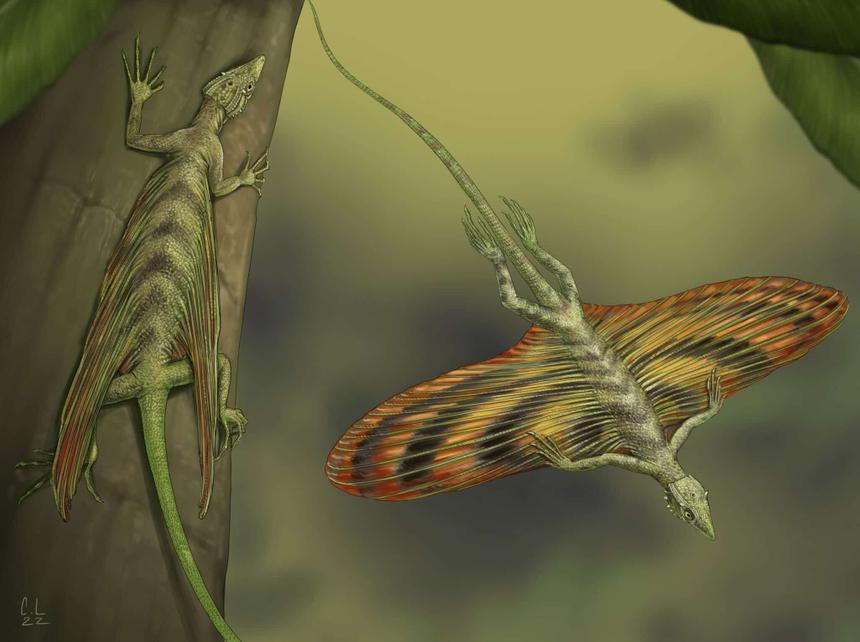
Since the first discoveries in 1907fossils of Coelurosauravus elivensis, there has been heated debate about how this animal actually lived during the Late Permian period – 260 to 252 million years ago – and how his unique body parts fit together.
By collecting enough fossils to createA near-perfect skeletal reconstruction, the new study provides new insights into the reptile's morphology and habits, as well as how it became the first known reptile capable of gliding.
The answer to the last question lies in the canopy forest,in which this unusual creature lived, – suggest experts from the National Museum of Natural History of France in Paris and the State Museum of Natural History of Karlsruhe in Germany.
Explaining his findings, lead author Valentin Buffat of the Center for Paleontological Research in Paris states:
“Pennsylvania forests, although taxonomicallyvertically heterogeneous, had fairly open canopy layers with spatially separated dendritic taxa, resulting in little crown overlap. In contrast, denser communities are observed in Cisular forests, indicating more continuous canopy layers. Such a change in forest structure may explain why no planarians have been recorded before them... they just had to move from place to place. As it turned out, planning was the most effective way to get around.”