Biologists from Imperial College London, led by Huai-Ti Lin, conducted the most comprehensive study yet.
Scientists have discovered a surprisingly large number"sensors" in various species of dragonflies. For example, on the four wings of the eastern amberwing (Perithemis tenera), according to researchers, there are more than 3,000 sensory cells in total, and in homoptera dragonflies there are half as many.
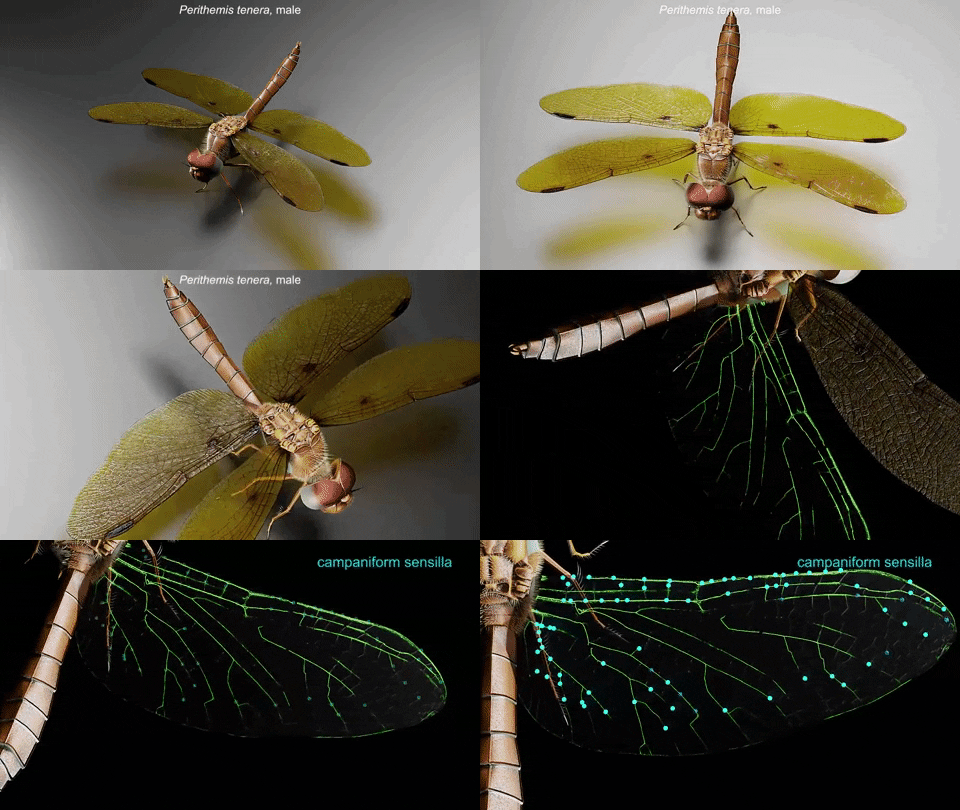 Source: Imperial College London
"We knew that all flying animals havemechanosensors, including in insects, but we were surprised by the variety and number of sensory neurons that exist on the wing. We didn't expect to find so many,” says Lin.
According to the researchers, maintaining the worksuch a complex sensory network requires a lot of energy, which means that their functioning is important for the survival of these insects. Dragonfly wings deform, bend, and twist during flight to increase lift or make flight easier to control. According to scientists, insects make these complex decisions based on the "indications" of the sensors.
Biologists continue their research:in the second phase, they focused on recording the neural signals that are transmitted from the wings in flight. Lin said they expect to get information that will be useful for creating a sensor system in aviation and industry.
"An example of how we could use ourknowledge is the flow sensors on the wings of the aircraft that can predict when and where the fall into the air pocket will occur, says Lin. - The wing can usually detect changes before the main body of the aircraft begins to vibrate. By placing sensors directly on the wing, you can detect such events much earlier, especially in unsteady airflow, which is difficult to model.”
Read more
After ten years of work, scientists questioned the standard model of physics
There is another “planet” inside the Earth: how it saved nascent life
Old cells were reprogrammed, and they became 30 years younger: how it works