The history of money has come a long way from natural exchange and payment in precious metals to coins and
This complication will continue, and it is possible thatIt is the blockchain that will change the financial system. We tell how it already affects the economy, where it is used and whether all states will come to adopt it.
What is blockchain and how is it used today in financial structures
Blockchain is a way to encrypt, transfer andordering data, which is a chain of blocks of information. Each block is a digital code containing a record of the action and information from the previous link. All transaction records are stored in the chain, they cannot be deleted: for this, the entire chain must be destroyed. But you can add new ones without restrictions.
For example, a company enters all data on transactions withpurchasers and she cannot delete any of the contracts. The substitution or change will be noticeable to everyone, it is very easy to calculate the discrepancy and find an unscrupulous person. Instead, the company can create a new record that one of the suppliers brought less or more goods than they should have. Information about the quantity of goods will be updated, but both the first contract and the second one will exist.
Classical databases are managed by a centralan entity that can change information at any time without the knowledge of users. For example, a bank suddenly deducts money from a customer's account. And the blockchain is decentralized - this is its main principle and advantage. The entire ledger of transactions is not stored on one computer, and different independent users have access to the ledger. Therefore, if a failure occurs with one server, nothing will break, the information will remain unchanged - it is as protected as possible.
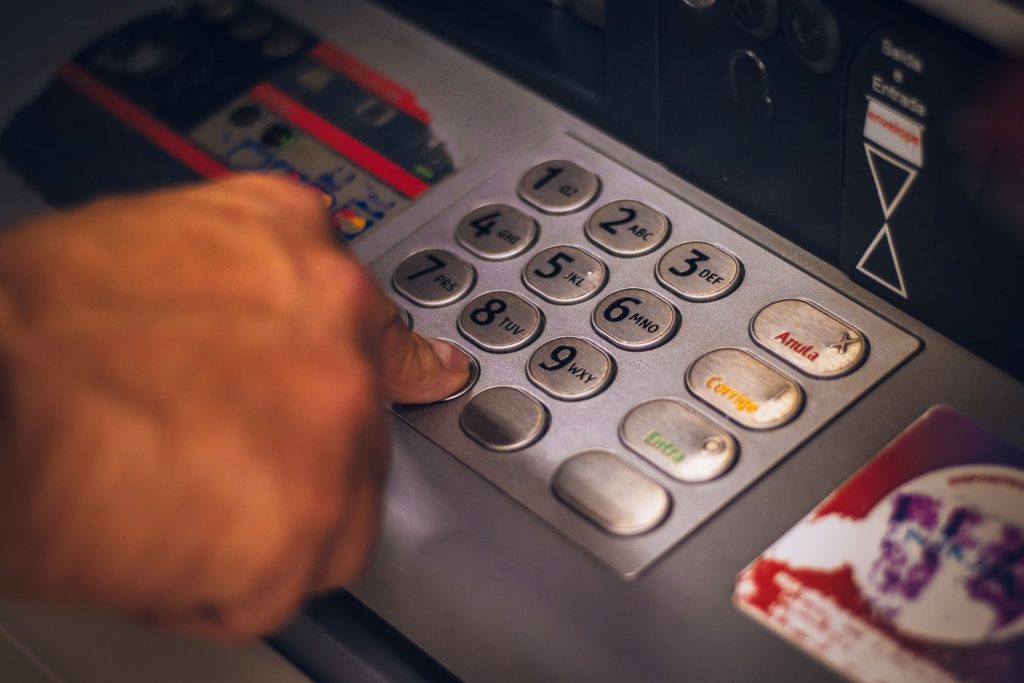 "Classic databases are managed by a central entity"
Blockchain Examples
Authentication of transactions in the blockchain is strongis related to the algorithms of the mathematical "consensus protocol": it defines the rules for updating the registry. Thanks to these algorithms, different independent participants cooperate without being tied to a third independent party, some kind of intermediary. There are two such algorithms: Proof of Work and Proof of Stake.
The first widely known example of blockchain wasbecame bitcoin (BTC) - a decentralized system of electronic money, a type of cryptocurrency. To create bitcoin, the Proof of Work (PoW, “proof of work”) algorithm was used, it is responsible for issuing bitcoins, determines the principle of adding a new block, confirming transactions and verifying the registry in a single form in all copies. Block creation is a complex computational cryptographic problem that takes a long time to solve. The moment of decision is the moment of block creation. The main disadvantage of PoW systems is that they consume a lot of resources. Bitcoin requires 1163 kWh of energy.
The process of creating new blocks is calledmining. And those who do this are called miners, respectively. When a miner uses the network and issues a block, he receives a commission - this is the economic incentive of the PoW algorithm. The PoW algorithm ensures the security and protection of the blockchain from DOS attacks, fraud and other abuses. Thanks to PoW, it was possible to protect transactions from double spending: the sender of the transfer cannot use the same funds twice before the system confirms them. Miners verify each transaction before it is added to the ledger, so the system cannot be fooled.
In addition to Bitcoin, PoW is used in Litecoin(LTC). Other, newer assets - Binance Coin (BNB), Solana (SOL), Cardano (ADA) - use the Proof of Stake (PoS) algorithm. Ethereum (ETH) switched to it in the fall of 2022. Cryptocurrency and mining have become the backbone of an innovative financial sector focused on digital assets. Around cryptocurrency and blockchain, companies have emerged that develop this industry: platforms have emerged that operate in B2B and B2C formats, allowing you to buy and sell cryptocurrency, take loans, and invest.
But the traditional financial sector in the face ofbanks, payment systems, stock exchanges began to use the blockchain to enhance the security and efficiency of transactions, their storage and transfer of valuable assets. The Australian Stock Exchange (ASX) has changed its registration, settlement and clearing system to blockchain in order to reduce customer costs. And one of the largest banks in the world, J. P. Morgan, uses blockchain to improve transfers. In addition, the blockchain is used to manage online payments, accounts, market trading.
 “The traditional financial sector has begun to use blockchain to enhance the security and efficiency of transactions”
For example, investment company SingaporeExchange Limited, which provides trading services throughout Asia, uses blockchain for efficient interbank settlement. The introduction of the technology solved several problems, including batch processing and manual reconciliation of several thousand financial transactions.
At the same time, blockchain reduces the costtransactions - primarily for the end user. Money leaves instantly and with lower commissions than traditional banks. Therefore, cryptocurrency can become an alternative to expensive and time-consuming SWIFT bank transfers for both B2B and B2C.
From 2014 to 2019, the interaction of the financialthe blockchain sector has grown. The technology was tested by Visa and Mastercard, PayPal, JPMorgan Chase, China Merchants Bank and other major financial institutions. According to Allied Market Research, the global market for financial sector blockchain solutions, which was estimated at $277 million in 2018, will reach $22.46 billion by 2026, adding 74% annually.
Transparency of all financial transactions
Security and transparency are keythe advantages of the blockchain, which potentially make it significant and its significant financial instrument. According to Deloitte, one in four blockchain companies belongs to the financial sector.
Business representatives are sure that blockchainwill make audit and compliance (customer verification) better and more transparent, increase people's trust in the financial system and reduce risks for participants in any operation. Delays in information processing will decrease, unnecessary steps in the exchange of data between parties - for example, business partners - will disappear. This reduces the risk of information loss, operating costs. The information in the blocks is protected from fraudulent activities, does not depend on third-party organizations, it is all at a glance.
Payment transparency plays an important role inomnichannel transfers - when an order is created in one channel and executed in another. And this is especially important for international transactions. Juniper Research estimates that 2 billion cross-border transfers will be made using blockchain by 2030. The new technology will save banks up to $10 billion annually.
In addition, the ability of the blockchain to increasetransparency of all transactions can be useful for optimizing work with taxes, mainly with corporate ones, with transnational companies. KPMG has a successful track record of using blockchain to control customs duties, including refunds for goods that for some reason did not cross the border.
There is a global trend towards blockchain adoption andcryptocurrencies: it was legalized in the EU, USA, UK, Japan, Canada. And respondents to a Deloitte survey expect the emergence of digital currencies from central banks. Attempts to work in these areas in some countries are already emerging.
Back in 2017 in Japan, cryptocurrency becamemeans of payment - but did not replace the official monetary unit: it remains the yen. And in 2022, the Japanese parliament clarified the legal status of stablecoins (cryptocurrency pegged to the price of another asset — a conventional dollar, euro, and so on), pegging them to the yen. In addition, commercial companies, together with the state, intend to create a national single cryptocurrency DCJPY. It can be transferred between participants of the blockchain platform or transferred to yen at the rate of 1:1 to the owner’s bank account.
The State of El Salvador went further and announcedbitcoin as an official payment instrument in the fall of 2021, allowing you to buy anything with bitcoin, from groceries to real estate. The state purchased 2,300 BTC with budget funds, which was equal to about $100 million. True, this story is not the most positive development: El Salvador lost half of its investment in bitcoin due to the depreciation.
One reason is because it simplifies privatecross-border transfers. People who have left India send tens of billions of dollars home, to relatives, and lose up to 10% on commissions. Moreover, they also need to look for a bank that will send a transfer between specific countries, or a service like Western Union. It's not fast and quite expensive.
Through cryptocurrency, an Indian citizen sendsdollars to the family, his relatives change this money for rupees, look for a local exchanger and withdraw money. A little more difficult than from card to card. But in the end, the commission is not 10%, but 2% due to the fact that there is no central intermediary: the money goes from the sender to the recipient. For workers from India, Pakistan, Latin America, the difference between 2% and 10% is big. And at the same time, the money will come in a few minutes, and not in a week. This problem is of little concern to Europe or North America, but is relevant for Latin America, the UAE, where a large percentage of workers are from other countries.
In Russia, despite the controversial attitude towardscryptocurrencies, trying to master the blockchain. In the summer of 2022, Sberbank launched a settlement service between counterparties on a blockchain platform through smart contracts. These are programs in the blockchain that work under certain conditions. Typically, smart contracts automate the execution of an agreement — exchanging money, sending a document, and so on. The first new technology was tested by the digital trading platform GrainChain (Belaya Dacha Group). According to Sberbank, blockchain will help bring market relations to a new level thanks to the secure execution of remote transactions. The company plans to scale this solution to different industries.
Previously, Sberbank held a deal for the supply of oilthrough the blockchain, which allowed the company to “reduce operational risks, terms for coordinating documents and the labor costs of the parties to conduct a transaction,” as the deputy chairman of the board of Sberbank explained.
Restructuring the financial system
According to Deloitte analysts, 2021 has shownthat the evolution of digital assets on the blockchain is already causing seismic shifts in financial structures. Further, this trend will develop even more rapidly. Blockchain and cryptocurrencies will play a big role in deposits and storage of assets, help create new ways or types of payments, and also affect the system of access to finance - in particular, lending. It is possible that they will also participate in the diversification of investment portfolios.
The use of blockchain in different industries canreduce the dependence of companies on banks. The business itself will store and move digital assets, including for international transactions. This will force banks to actively explore the use of the blockchain and ways to create new services to offset the loss of declining revenue from traditional payment instruments. Banks will have to rethink their business models if they want to remain competitive.
In Russia, the active development of blockchain inthe financial segment is facilitated by sanctions. Rostec plans to create an alternative to SWIFT based on the Cells blockchain platform. According to representatives of Rostec, such a payment system will make transactions safe and irrevocable, and their execution will be as fast as possible. Settlements will be made in national currencies, and clearing participants will be independent of national financial policies.
And it is possible that international settlements onforeign trade activities in the near future will be conducted in cryptocurrency. The Ministry of Finance has already amended the bill "On Digital Currency" and allowed the use of crypto for such operations. But cryptocurrency settlements within Russia are still under a big question: according to the first deputy chairman of the Central Bank of the Russian Federation, this is not safe.
Blockchain boundaries
But the development and penetration of the blockchain hasborders. A government blockchain is a very unlikely picture because it goes against the principle of decentralization. The state is a body of centralized government. It controls, at any moment it can change something. But with blockchain, this is not possible. If something is done in it, it is forever, because each step is tied to the previous one. For example, the documentation on the blockchain cannot be changed somewhere on the first pages: you will have to change it all.
Inability to control and change parts -probably one of the reasons why some states do not yet understand what to do with blockchain and cryptocurrency. The thing is incomprehensible, it doesn’t work out to control, the easiest way is to ban it. But, on the other hand, it is unrealistic to ban blockchain as a phenomenon, just like cryptocurrency. Just because of decentralization.
It is more logical for states to legalize cryptocurrencyand tax it. In addition, legalization is also control. Especially in Russia, we have already seen that the persecution of anything technological leads to a lag: this was the case with genetics and cybernetics. Therefore, if you think about the short term, then in Russia the cryptocurrency will still be legalized.
But the transformation of cryptocurrency into one oftools for the formation of state reserves is still unlikely. For this, the capacity of the cryptocurrency market and its stability are not enough - it has too high volatility. Now there are high risks that, for example, the state will place $70 billion in crypto, and tomorrow this amount will turn into $20 billion, because the volatility is high, bitcoin suddenly falls. Therefore, for now, bonds of other countries or gold are much more reliable options.
However, over time, if penetrationconditional bitcoin will grow, countries will start to buy and use it, the market capacity will increase. With it, the degree of reliability of bitcoin will also increase. Therefore, in the very distant future, decades later, it may become an instrument for accumulating state reserves. But so far there are no prerequisites for this.
 “The transformation of cryptocurrency into one of the instruments for the formation of state reserves is still unlikely”
Future of Cryptocurrency
Cryptocurrency develops cyclically and is experiencingups and downs, it has winters and thaws, and in each cycle something new appears. In 2018-2019, the concept of ICO appeared - a variation of IPO for crypto projects. Those who could, made money from it and attracted investments. Then came the NFT cycle, which is now ending.
Each cycle brings something permanent:along with the ICO, stablecoins, decentralized exchangers appeared, and these projects are developing. Therefore, it is very difficult to predict what will happen next and what will arise thanks to the blockchain in the economy of the future.
Perhaps in the coming decades there will bethe moment when individuals will receive loans in cryptocurrency or stablecoins. An add-on will appear over the classical financial system, and the blockchain will be used in the provision of loans, trade, and speculation.
Adding complexity and interest is the fact thatOn the blockchain, everyone can do something different. Sitting in an apartment in Budapest, Dubai and creating something that will change the understanding of cryptocurrencies. There is no World Blockchain Committee or regulator that would say what can be launched and what cannot. Nothing prevents you from writing your own code and proving that it is better - perhaps it will be really cooler than the conditional Etherium. Therefore, it is interesting to see what blockchain will be like in 5, 10 or 30 years and how it will change the financial system.
Read more:
Named the consequences of the last solar storm that hit the Earth
A massive impact from a space object triggered the Earth's magnetic field
A huge tunnel under the Egyptian temple “hidden” mysterious artifacts