The study could change the care of patients with blood disorders such as sickle cell
How did it all start?
Sickle cell anemia belongs to a group of hereditary diseases. It affects the shape of red blood cells, which carry oxygen to all parts of the body through the bloodstream.
Usually red blood cells are round and flexible, so it is easy tomove through the vessels. In sickle cell anemia, some of them are sickle or crescent shaped. These cells become stiff and sticky, which can slow or block blood flow.
How does the disease manifest itself?
Signs and symptoms of sickle cell anemia usually appear around 6 months of age. They are different and may change over time. Among the main signs and symptoms:
- Anemia. Sickle cells break down and die easily.Red blood cells usually live for about 120 days before they need to be replaced. But sickle cells usually die after 10 to 20 days, leading to a shortage of red blood cells (anemia). Without enough red blood cells, the body does not get enough oxygen and this causes chronic fatigue.
- episodes of pain. Recurrent episodes of severe painsymptom of sickle cell anemia. Pain develops when sickle-shaped red blood cells block blood flow through tiny blood vessels to the chest, abdomen, and joints. It varies in intensity and can last from several hours to days. Some people have only a few pain crises a year. Others have 12 or more. A severe pain crisis requires hospitalization. Some teens and adults with sickle cell anemia also suffer from chronic pain, which comes from bone and joint damage and ulcers.
- Swelling of hands and feet. It is caused by sickle-shaped red blood cells that block circulation in the arms and legs.
- Frequent infections. sickle cells can damage the spleen,increasing the body's vulnerability to infections. Infants and children with anemia are usually given vaccinations and antibiotics to prevent potentially life-threatening infections such as pneumonia.
- Growth retardation or puberty. Red blood cells provide the bodyoxygen and nutrients needed for growth. A lack of healthy cells can slow the growth of babies and children and delay puberty in teenagers.
- vision problems. Tiny blood vessels that feed the eyesmay become clogged with sickle cells. This can damage the retina, the part of the eye that processes visual images, and lead to vision problems.
What is the problem?
There is no specific treatment for sickle cell anemia, only symptomatic treatment. It only relieves pain and prevents complications associated with the disease.
Patients are usually given blood transfusions andmore serious procedure - bone marrow transplantation. Healthy hematopoietic cells are injected into the patient's body in order to resume the process of hematopoiesis. The method alleviates the symptoms of anemia, but it has serious contraindications - severe pathologies of the liver and kidneys, infectious diseases, pregnancy and physical weakness of the body (old age, concomitant diseases).
There is also the possibility of overloadiron. In mild cases, patients experience weakness and fatigue. However, heavy overload causes cirrhosis, diabetes, heart failure, an increased risk of liver cancer, infertility, and erectile dysfunction.
What to do?
To solve the problem, the UK isa single-cell randomized study called RESTORE (recovery and survival of stem cell-originated red cells, recovery and survival of erythrocytes from stem cells). This is a joint initiative of the National Health Service for Blood and Transplant (NHSBT, NHS Blood and Transplant) and scientific groups in Bristol, Cambridge and London.
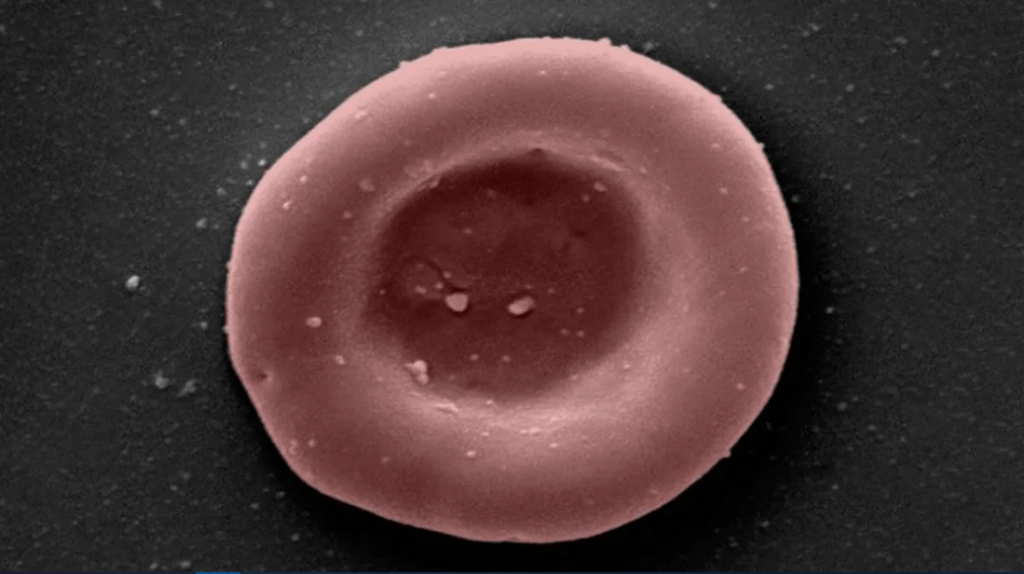 An example of a microscopic image of a young erythrocyte grown in the RESTORE laboratory.
Photo: NHSBT
The goal of the project is to compensate for the shortage of rareblood groups. From human blood stem cells, biologists grow new red blood cells in the laboratory. Scientists recently made a historic breakthrough by introducing a "new" transfusion product into the human body.
How is blood grown?
Donors were recruited from the NHSBT blood donor database.All donated 0.5 liters of blood. Using strong magnets, flexible stem cells were extracted from it, which can become red blood cells. About half a million stem cells can produce 50 billion red blood cells. They were filtered until only 15 billion remained. The whole process took three weeks.
In the end, the number of cells grown in the laboratory was about 5-10 ml - about one to two teaspoons.
How is the research going?
Two patients in the UK have already received tiny doses of "artificial" blood, they have been closely monitored, and no adverse side effects have been reported. All participants in the experiment are healthy, their identities have not been disclosed. The goal is to keep the blind test alive.
Then, as part of the study, the researchers compared the lifespan of the grown cells with standard red blood cells from the same donor.Biologists expect that laboratory samples will work better because they are as "fresh" as possible.
What's the bottom line?
If it turns out that artificial cells last longerstored in the body, patients who regularly need blood will not even need transfusions as often. This will reduce "iron overload" due to frequent blood transfusions.
What's next?
This is part of the first phase of a widerresearch. The trial will expand to 10 patients over several months. Biologists will study the lifespans of cells grown in the lab and compare them with the results of infusion of standard red blood cells.
Read more:
A massive impact from a space object triggered the Earth's magnetic field
Scientists Confirm Alternative Gravity Theory: Why It Changes Physics
Pig heart beats slower after transplant to human