A team of biologists led by Professor Jay Gopalakrishnan from the University of Düsseldorf conducted a
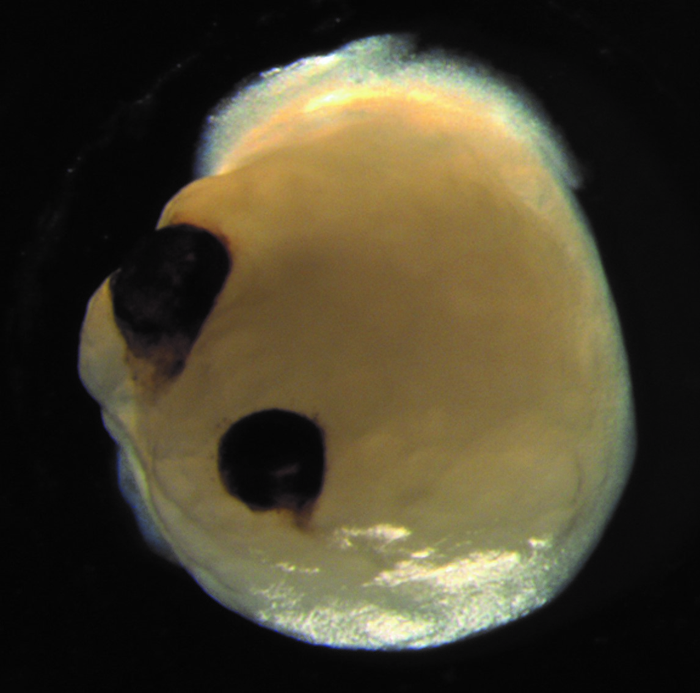 This image shows a brain organoid with optical cups.
Elke Gabriel
In the course of the study, the scientists prepared a set of chemicals that activate genetic sequences responsible for transforming stem cells into "blanks" of nerve cells and eye cells .The biologists then treated stem cell cultures with these substances, which then grew for two months.
Signaling substances produced an effect - approximatelyafter a month, structures resembling the optic cups began to form on organelles resembling the brain. Then we saw the growth of structures similar to the primitive analogs of the eyes. They reacted to light and contained retinal cells and other specific cells.
Prof. Jay Gopalakrishnan of the University of Düsseldorf
In future studies, the researchers will develop strategies that will maintain the viability of such "eyes" over a long period of time, using them to investigate the mechanisms that cause retinal disease.
Read more
Giant iceberg A74 collides with the coast of Antarctica
The Earth has already experienced a sharp rise in temperatures during global warming
Two new dinosaur species discovered in China