The U.S. Department of Energy and the National Nuclear Security Administration today announced
BREAKING NEWS: This is an announcement that has been decades in the making.
On December 5, 2022 a team from DOE's @Livermore_Lab made history by achieving fusion ignition.
This breakthrough will change the future of clean power and America's national defense forever. pic.twitter.com/hFHWbmCNQJ— U.S. Department of Energy (@ENERGY) December 13, 2022
In an experiment conducted at LLNL, scientistsspent 2.05 MJ of energy to start the fusion reactions and get 3.15 MJ of energy output as a result of fusion. This is the first demonstration of fusion ignition, the point at which the reaction becomes self-sustaining as the energy generated becomes sufficient to keep the system running.
Fusion is a process in whichtwo light atomic nuclei combine to form one heavier one, releasing large amounts of energy. In the 1960s, a group of pioneering scientists at LLNL hypothesized that lasers could be used to induce nuclear fusion in the laboratory. Scientists have been developing this idea—inertial confinement fusion—in the laboratory for nearly 60 years.
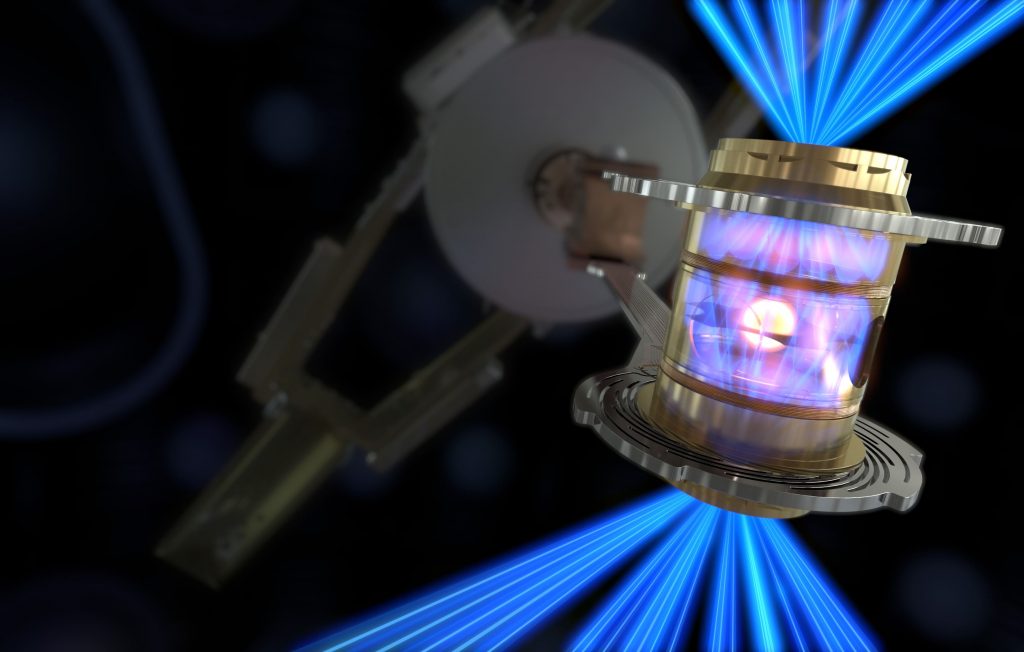 The National Ignition Center's laser energy is converted into X-rays inside the hohlraum, which then compresses the fuel capsule until it explodes. Image: LLNL
To realize this concept, in the laboratorybuilt more and more powerful laser systems. The modern experimental facility is about the size of a sports stadium. Inside the facility, powerful laser beams create temperatures and pressures similar to those that occur in the cores of stars and giant planets, as well as inside exploding nuclear weapons, scientists say.
To create thermonuclear ignition, the energyThe laser is converted into X-rays inside the hohlraum, a cavity whose walls are in radiative equilibrium with the radiated energy inside the cavity. The fuel capsule then contracts until it explodes, creating a high temperature, high pressure plasma.
Researchers believe that the world's first achievement of thermonuclear ignition opens a new era in the development of energy.
Read more:
Scientists from the permafrost zone: how they develop smart clothes and a cancer vaccine
Scientists "cheated" time and sent a photon into the past: how this breakthrough will change physics
10 scientific facts that turned out to be fakes. Cards