How did it all start?
SpaceX started 2020 with a bang—literally. January 7, a month after launch, cargo
Rocket fairing falls from space & is caught by Ms Tree boat pic.twitter.com/nJv0Ry1iKk
- Elon Musk (@elonmusk) August 7, 2019
Recovery of launch vehicles
During the year the company also improvedmethods of recovery of launch vehicles. In July, SpaceX crews managed to retrieve both halves of the nose cone in mid-air using a large net mounted on the roof of the recovery ship. Rocket Lab recently demonstrated a similar method with its Electron recovery system. These nose cones cost $6 million, so restoring them is of utmost importance.
Evacuation system for Dragon crew
Of course, before SpaceX could officiallyditching its old cargo pods, the company had to prove that the new Dragon 2 crew variants are safe and durable enough to transport people to and from the ISS.
Already in mid-January, SpaceX successfullydemonstrated its capsule evacuation system for the Dragon crew. On takeoff from Launch Complex 39A at Kennedy Space Center, the Falcon 9 unguided rocket flew just 90 seconds before the flight interruption signal was triggered, causing the crew capsule to be forcibly separated from the rest of the rocket. The capsule exploded at a speed of 644 km / h, then deployed its parachutes and landed safely in the Atlantic.
Sending people to the ISS
The next challenge for SpaceX came up in June,when the DEMO-2 mission was launched. Then, for the first time, there were real people in the crew capsule. After one failed launch attempt, astronauts Robert Behnken and Douglas Hurley successfully took off from Launch Complex 39A. This marks the first time that American astronauts have been launched from the United States since the end of the space shuttle era in 2011.
“Today begins a new era of mannedspaceflight as we once again launch American astronauts on American rockets from American soil en route to the ISS, our national laboratory in Earth orbit, NASA Administrator Jim Bridenstine said in a June press release. “I thank and congratulate Bob Behnken, Doug Hurley, and the SpaceX and NASA teams on this achievement for the United States.” The launch of this commercial space system designed for humans is a phenomenal demonstration of American superiority and an important step in our path to expanding human exploration of the Moon and Mars."
19 hours after launch, a pair of astronautsdocked and entered the ISS. The station became their temporary home for the next month. They later climbed back into the Dragon crew capsule, separated from the ISS, and did not return to the surface, making an epic ocean landing.
Certification Crew Dragon
SpaceX has been in business for almost twodecades and spent that time on improving the design and of its rockets, improving launch& recovery operations. All that hard work paid off in November when NASA officially certified Crew Dragon—the Falcon 9 rocket and the capsule itself—as the “first-ever commercial spacecraft system capable of carrying people to and from the International Space Station.” within the framework of the agency’s Commercial Crew Program,” these words were stated in NASA’s official statement.
“I am extremely proud that we are returningregular launches of manned space flights to American soil on American rockets and spaceships, Bridenstine emphasized. "This certification milestone is an incredible achievement for NASA and SpaceX that highlights the progress we can make in partnership with the commercial industry."
New mission with four astronauts
As if that wasn't enough to giveSpaceX CEO Elon Musk has reason to celebrate. But a week after NASA’s congratulations, the CREW-1 mission successfully launched from the Kennedy Space Center in Florida - there were no longer two, but four astronauts on board. NASA astronauts Mike Hopkins, Victor Glover, Shannon Walker and JAXA astronaut Soichi Noguchi arrived at the ISS on November 16 ahead of a six-month stay on the station. By the way, Victor Glover is the first black astronaut to live on board the ISS for six months. In the 22 years the ISS has been in orbit around the Earth, African Americans have never stayed on board for more than a few days. Musk assures that the CREW-1 mission is just the beginning. SpaceX has plans for two more crewed launches in 2021 and again in 2022.
Contract for "spy satellites"
In 2020, SpaceX was not limited to NASA.In August, the U.S. Space and Rocket Command (SMC) announced that it had selected SpaceX and its rival ULA to enter into five-year contracts for services to launch national security space assets - essentially launching spy satellites into orbit. The contract is valid until 2024, with the first, colossally expensive launch of $ 316 million due in 2022. What's more, in November, Space Force gave SpaceX an additional $ 29.5 million for a one-year contract that “provides early exploration and surveillance of the fleet for space missions not related to national security,” the official announcement said.
“This is a significant day, which has become the culminationyears of strategic planning and effort by the Department of the Air Force, NRO and our launch services partners,” William Roper, assistant secretary of the Air Force for acquisition, technology and logistics, said in a statement in August. - Maintaining a competitive launch market, serving both government and commercial customers: We encourage continued innovation in providing secure access to space. A new era of space launches is opening.”
Launch of new generation GPS satellites and military contracts
In addition, SpaceX has signed an agreement ondelivery of new generation GPS satellites into orbit as part of its deal with SpaceForce. The GPS III spacecraft has three times more accuracy and eight times better anti-jamming capabilities. Moreover, it will remain in orbit for 15 years - 25% longer than the current generation of satellites.
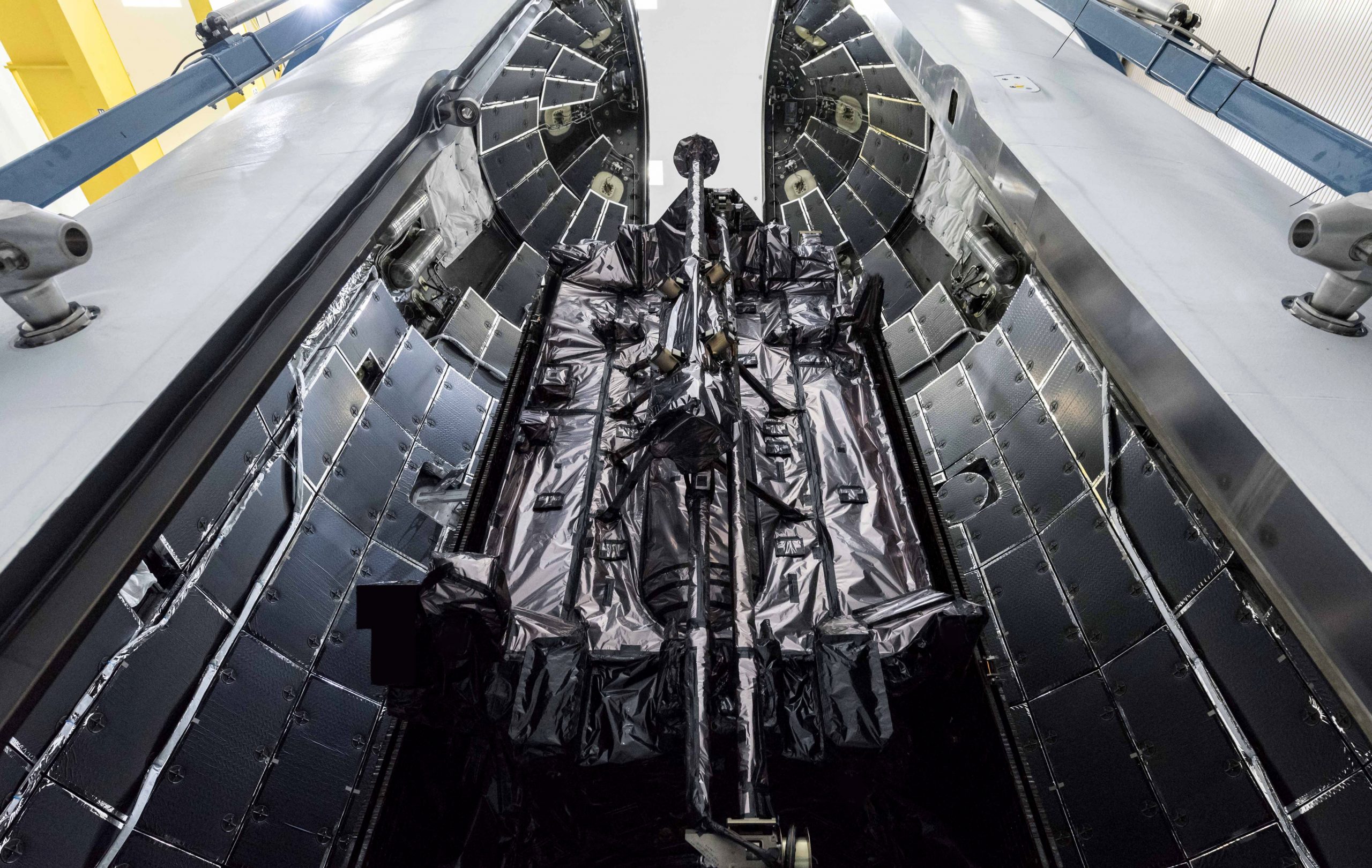 GPS III
SpaceX's military contracts aren't limited to the United States. In July, the Falcon 9, which carried Bob Behnken and Doug Hurley to the ISS, carried the military communications satellite ANASIS-II for South Korea on board.
August 30 another Falcon 9, on board whichSAOCOM 1B, an Argentine Earth observation satellite used to provide radar data to emergency responders, was launched from Cape Canaveral. Incidentally, the rocket went south (towards Cuba), not east. Rarely do polar orbit launches such as this one take off from the east coast. They usually fly from Vandenberg Air Force Base in California, so they don't need to fly over island countries with which the US nearly fought a nuclear war. However, SpaceX managed to get a special exemption for the Air Force thanks to the Falcon 9's ability to automatically self-destruct if the rocket deviates from its intended flight path. This means that the probability of its fall on populated areas was almost zero.
New successes Starlink (and problems)
SpaceX has also made significant progress inoperation of its fledgling orbital broadband communications system, Starlink. Starting with the successful launch of about 60 microsatellites (the maximum the Dragon capsule can carry) in early January, SpaceX later launched 14 more sets.
“The performance of satellites is far superior toindicators of the traditional internet. Our global network is not limited to terrestrial infrastructure and Starlink will deliver high-speed broadband internet to places where access was unreliable, expensive, or completely inaccessible, ”says the SpaceX website.
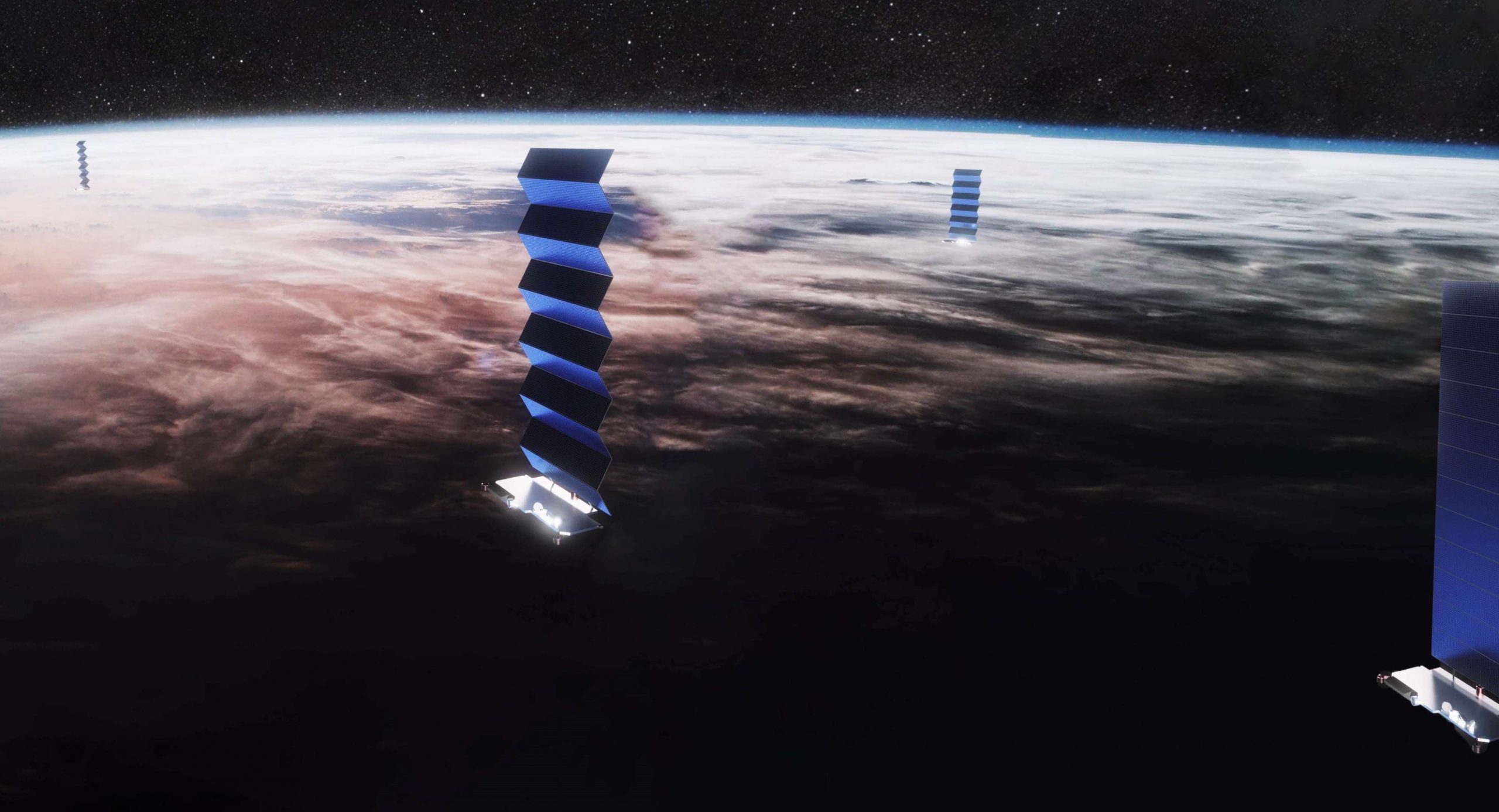
At the end of November, the company had successfully launched more than950 satellites out of a planned 1000 for 2020. Ultimately, SpaceX wants more than 42,000 Starlink satellites to span the globe. The latest launch went so well that SpaceX is already preparing a private beta of its upcoming Internet service ($99 per month to join). Thanks to recent regulatory approval, the company will begin offering Starlink internet in Canada when the service officially launches by 2022.
Of course, the Starlink program was not withoutdisagreements. Shortly after the launches began, astronomers expressed concern that a constellation of reflective microsatellites could interfere with ground-based telescopes. Especially in the quantities that Musk predicts. The company was accused that the entire project could potentially slow down scientific progress in general. Hundreds of scientists and researchers later signed on to the workshop report at the SatCon1 conference in August, arguing that "no combination of mitigations can completely avoid the impact of satellite footprints on the next generation of science programs." In response, SpaceX began adding solar shields to Starlink to reduce their reflectivity.
Universal launch system of the future - Starship
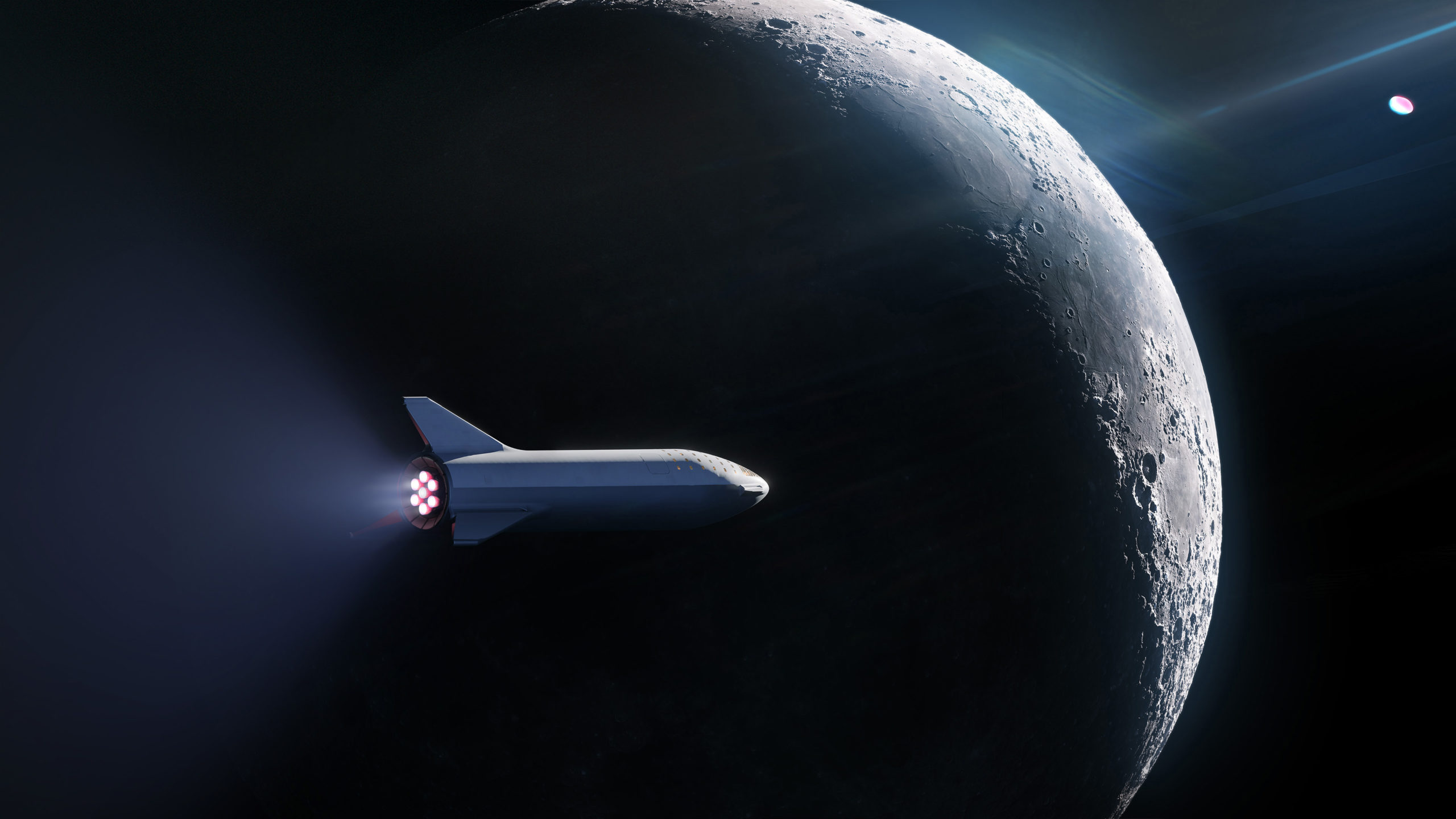
Looking ahead, we note that SpaceX will notforever rely on your “dragons” (Dragon) and “falcons” (Falcon). The company is already working to create a unified space launch system that can—and will—carry passengers as easily as cargo and satellites. We are talking about the Starship super-heavy rocket. SpaceX said Starship, which will not only carry people to Mars, but will be a fast and reusable launch system for quickly getting resources to low Earth orbit and the Moon, is the company's "top priority" now.
Of course, the year didn't start well for Starship.- Another prototype, SN4, exploded on the launch pad in May. And yet, the ill-fated SN4's successor, SN5, managed to escape an explosion during a test flight in August.It also successfully climbed 150 meters from its launch pad before switching to land at a short distance at another pad.
Good Starship SN8 static fire! Aiming for first 15km / ~50k ft altitude flight next week. Goals are to test 3 engine ascend, body flaps, transition from main to header tanks & landing flip.
- Elon Musk (@elonmusk) November 24, 2020
Starship's biggest challengeto today the first test flight at high altitude can happen in the near future. The company's latest prototype, SN8, was completed in September and was originally scheduled to fly to an altitude of about 18,00m before returning safely to Earth. This ceiling was lowered to 15,000 m at the end of September for undisclosed reasons. Since then, the test itself has been postponed several times. However, in late November, following a successful static engine fire, Musk tweeted that proper flight testing was imminent.
What's the bottom line?
Whatever happens, performanceSpaceX has already made a lasting impact on the aerospace industry in 2020. The European Union, for example, has already announced that it is advancing the deployment of its Galileo navigation satellites, pushing back the schedule by 3 years to 2024 and is also investing €1 billion for for the first time researching reusable rocket technologies and stimulating startups in industry. When you combine SpaceX's already significant revenue stream of $2 billion as of 2019 with its growing military contracts and scientific and commercial successes, the conclusion is that the company will maintain its dominance in the market. in the coming years.
Read also
The most distant and ancient galaxy in the Universe has been found
20 new species of animals and plants found in the Andes
Scientists have discovered where the red giants disappeared from the center of the Milky Way