The ice sheets of Norway are an excellent repository of ancient artifacts.acidic soils, which
Over the past two decades, several thousand ancient artifacts belonging to Bronze Age hunting tribes who hunted reindeer in northern Europe and southern Scandinavia have been found in areas of melting mountain ice.One of them is leather shoes, about 3 thousand years old.Years.
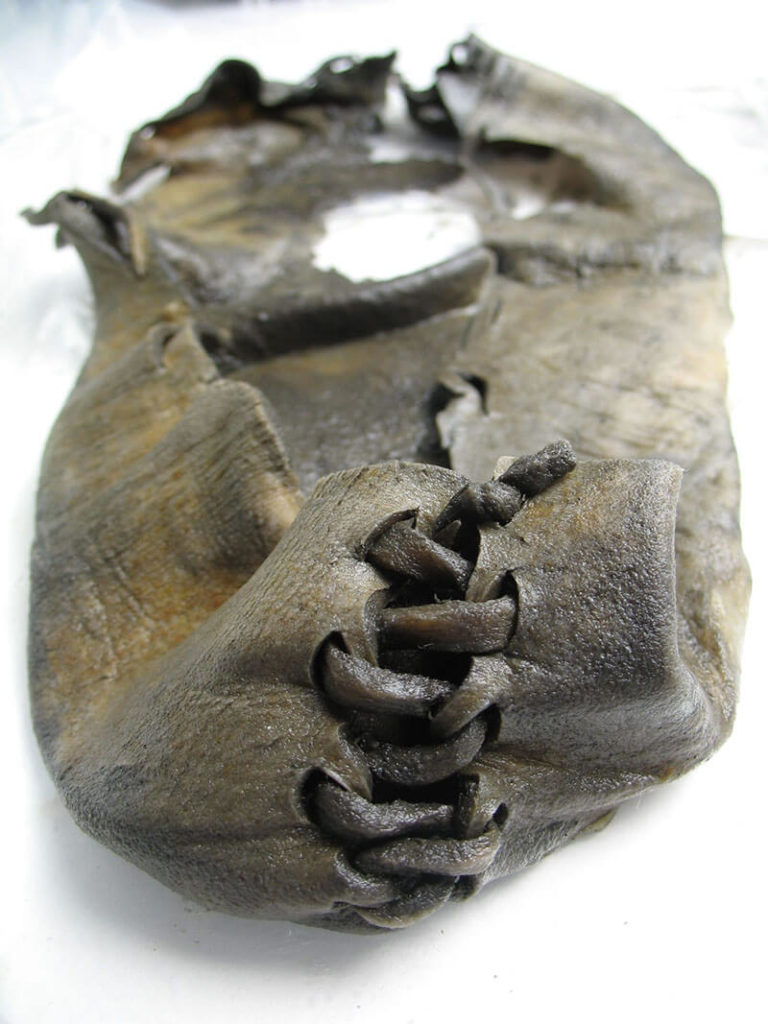 Photo: Vegard Vike, Cultural History Museum in Oslo
Objects and remains of animals were found andhuman activity, the existence of which we did not even suspect. They include everything from horse equipment and clothing to shell-headed arrows, wooden shafts and feathers. Hardly a year goes by without amazing discoveries that push the boundaries of our understanding.
Birgitte Skar, archaeologist at the Norwegian University of Science and Technology
The shoe was discovered during researchice patch in the Jotunheimen mountain region in southern Norway in 2007. However, it still represents a landmark find. According to the researchers, these are not only the oldest shoes in Norway, but possibly the oldest piece of clothing ever found in all of Scandinavia.
It's about a size 36 or 37.modern shoes. Scientists believe that the "shoe" could belong to a woman or a young man. Next to the boot, the researchers also found an arrow and a wooden shovel. They believe that this place was an important hunting ground.
All finds were made in ice spots - this isareas that form at high altitudes where snow and ice deposits accumulate and do not completely melt in summer. Unlike glaciers, such patches of ice do not move, so the objects in them remain stable for hundreds or thousands of years.
Researchers note that climate change andthe gradual melting of the ice cover requires more active research. After "reopening" ancient objects must be quickly removed so as not to suffer. Archaeologists plan to monitor the ice slicks for quick excavations once the ice slick breaks.
Cover photo: Espen Finstad
Read more
Chinese AI predicts the course of hypersonic missiles. The retaliatory strike will be ahead
The secret of longevity is revealed. It's all about gene expression, and here's how you can influence it
Scientists search for minerals for electric vehicles at the bottom of an ancient ocean