Japanese researchers analyzed the records of Byzantine scientists about solar eclipses. Data
In their work, scientists examined recordsByzantine Empire to locate and locate total solar eclipses observed in the Eastern Mediterranean from the 4th to 7th centuries. Records of this time, coinciding with the fall of Rome and the great migration of peoples, are especially scarce in other historical documents.
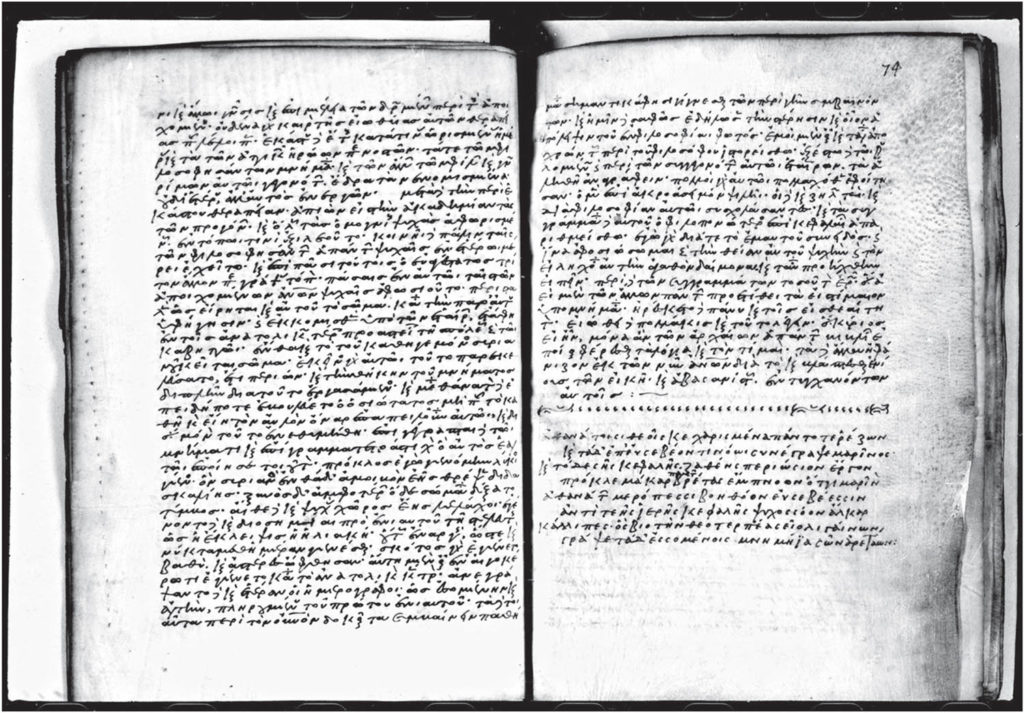
Although the original eyewitness accountsperiod are mostly lost, scholars may use quotations and translations of ancient manuscripts in other documents. At the same time, in order to use the obtained data, scientists need accurate confirmation of the place and time of observation of the total eclipse. Like when the stars are visible during the day.
Through hard work, the researchers were able todetermine the probable time and place of five total solar eclipses. They were observed in the Eastern Mediterranean region in 346, 418, 484, 601 and 693. At the same time, the regions in which this phenomenon could be observed differed from those calculated theoretically.
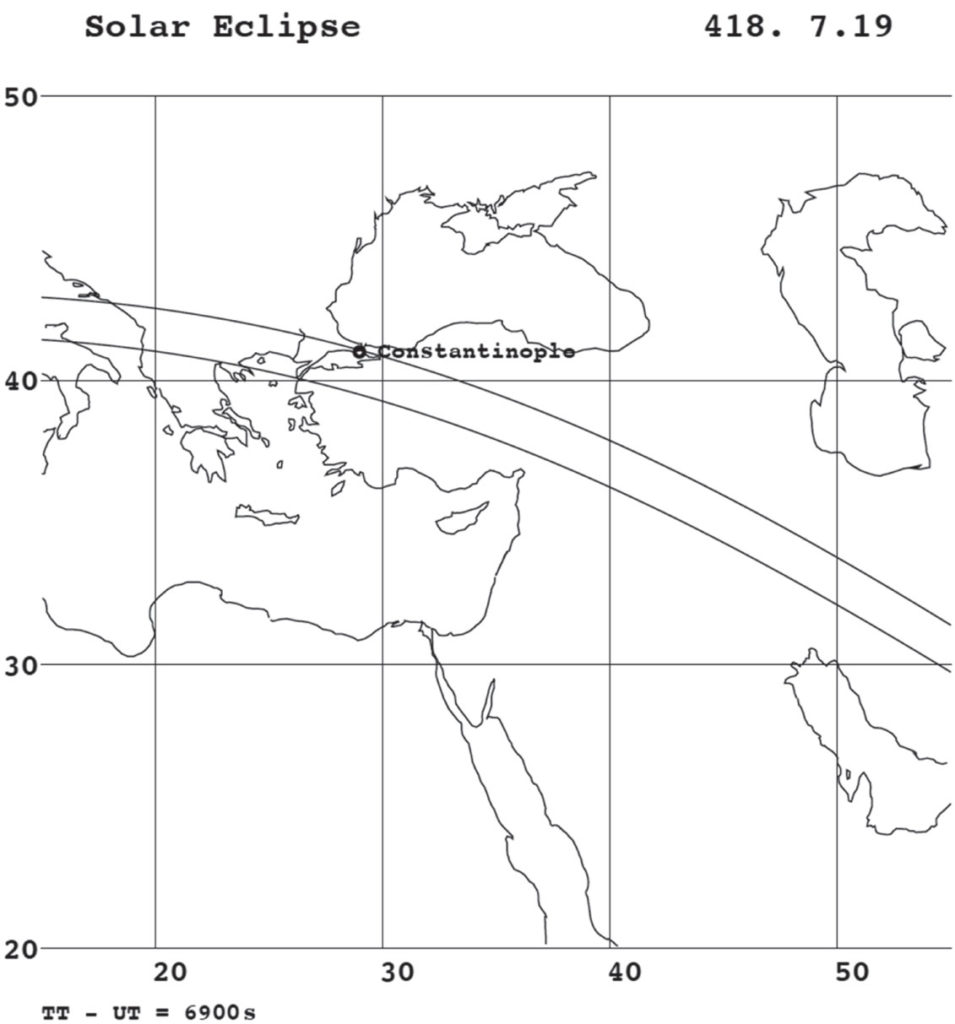
For example, the eclipse of July 19, 418 could besee in Constantinople. According to reports in an ancient text, it was so full that stars appeared in the sky. The previous model assumed that the eclipse this year was impossible to observe in Byzantium.
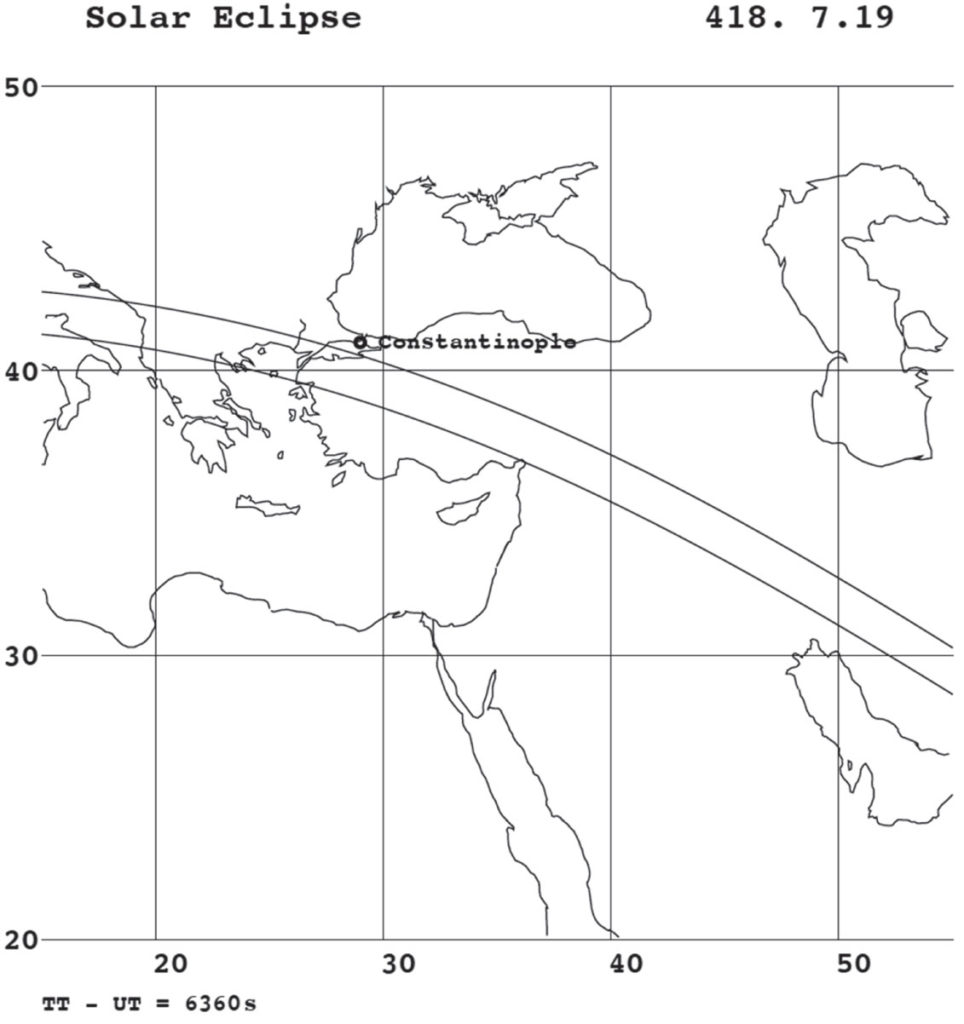
Model of the solar eclipse of 418 based on the classical model (left) and the refined one (right). Image: Hisashi Hayakawa et al., IOP Publishing
Scientists use these observations to refinea model that describes how the Earth's rotation around its axis has changed over time. The combined results showed that delta T (the difference between the length of the day in seconds and the actual rotation of the Earth) should increase in the 5th century and decrease in the 6th and 7th. This means that during this period, the speed of the Earth's rotation changed - at first it was less than predicted, and then more.
Read more:
Physicists explain Hawking's 'cosmic mismatch': how it will change science
See photos of the Sun in record resolution
The space plane will deliver cargo to the ISS and land at a regular "airport"