Chemists from the Massachusetts Institute of Technology presented a new processing technology
The new approach proposed by scientists is based onhybridization of DNA molecules. First, the researchers attached a single strand of DNA to an electrode. The complementary chain was then added to the catalyst floating in aqueous solution. When this strand approaches the first, they hybridize. This means that they become connected by multiple hydrogen bonds between correctly paired bases. As a result, the catalyst is firmly attached to the electrode.
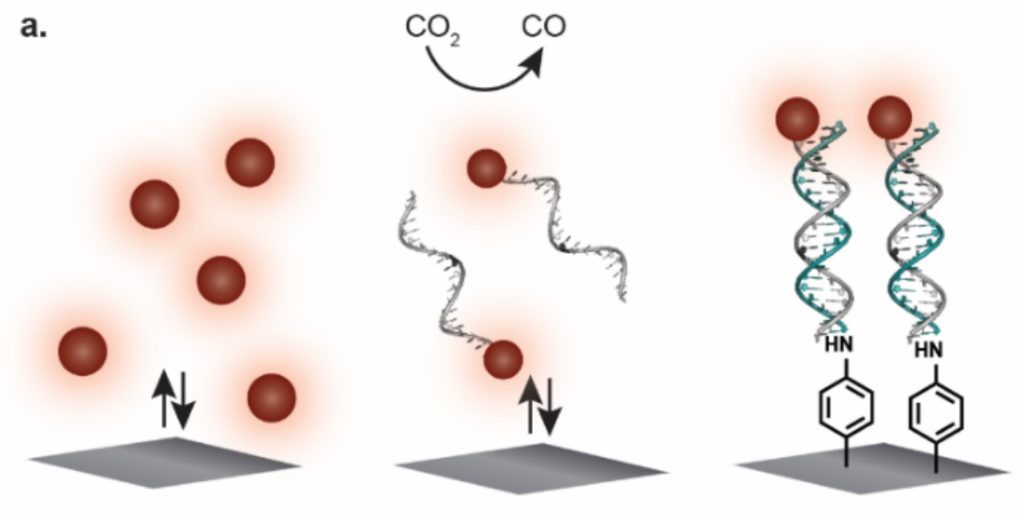 Electrochemical decomposition of carbon inthe presence of a catalyst (left), a catalyst with attached DNA (center), a catalyst and an electrode connected by hybridized DNA molecules (right). Image: Gang Fan et al., ChemRXxiv
Experimental results showed thatthe modified catalyst exhibited good solubility, high stability, and did not degrade at the high voltages required for industrial processing of carbon dioxide. In addition, three different catalysts modified with this method significantly increased the amount of carbon monoxide produced per minute.
Carbon dioxide is produced as a resulta large number of industrial productions and is one of the factors influencing climate change, scientists explain. The by-product output of this gas is enormous and can be used to produce other carbon compounds and fuels, but is difficult to convert due to the high stability of the molecules.
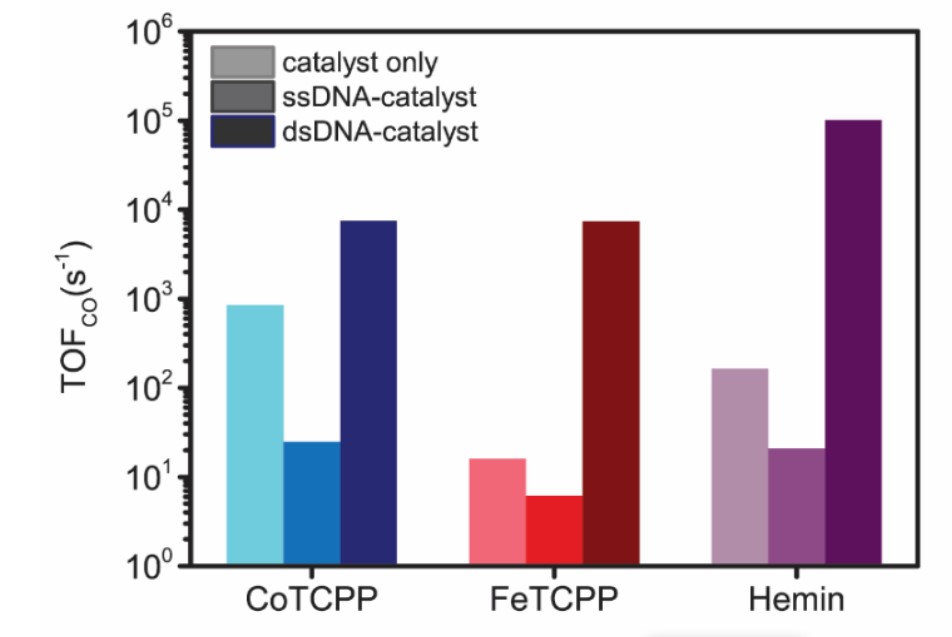 Change in the efficiency of various catalysts when using hybridized DNA molecules. Image: Gang Fan et al., ChemRXxiv
Traditional electrochemical decomposition approachwith the release of carbon monoxide requires significant energy costs, which negate the economic and environmental benefits. The efficiency of this process can be improved, but this requires a catalyst that will effectively cover the electrodes.
Read more:
The ancient Vikings suffered from a dangerous disease. It is caused by a parasite from Africa
Plant on Mars produces oxygen at the rate of an average tree
The largest human organ was recreated in the laboratory. It is twice as strong as ours.