Planetary scientists from the University of California, Riverside used detailed models of the solar system
Most of the orbits of the planets are not round, buteccentric. They either approach the Sun or move away from it. The influence of other objects on the trajectory of the planetary system cannot be underestimated. For example, if Jupiter remained at the same average distance from the Sun, and its orbit were more eccentric, then the Earth's orbit would change in the same way.
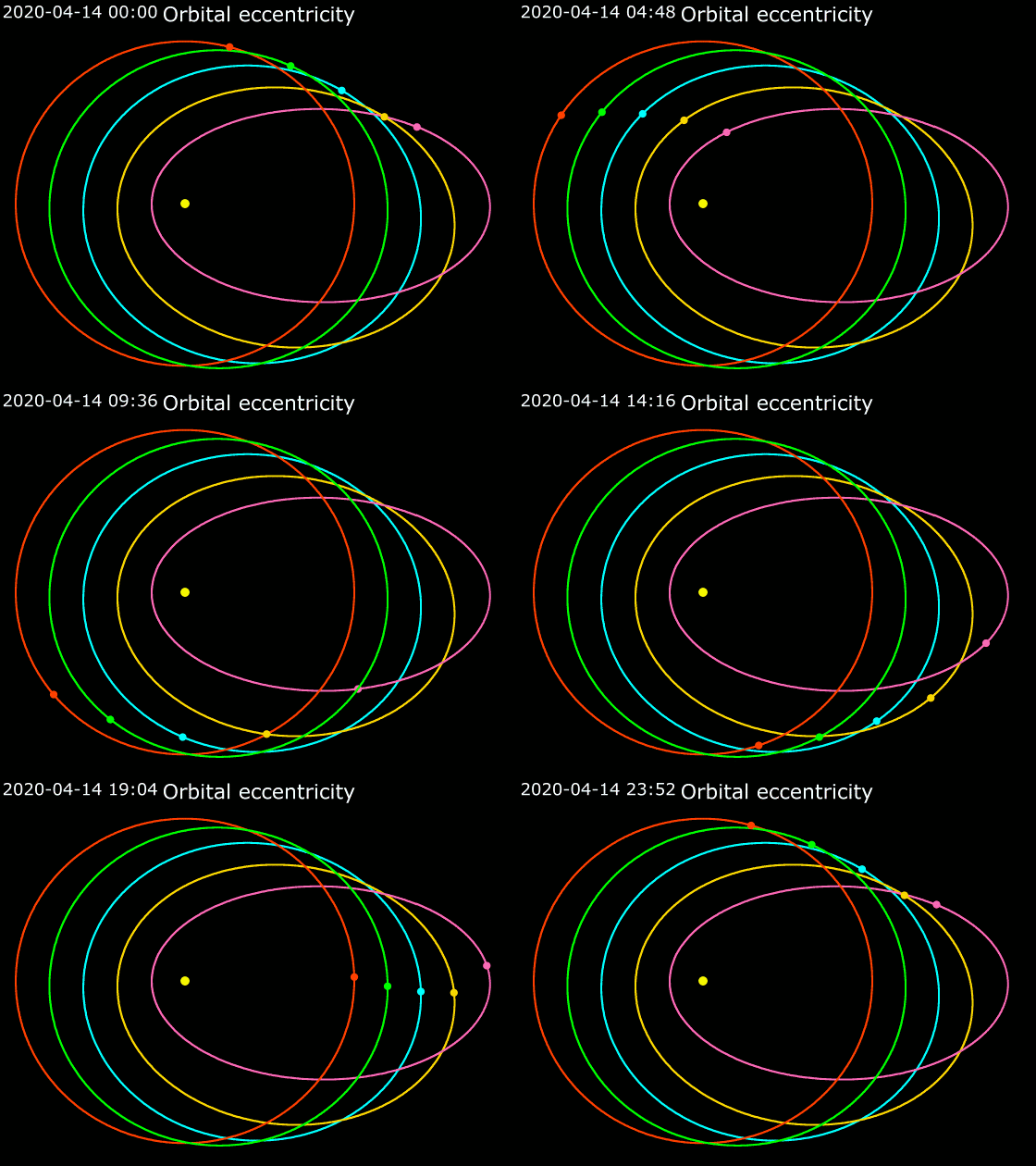 Planets of orbits with different eccentricities. Animation: NASA/JPL-Caltech
Optimal conditions for most life formslocated in the range from 0 to 100°C, scientists note. If Jupiter caused parts of the Earth to occasionally move closer to the Sun at shorter distances, then parts of the Earth's surface that currently freeze below freezing would become warmer, resulting in higher temperatures in the habitable range.
Scientists use their theoretical models toin order to optimize the search for potentially habitable exoplanets. The traditional approach determines the habitable zone based on the distance from the star. But in this case many other factors are not taken into account.
For example, in their work, scientists showed the influenceJupiter at the angle of inclination of the earth's axis. If the gas giant were a little closer to us, it would cause a strong change in the inclination, as a result, there would not be favorable conditions for life on Earth.
Such details are very difficult to observe on a large scale.distance, but knowing how the planets in the solar system will behave under certain conditions, it is possible to assess the likelihood of conditions for life on distant exoplanets.
Read more:
The ancient Vikings suffered from a dangerous disease. It is caused by a parasite from Africa
Plant on Mars produces oxygen at the rate of an average tree
The largest human organ was recreated in the laboratory. It is twice as strong as ours.
Cover photo: NASA, ESA, A. Simon (Goddard Space Flight Center), and M.H. Wong (University of California, Berkeley)