Researchers analyzed regolith samples collected by the Chinese lunar rover and delivered to Earth
Materials collected by Chang'e 5 - the youngestregolith delivered to Earth. It was obtained in the lava region of the Ocean of Storms and formed about 2 billion years ago, at a time when the Moon was still volcanically active.
The researchers analyzed about 3 thousand.particles smaller than 2 mm in size to study the geological history of the Earth's natural satellite. The three particles had unusual petrological and compositional features, the scientists said. They are vitrofire (volcanic glass) with a high titanium content, encased in glassy rock.
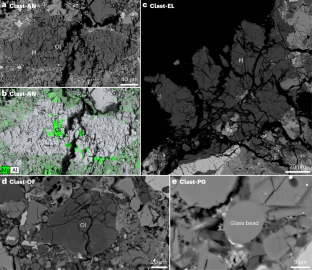
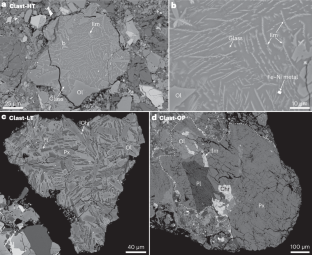
Photos of previously unknown basalt rocks under a microscope. Image: Xiaojia Zeng et al., Nature Astronomy
The authors of the study believe that these particles,whose composition differs from all previously known materials, were formed in regions of the Moon located at a distance of up to 400 km from the collection site, and were scattered due to many collisions with asteroids. At the same time, scientists note that they expected that unknown materials would make up to 10% of all samples, but in fact they are much less.
This result suggests that researchersModels of how impact ejections move materials across the lunar surface need to be revisited, at least in this new region. The researchers note that further analyzes of the collected rocks will help to learn more about the history of the moon and its geological activity in the past.
Read more:
The tomb of the “midwife of Jesus” was unearthed: scientists told what they found there
The "Christmas Comet" flies to the Earth. Last seen by Neanderthals
Two genes found in humans that are unlike any known
On the cover: an artistic illustration of the Chang'e-5 lander on the Moon. Image: China News Service, CC BY 3.0, Link