The World Health Organization, in its guidance on the burial of COVID-19 victims fromOn March 24, it is stated that
In the guide to the burial of victims ofA new type of coronavirus for funeral workers released by the UK government says the risk of contracting SARS-CoV-2 victims is due to the generation of droplets of fluid as a result of artificial air movement during primary care for the deceased. In addition, the virus may remain on the body after a post-mortem examination using power tools.
At the same time, the Italian Federation of Enterprises Operating in the Field of Energy, Hydrology and the Environment, in a letter to its employees, explains that after the death of a patient with confirmed COVID-19 from the lungs,In addition, it can escape the air that contains the virus.be in the fluids that the body secretes.
These measures are much more lenient than the rules for burying the dead of Ebola, in which the deceased canPose a danger to others within 50 days of death.Nevertheless, the epidemic is very widespread and changes a lotRules for the burial of the dead.
In some regions, such as northern Italy and New York State, morgues and cemeteries are in short supplyThe bodies of some coronavirus victims either remain unidentified or unclaimed by family members.
Traditional funerals are almost out of the question due to the fear of spreading the disease in a large crowd of people, all of which forcesrelatives to mourn the dead from a distance or watch the process through a monitorComputer.
Even when close family members are allowed to attend the service in person, they still often have to keep a distance of 1.5 meters from each other.This means that the coronavirus, which has interfered with such a large part of life, is similarly affecting the coronavirus.on all aspects of death.
Italy
All those who died from coronavirus die in isolated boxes, and the farewell most often takes placeIn Italy, during the COVID-19 epidemic, it is validA law prohibiting religious ceremonies, as well as funerals in the traditional sense.
In the most affected areas of the country are heldshort ceremonies without traditional processions from the residence to the cemetery. Funeral bureau employees are involved in their organization - first they select the coffin, coordinating its shape, type and material with the relatives of the deceased via a messenger, take the body from the hospital on their own, take it to the church for a short burial service, and then to the cemetery or crematorium.
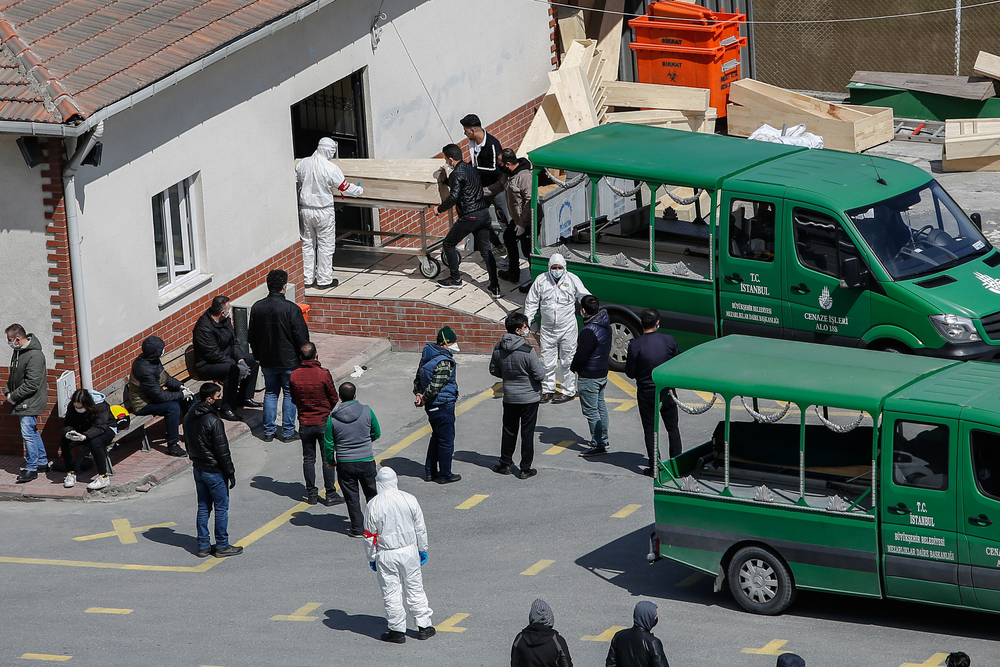
However, due to the large number of deathsthe procedure does not always look like this. On March 18, bodies were transported from the hospitals of Bergamo, the epicenter of the epidemic in Italy. The army delivered the bodies of 61 dead to cremation sites in 12 Italian cities, including Modena and Parma. The authorities took such a step because of the overload of the local crematorium and the lack of places in city cemeteries.
In Spain, families can only say goodbye to their loved ones from a distance – public funerals are prohibited.
China
February 1 National Health CommissionChina issued a decree stating that all victims who died from coronavirus should be cremated at the nearest facility. “No farewell ceremonies or other funeral events involving the corpse should be held,” the announcement said.
At the end of January, Wuhan and most of China were closed for strict quarantine, so the families of those who died fromCOVID-19 Until recently, it was extremely difficult to collect the ashes of your loved ones.Now the authorities of Wuhan, which accounted for the most deaths in the country, are issuingAshes for burial only by appointment - the queue for it has already stretched for several weeks.
Russia
In Russia, in accordance with the recommendation of the Ministry of Health, those who died from COVID-19 are buried in closed coffins. Farewell ceremonies are not prohibited, but a “minimum number of people” may be present.
Those present must wear masks and gloves,maintain social distance, and after the procedure - undergo mandatory disinfection. When contacting relatives of the deceased, funeral agency employees must maintain a distance of 2 meters, including in the cemetery.
According to representatives of the Ministry of Health, there are no restrictions on the burial place. At the same time, Rospotrebnadzor states that the farewell ceremony during the epidemic takes place without the participation of relatives.
USA
In the United States, the epicenter of the epidemic of the new type of coronavirus was the state of New York - there are now more cases there than in any other country in the world except the United States. The number of deaths exceeds 15 thousand.
Places in local morgues ended at the end of March - now there are mobile refrigerators near many hospitals where the bodies of the dead from COVID-19 are temporarily stored.
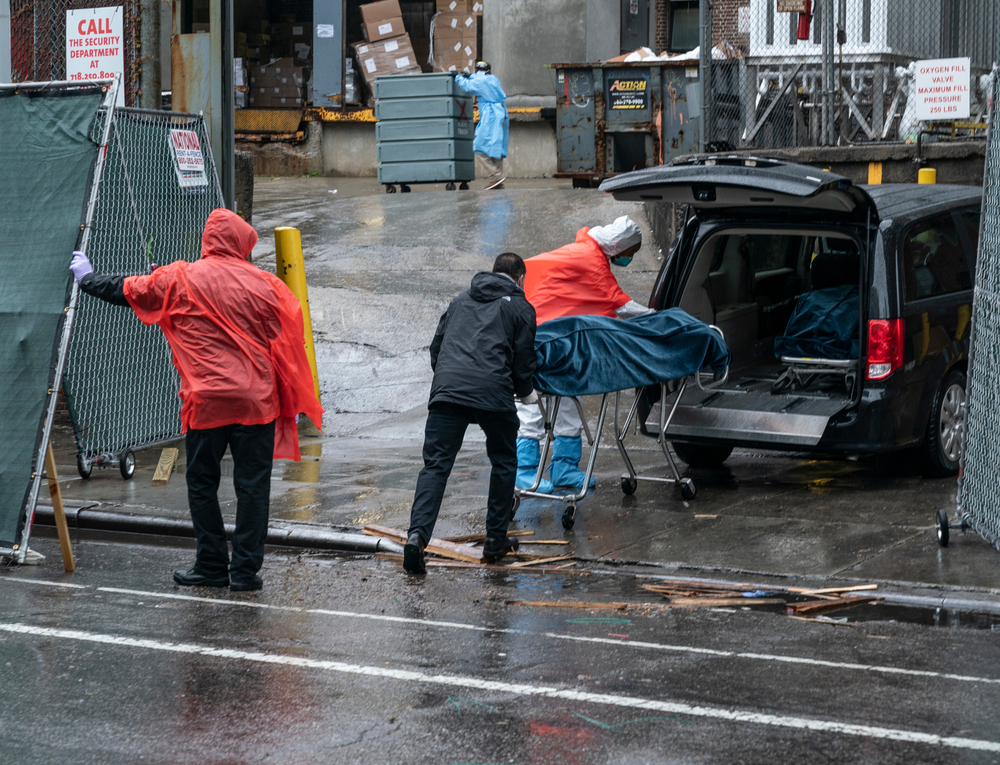
On April 6, New York authorities passed a resolution,according to which the families of the deceased have 14 days to organize the funeral of a relative. If this does not happen, his data will be cataloged, and the body will be buried at the mass burial site on the Bronx Island.
Ecuador
The highest number of confirmed cases of COVID-19recorded in the main city of Guayaquil. At the beginning of the outbreak in late March, morgues and hospitals in the country were overloaded, and a shortage of wooden coffins was recorded in the country. Then the authorities decided to bury the dead from a new type of coronavirus in cardboard coffins - relatives received 2 thousand of such coffins.
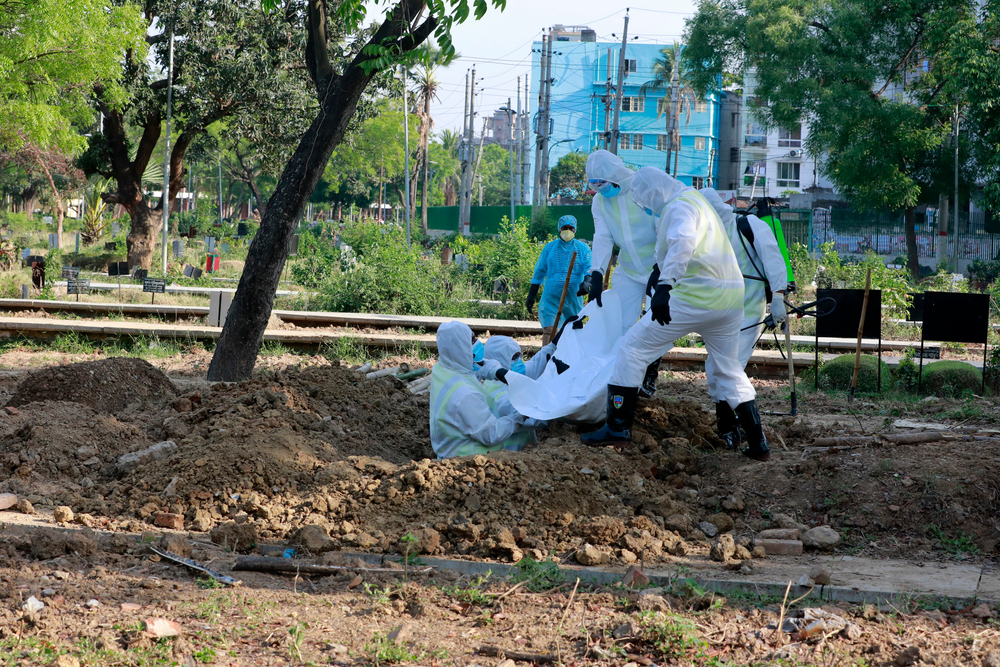
In this case, prior to burial, the corpses of those killed byCOVID-19 lay on the streets for several days - this is due to the overload of hospitals that could not accept all the sick. According to estimates by the head of the coronavirus control headquarters, Jorge Vateda, the number of deaths will increase and will be at least 4.5 thousand.