Honeycomb vs. Companion
First, let's figure out how cellular communications work. Imagine the work of telephone operators:
Each base station has a limited areacoverings. To ensure that the signal is not interrupted, these zones must intersect. Therefore, the territories where subscribers are served are divided into hexagonal cells, similar to honeycombs. A base station is placed in each corner and connected to the central fiber optic cable.
Cable laying and tower construction -the main problems of cellular communication. Installing equipment in hard-to-reach areas is inconvenient and often unprofitable. Therefore, in many places on Earth there is still no cellular connection. In Russia, with its vast territory, the issue of digital inequality is very important: in 2014, the government issued a decree that universal communication services should be provided even to sparsely populated areas.
Satellite communication solves this problem.The satellite receives a signal from a ground station and broadcasts it to other objects in the coverage area. The range of satellites is greater than that of base stations, and in space, devices can be positioned anywhere - even over oceans or permafrost regions. The global satellite network (which is what Starlink is doing) is the best opportunity to provide communications throughout the Earth.
But there are difficulties here too.The signal from the satellites is not very stable yet, and for a high quality communication it is necessary to use not only large antennas, but also rather sophisticated devices to suppress noise and interference. Satellite communications are more strongly influenced by weather and atmospheric effects than cellular communications. In addition, cellular communication is more convenient to use on the go. Satellites require the installation of stationary equipment to receive a signal, and although Starlink promises to develop a mobile system for transmitting and receiving a signal, it is not known how well it will perform when the user moves by train or in the subway.

The satellite communications market is growing all over the world. Starlink leads
The satellite communications market in Russia is constantly growing.2020 was no exception: compared to 2019, the growth was 9%. The main companies involved in satellite Internet are konnect, Gazprom Space Systems and RTKomm. Another serious company may emerge in 2021. Russia will start deploying a satellite constellation within the Sphere global communications program. To do this, they plan to combine the GLONASS satellite navigation system, Earth remote sensing systems, Express-RV and Gonets satellite communication systems. They want to launch the project by 2030.
Global operators also show in Russianice results. Iridium, the only satellite operator with 100% coverage on Earth so far, serves more than 6,000 users and 79,000 IoT devices.
Completing Starlink Mission 28 is likely stillwill more stimulate the growth of the satellite communications market and change the distribution of forces. Now many operators operate only in a limited area - for example, only in one country - and provide specialized services (serving industrial IoT). The Starlink system will provide satellite communications throughout the Earth for all consumers. Iridium can compete with Elon Musk's company, but given the scale of the projects, Starlink is likely to take the lead. The Iridium constellation employs only 82 devices, and the first "layer" of the Starlink system has 1,635 satellites. And with the increase in the number of repeaters, the quality and stability of communication grows.
Applications: Rare animal tracking, vaccine delivery and internet in harsh climates
The advantages of satellite communications can be appreciated right now.It is, for example, used to develop hard-to-reach areas such as the Arctic. This is an important region for the country's economy, where there are deposits of coal, oil, gas, diamonds and ores. The new infrastructure will help in the exploration of the region and the operation of enterprises. In addition, in the Arctic zone there are many settlements that are remote from each other and from large cities, whose residents cannot even call for help. Due to the harsh climatic conditions, it is impossible to build stations and run cables there. Therefore, satellites are the only available option.
Satellite communications are actively used inindustrial IoT. Data transmission is often carried out from remote regions, where, for example, mining takes place. It is possible to deliver and receive information from such zones only with the help of satellites. Due to the development of machine interaction services, signals need to be exchanged very quickly. Sometimes information is transferred from one drone to another, or sent aboard a ship on the high seas. In such cases, it is not possible to use physical cables.

Examples of using satellite communications can befound in ecology. In nature reserves, collar trackers are used to track animals released into their natural environment. British Petroleum uses Flylogix drones and satellite communications to collect data on coastal methane pollution. Satellites have the potential to help locate forest fires and restore communications after natural disasters.
Satellite communications help fightthe spread of COVID-19. Iridium recently teamed up with Swoop Aero to deliver the vaccine to remote corners of the world. Iridium systems allow you to monitor the location and condition of drug packages.
The future of satellite communications: one and a half billion people connected to the network and the Internet in remote regions of the Earth
Satellite communications are only gaining momentum.Mining enterprises will be able to establish remote communication between different sites and offices. Specialists will not have to go to the point in the event of a breakdown or, if necessary, instruct a new team of specialists. All consultations can be video-based.
The same goes for business:wherever a production or warehouse is located, all stages of work with products are monitored using IoT tools in real time. The introduction of remote video surveillance to control the work of enterprises will become much more affordable. Finally, satellites will help you do business in hard-to-reach regions. At the same time, the satellite system is capable of transmitting data faster than the cellular one. Now the main question is how to establish interaction between devices and ensure a connection without interference.
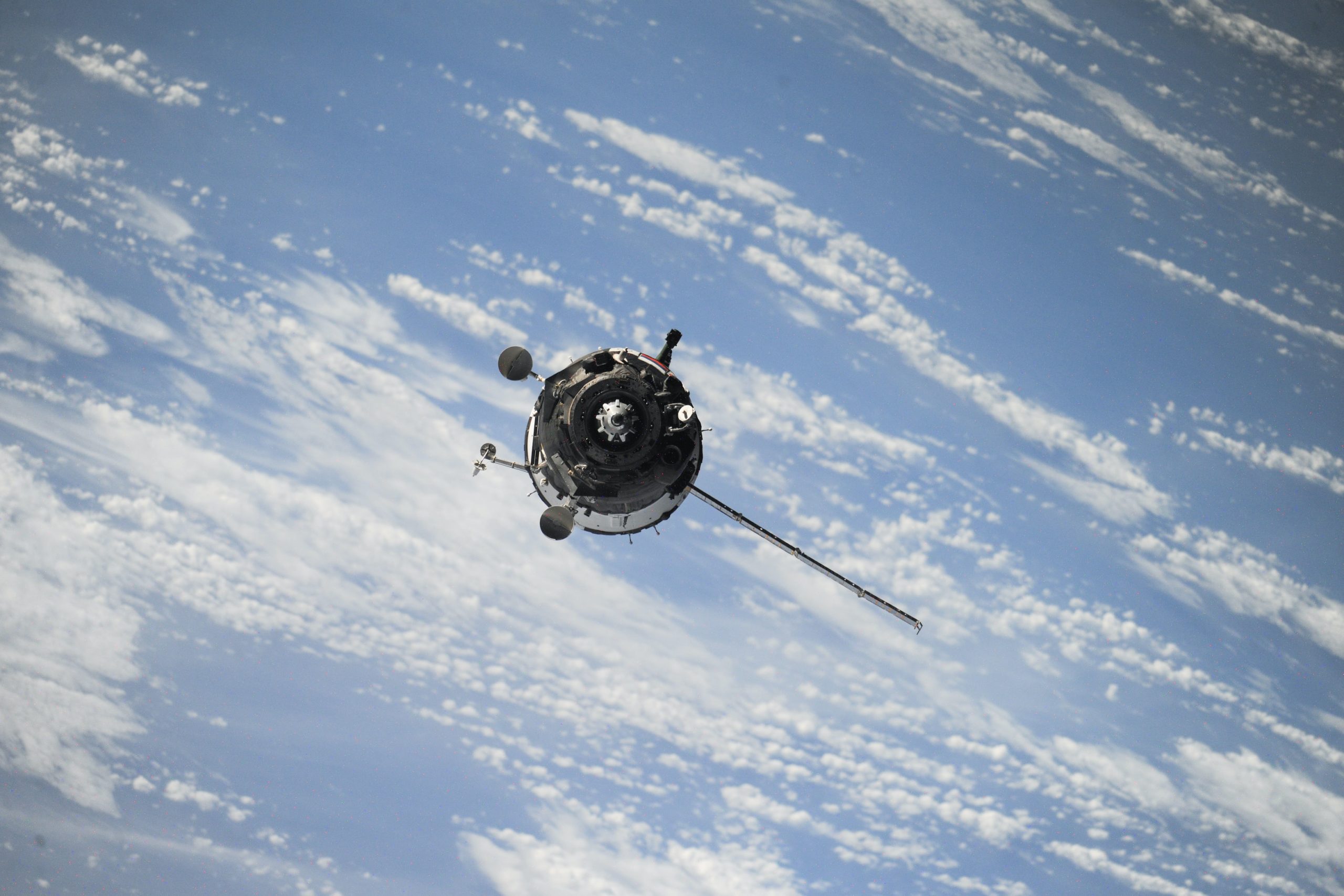
Satellite communications are the main tool in the fight againstdigital divide. Today, 60% of the world's population does not have access to high-speed Internet, and 1.6 billion people cannot use the mobile network. Thanks to satellites, the Internet and mobile communications on Earth will become limitless.
But that doesn't mean we're watching the sunsetcellular era. Satellite communications are so far less stable, predictable and accessible. Cellular operators are also constantly growing, developing and offering more and more profitable and convenient solutions. Therefore, in the future, users will have twice as many opportunities, and the type of connection, most likely, customers will choose for a specific task.
Also, the space segment is possiblyintegrate with other technologies to expand the capabilities of the 5G standard. Satellites can be used to create a hybrid configuration. They will consist of broadcast and broadband infrastructures providing 5G services to users. As a result, it will be possible to achieve a universal connection "of everything, always and everywhere."
To read Further
See a heavy attack drone that carries a ton of weapons
Scientists have been unable to catch Rambo's fox for three years. It prevents rare animals from being released into the forest.
A spaceship several kilometers away: everything that is known about China's new project