Researchers at the University of Leeds have developed a robot that can get through the narrowest of spaces.
Miniature robot Joey weighs only 70 g,fits in the palm of your hand and can move through pipes with a diameter of only 7.5 cm. It moves on 3D-printed “leg-wheels” that roll along straight sections and overcome small obstacles. The device is equipped with a range of energy-efficient sensors that measure distances to walls, joints and corners, navigation tools, a microphone, a camera and spotlights for capturing faults in the pipeline network and storing images.
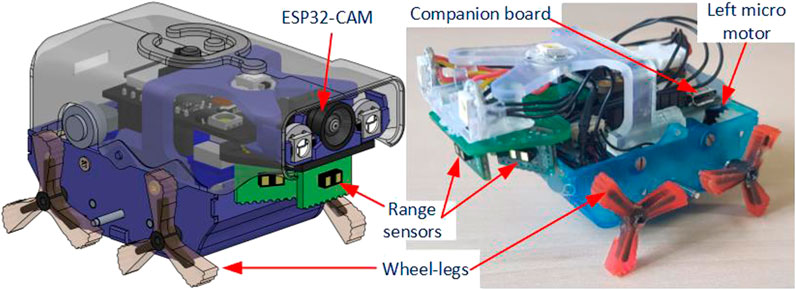 Robot Joey: model (left) and prototype (right). Image: Thanh Luan Nguyen et al., Frontiers in Robotics and AI
In a series of experiments, scientists showed that Joeycan pass through the experimental network of pipes without any instructions from the operators. The researchers mimicked the natural environment of the pipelines with slopes and "mud" like sand and sticky gel. The robot successfully passed the entire "maze", including the T-junction, left and right corner, dead end, obstacle and three straight sections. On average, Joey was able to explore about one meter of pipe network in just over 45 seconds.
Engineers note that the data coming fromminiature sensors are enough to orient the robot in space, and therefore it does not need to use a camera and energy-intensive computer vision for navigation. When the device's batteries run low, Joey returns to his starting point to recharge.
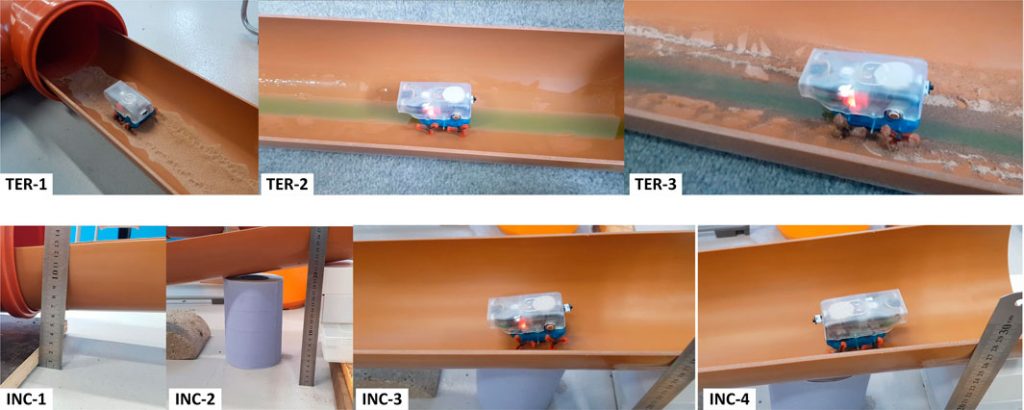 The movement of the robot in various conditions. Image: Thanh Luan Nguyen et al., Frontiers in Robotics and AI
Analysis and repair of underground pipelines andsewerage is expensive, and the work itself disrupts the street network, traffic and creates problems for local residents, the authors of the study add. They believe that the use of tiny robots will help avoid unnecessary problems and reduce the cost of maintaining engineering networks.
Engineers are currently working on a larger Kang robot that can carry and charge the Joey swarm and perform simple repairs inside the sewer network.
Read more:
The main theory of the origin of man was refuted: where did we come from
Results of first cancer drug trial published
8 billion people now live on Earth: is overpopulation threatening the planet?
Cover image: Pipebots