Bioengineers from the Delft University of Technology have shown that a certain curvature of biomaterials
In a study published in the journal NatureCommunications, the researchers showed that living cells "analyze" and respond to the geometry of the space in which they are located. Depending on the degree of curvature, the surface can either stimulate cells to create new tissue or prevent it.
 Effect of surface shape on cell growth. Animation: TU Delft
Researchers distinguish three types of surfaces:a "ball" with a convex curvature, a "saddle" with a concave curvature, and a flat plate. The analysis showed that cells placed on the concave saddle surface grow more actively than on the other two, on the contrary, the convex surface slows down tissue formation.
To apply this effect in medicinethe researchers suggest using special stimulating curves printed with a 3D printer. These surfaces will hold cells in an optimal position for growth and stimulate organ and tissue repair.
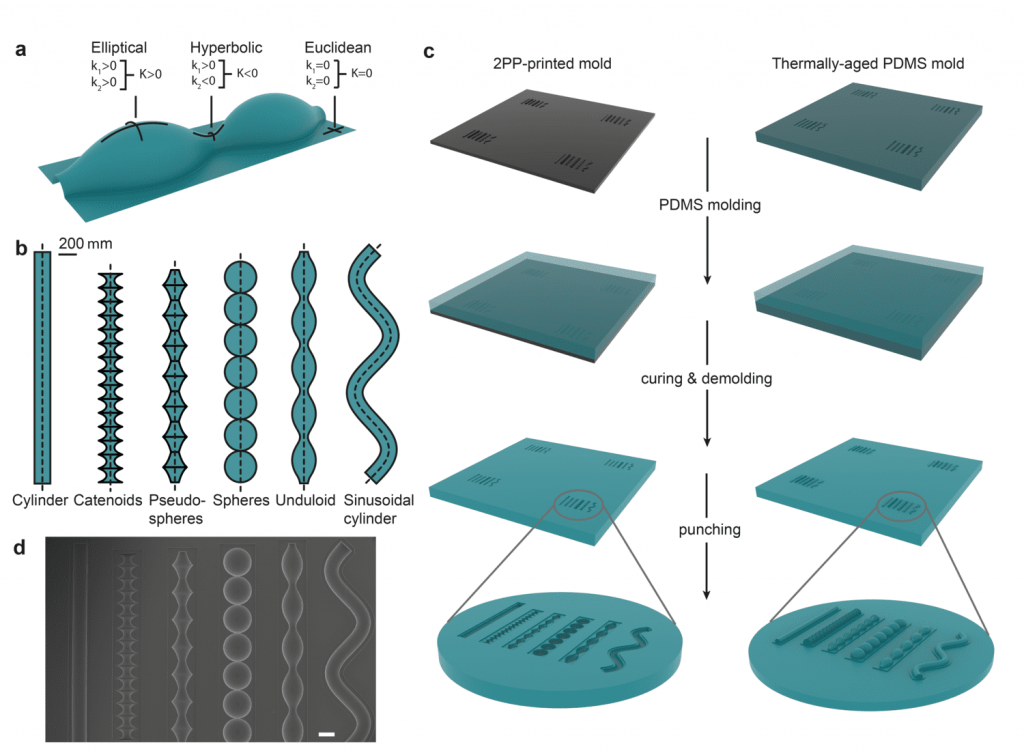 3D molds for cell growth research. Image: TU Delft
In a series of experiments, researchersdemonstrated how such biomaterial forms stimulate the growth of bone cells in a petri dish. By manipulating the geometry of the surfaces, the researchers changed the tendency of cells to grow, divide, and form tissue. In future studies, bioengineers will test the technology on living organisms.
Read more:
Named a vitamin that protects the brain from dementia
See how the Earth has changed over 100 million years on the most detailed map
It turned out which men are the most fertile: their sperm is 50% better than the rest
Cover image: TU Delft