Chinese scientists have developed an alternative to the mixture of sand and salt that is used to sprinkle roads in winter. Tiny
Researchers have developed salts based on acetate,not containing chlorides (traditional substances used for anti-icing). Such salts are much less harmful to the environment, have less impact on steel machine components and other materials. In addition, they work effectively at low temperatures.
The scientists combined the prepared salt of sodium acetate withsurfactant - silicon dioxide, sodium bicarbonate and blast furnace slag - a waste from the operation of a power plant - to obtain a fine powder. They then coated the powder particles with a polymer solution, forming tiny microcapsules. When preparing the asphalt mix, the scientists replaced part of the mineral filler with these microcapsules.
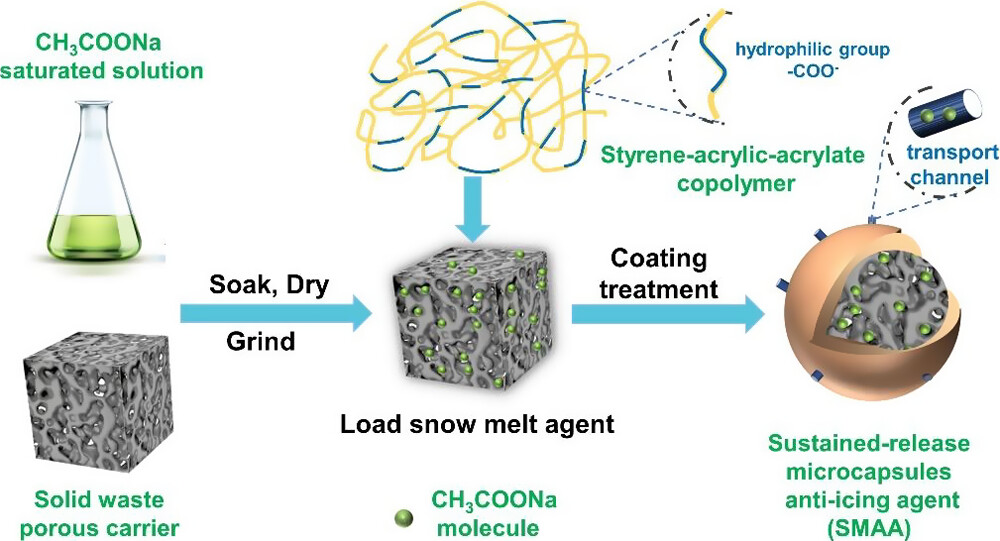 Scheme for the manufacture of anti-icing particles. Image: Yingfei Zhao et al., ACS Omega
Test road test,built on a real highway exit, showed that modified asphalt caused snow that fell on it to melt. At the same time, the freezing temperature of water decreases from 0 ° C to -21 ° C.
Analysis in the lab showed that a 5 cm thick paving slab designed with modified asphalt would release salt capsules for 7-8 years, keeping the road clean.
Read more:
Land in China drilled to a record depth
It's not about the Earth: scientists explained why the solar system is the rarest
200-year-old biology mystery finally solved