Engineers from the City University of Hong Kong (CityU) have developed a wireless haptic interface for
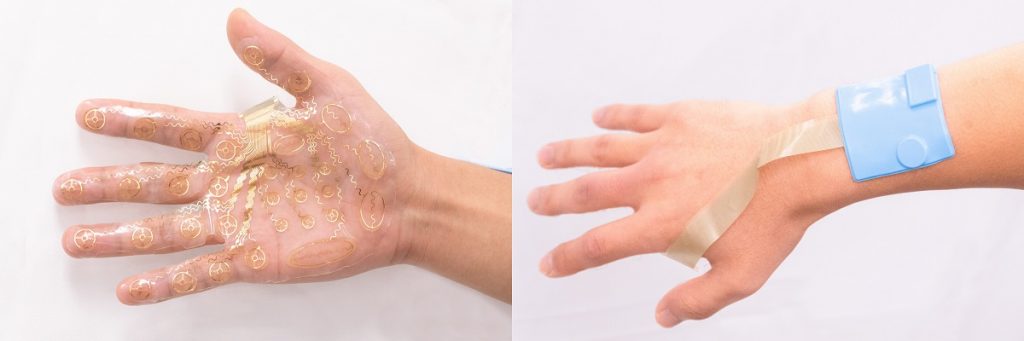 Electrotactile stimulation system. Image: Dr Yu Xinge’s research group, City University of Hong Kong
The system consists of two parts:a miniature soft driver attached to the forearm, and pads with electrodes on the arm. The first of them is used as a remote control, it weighs only 19.2 g and is easily attached to the arm. The device is equipped with a battery and transmits data using a Bluetooth wireless connection.
The thickness of the lining is from 220 microns to 1 mm.Special electrodes are placed on the palm of your hand and used to create tactile sensations. The advantage of such a system is that the soft and flexible pad does not interfere with normal hand movements and provides accurate information about the actions of users during various movements, the engineers say.
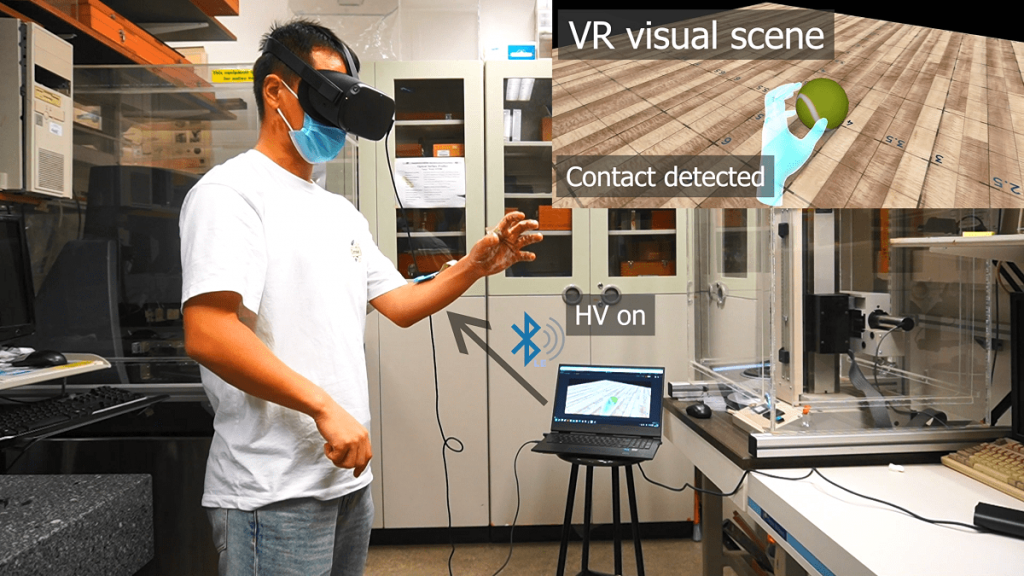
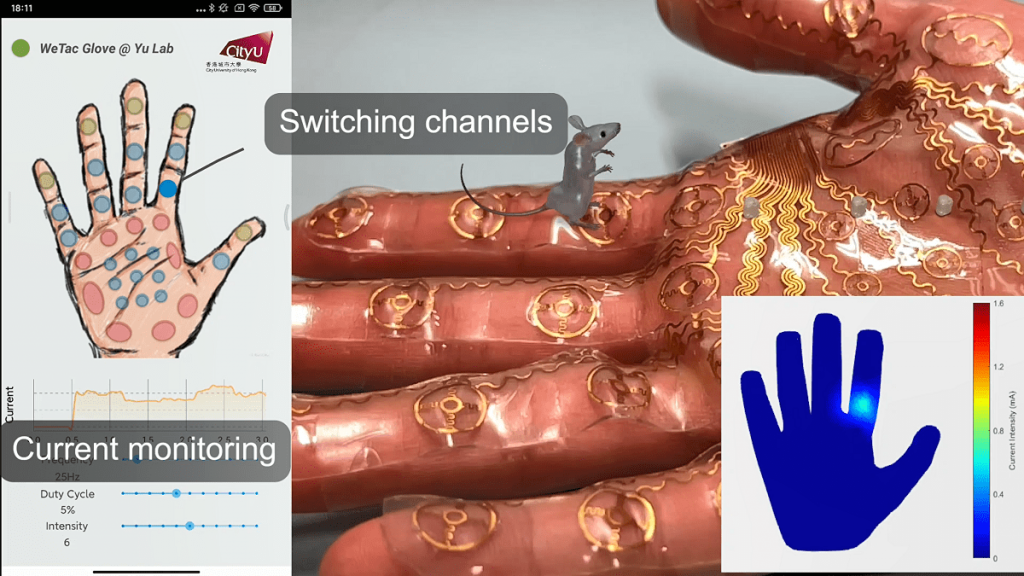
Skin VR system. Image: Dr Yu Xinge's research group, City University of Hong Kong
The device operates on the basis of electrotactilestimulation. Different users have different sensitivities, the authors of the development explain, so for effective control and feedback, a personalized experience must be taken into account. The device analyzes the threshold limits of a particular user and changes the transmitted electrical stimuli taking into account the collected data.
It is configured so that the user does not havehurt, but at the same time he could feel the signal. With such a system, virtual tactile information can be accurately reproduced on the entire hand, the scientists add. Users can experience virtual objects in various scenarios, such as grabbing a tennis ball in sports practice, touching a cactus, or feeling a mouse running across their hand in social activities and virtual games.
Read more:
Hydrogen energy, material against cold weather and bioadditives against COVID-19: what scientists are creating in the North
Scientists have found out who benefited from the death of dinosaurs
Look at the photo of the Earth from space: it was made by the first private module