Chinese scientists analyzed 1,000 eggshells found in central China and concluded:
Scientists said that the eggshell foundin layers of rocks 150 meters thick, contained only three types of eggs belonging to the late Cretaceous period. This means that during the last 2 million years before the impact of the asteroid, the biodiversity of the dinosaur population had already significantly decreased compared to previous epochs.
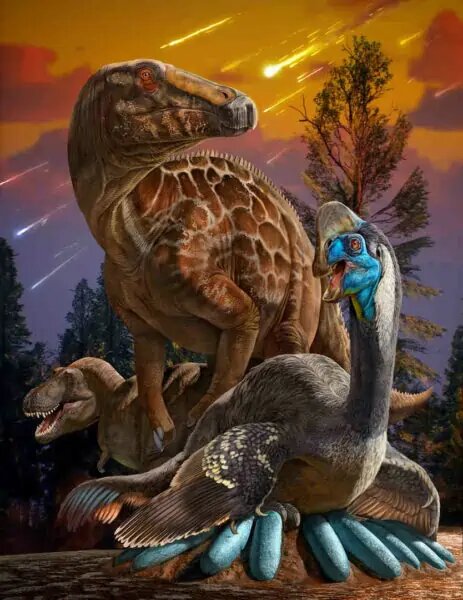 Artist's illustration of three species that lived in China at the end of the Cretaceous period. Image: Institute of Vertebrate Paleontology and Paleoanthropology
The study found that eight clades of dinosaurswere present in China during the Campanian period, the fifth of the six main stages of the Upper Cretaceous. At the same time, at the sixth and last stage, only three of them remained - bird-like oviraptorids (Oviraptoridae), duck-billed hadrosaurids (Hadrosauridae) and tyrannosaurids (Tyrannosauridae).
Researchers believe that globalclimatic fluctuations and massive volcanic eruptions of the Deccan Traps in India have led to a reduction in diversity. This is what made the ancient species especially vulnerable to the fall of the Chicxulub asteroid, about 10 km in diameter.
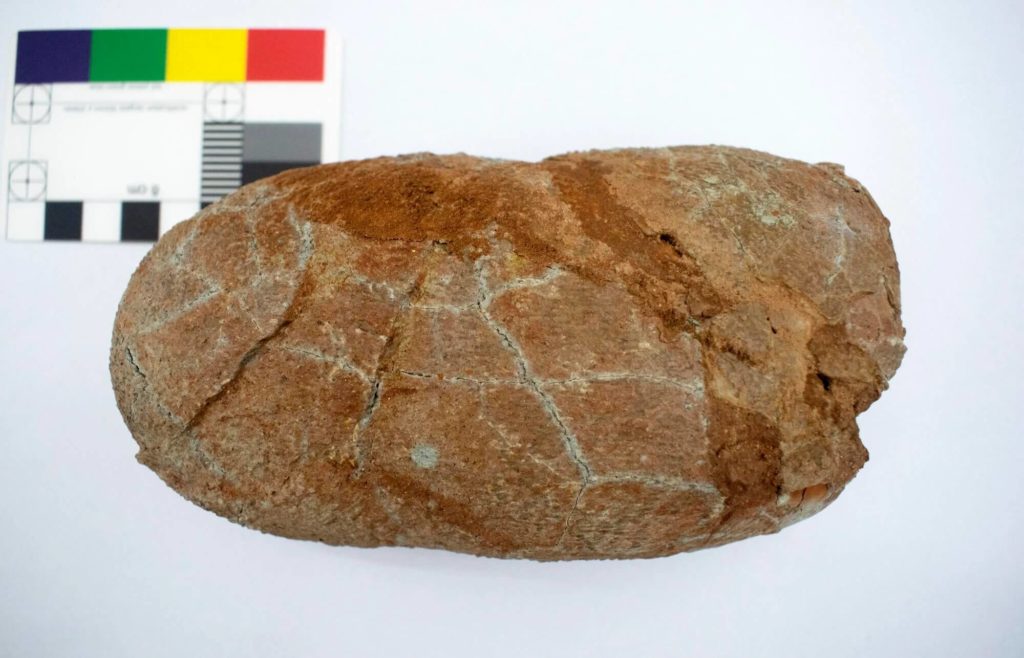 Fossilized dinosaur egg. Image: Institute of Vertebrate Paleontology and Paleoanthropology
Researchers believe that by the end of the Cretaceous, dinosaurs had lost the ability to adapt to and recover from sudden environmental changes.
Dinosaurs died out gradually over millions of years instead of suddenly disappearing due to sudden disasters.
Wang Qiang, Associate Research Fellow, Institute of Vertebrate Paleontology and Paleoanthropology, Chinese Academy of Sciences, study co-author
Read more:
Look at the first photos of Mars that Webb took: they are literally dazzling
Mysterious 'blue goo' at the bottom of the sea baffles scientists
Scientists have come close to unraveling the secrets of the pyramids: how ancient people were able to build them