An international team of researchers has reported the discovery of an unusual herbivorous dinosaur. Mamenchisaurus
Fossils of Mamenchisaurus sinocanadorum werediscovered in China during excavations back in August 1987. It is an incomplete skeleton, consisting of part of the neck, a giant rib, and several bones of the skull, including the lower jaw. The lack of a complete skeleton has made it difficult for scientists to get an idea of the overall size of this dinosaur.
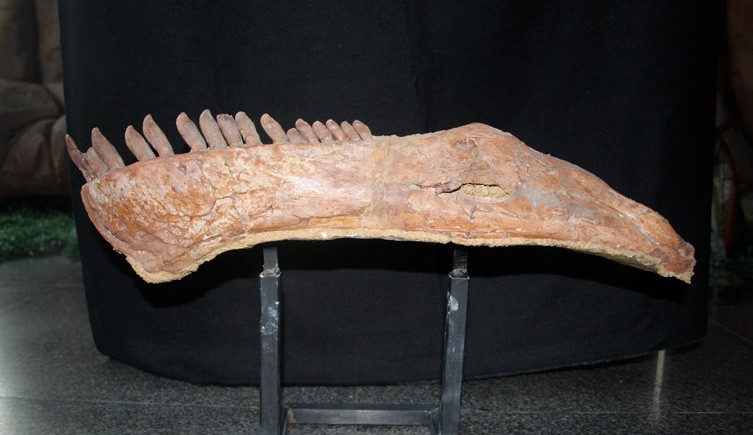
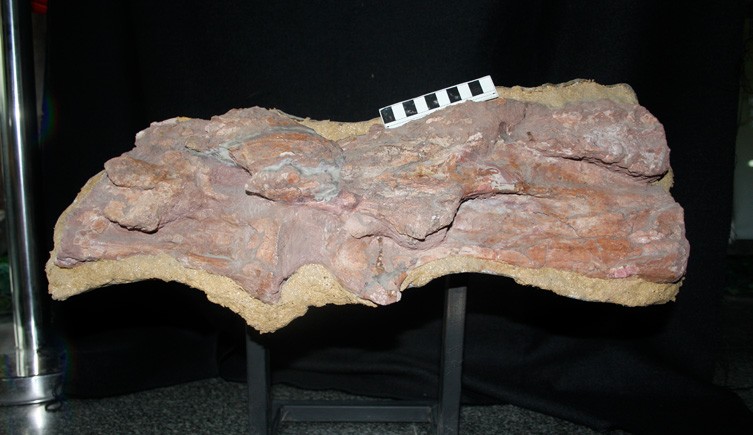
Fossil remains of Mamenchisaurus sinocanadorum: lower jaw (left) and two cervical vertebrae (right). Images: Paul Barrett, Natural History Museum
To restore its appearance, the researchersused bones of a related sauropod species found later in the same region. They used a dinosaur from the Xinjiangtitan species, which has a complete neck skeleton. By comparing the proportions of the neck vertebrae in the two species, the researchers were able to estimate the length of the neck of Mamenchisaurus. It is about 15 m long.
Many sauropods are known for their long necks,among them, for example, the well-studied diplodocus. This anatomical feature is thought to be related to feeding: they can consume a lot of food in close proximity without expending too much energy on locomotion. But even compared to these species, the new dinosaur has a disproportionately long neck.
Researchers do not know what thisanomaly. Perhaps this was due to the need for more food, scientists suggest. In addition, dinosaurs may have used their necks to compete with males for females and territory. Similar behavior is observed, for example, in giraffes.
Read more:
The secret of longevity is revealed: scientists have figured out how to start the necessary mechanism in the human body
Named a new cause of autism
2,700-year-old temple found in Sudan He surprised scientists
On the cover: artistic illustration of Mamenchisaurus sinocanadorum. Image: Julia d’Oliveira, Natural History Museum