According to a new study conducted by scientists from the University of Birmingham, fatty acids that
This means that when they hit a hardsurface, for example, against a window, then form a self-organizing thin film. Over time, it builds up and is very slowly broken down by other chemicals in the atmosphere. During this process, the film becomes rougher and attracts more water due to air humidity. In addition, this resistant crust traps toxic pollutants that are protected from decay in the atmosphere. As a result, human health can suffer from hazardous substances.
Dr. Christian Pfrang, senior author of the newresearch, stated that "fatty acids in the films are not particularly harmful in themselves, but because they are not broken down, they effectively protect any other contaminants."
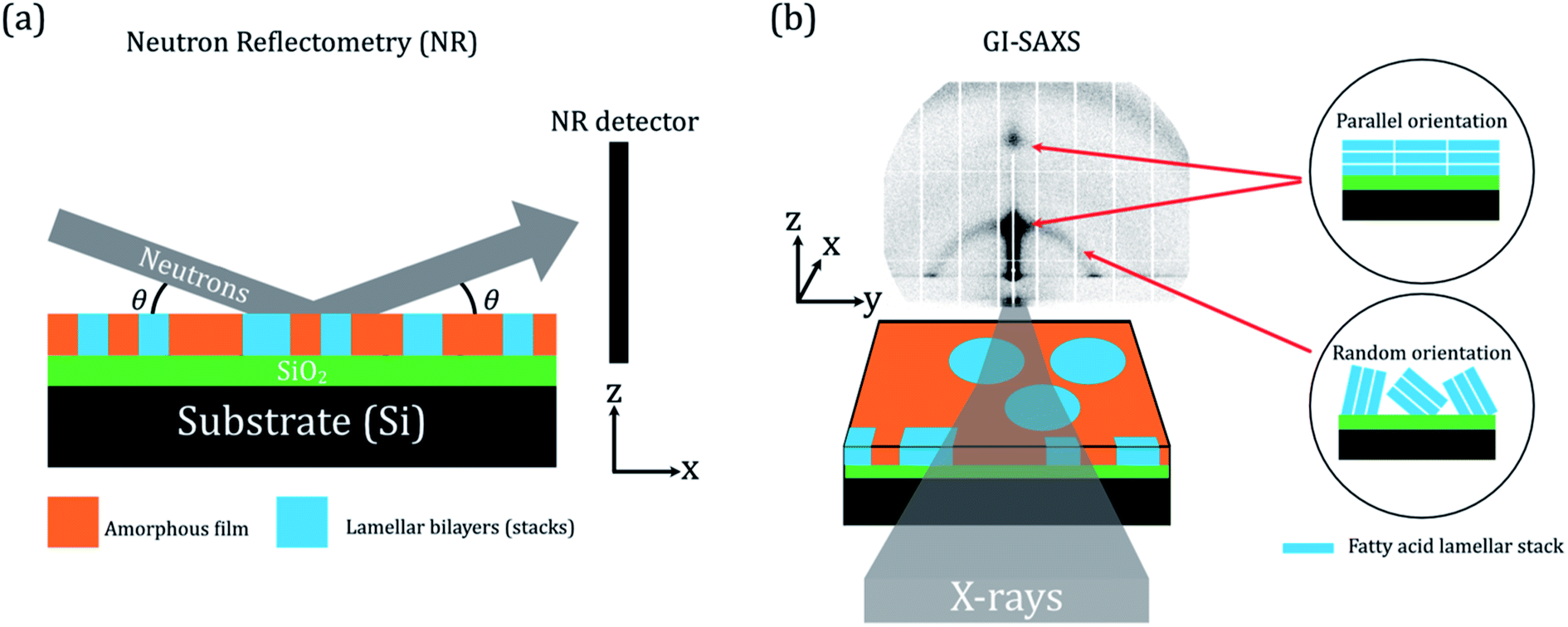 Schematic representation of (a) neutron reflectometry (NR) and (b) grazing incidence small-angle X-ray scattering (GI-SAXS) experiments.
Photo: Environmental Science: Atmospheres
During the study, the researchers usedneutrons and X-rays to study the nanoscale composition of films and changes in their surface structures. By changing the humidity and the amount of ozone, a key indoor and outdoor pollutant, the experts also simulated the behavior of the films over time.
They found that self-organizedthe arrangement within them in repeating molecular layers—the so-called lamellar phase—makes it difficult for smaller molecules, such as ozone, to access the reactive fatty acid moieties within these structures. After deposition and exposure to ozone, the surfaces of the films become less smooth and more likely to absorb water. This is important for the formation and lifetime of aerosols in the atmosphere.
Read more:
Scientists have come close to unraveling the secrets of the pyramids: how ancient people were able to build them
The mechanism of maintaining liver health in old age is revealed
Physicists explain Hawking's 'cosmic mismatch': how it will change science
Cover photo: Darren Barefoot