Cameras aboard Mars Express captured dust storms from orbit.The study shows that despite the
In a paper published in the journal Icarus,Researchers from the European Space Agency analyzed observational data from two dust storms that occurred near the north pole of the planet in the spring of 2019.
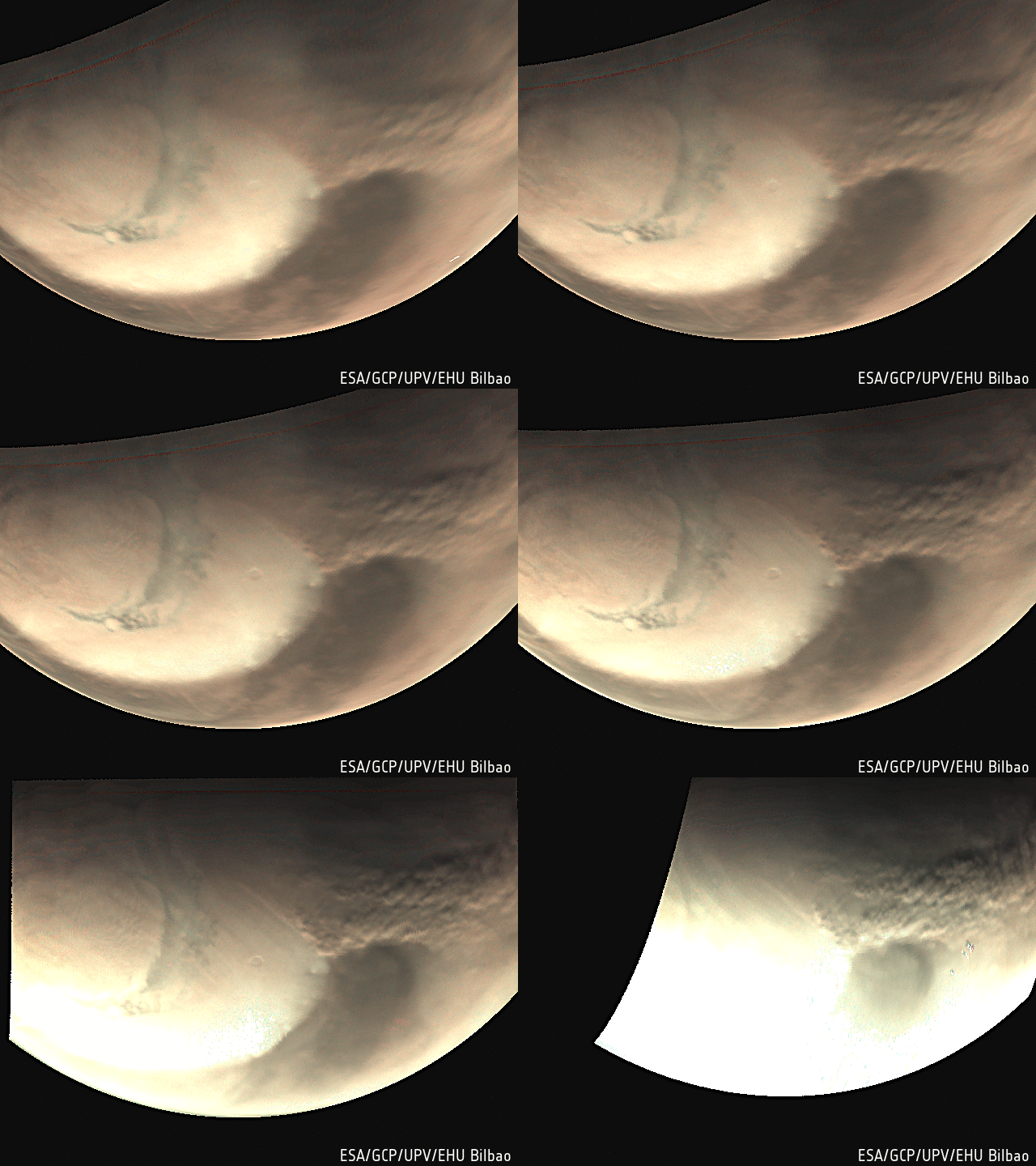 Dust storm on Mars. Animation: ESA/GCP/UPV/EHU Bilbao
Images show that Martian duststorms consist of regular small cloud cells arranged like grains or pebbles. A similar texture is seen in clouds in the Earth's atmosphere that form in the tropical zone.
Such textures are formed as a result of convection,when hot air rises because it is less dense than the colder air surrounding it. The type of convection observed is called closed-cell convection, where air rises in the center of small cloud pockets, or cells. The gaps in the sky around the cloud cells are the paths that colder air takes down.
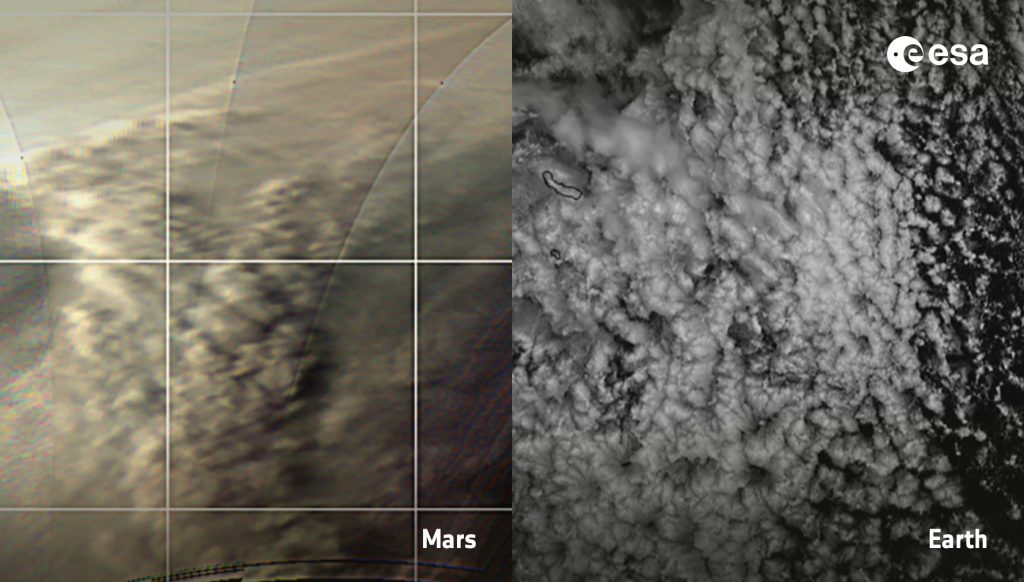 "Grainy" clouds on Mars and on Earth. Image of Mars: ESA/GCP/UPV/EHU Bilbao. Earth Image: EUMETSET
On Earth, rising air contains water,which condenses to form clouds. Dust clouds taken with Mars Express show the same process, but on Mars, the rising columns of air contain dust, not water. The sun heats the dusty air, causing it to rise and form dust cells. The chambers are surrounded by areas of descending air that are less dusty. This results in a grainy pattern.
Thanks to images from the Mars Express satelliteScientists have been able to measure the height of dust clouds by analyzing the length of their shadows and the position of the Sun. The results showed that the dust can reach about 6–11 km above the planet's surface, and the cells have typical horizontal dimensions of 20–40 km.
Read more:
The main theory of the origin of man was refuted: where did we come from
Results of first cancer drug trial published
8 billion people now live on Earth: is overpopulation threatening the planet?
On the cover: spiral clouds near the pole of Mars. Image: ESA/DLR/FU Berlin