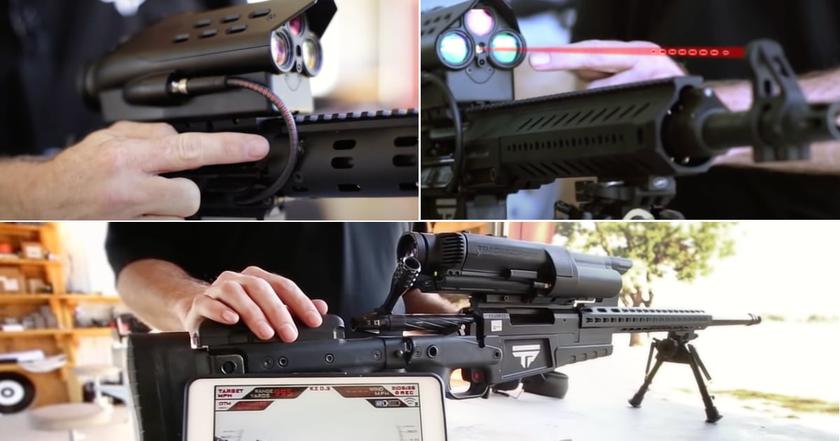
So-called “smart” sights for small arms have been around for a long time. However, they take a long time
What is a ballistic calculator and what does the world's first computer have to do with it.
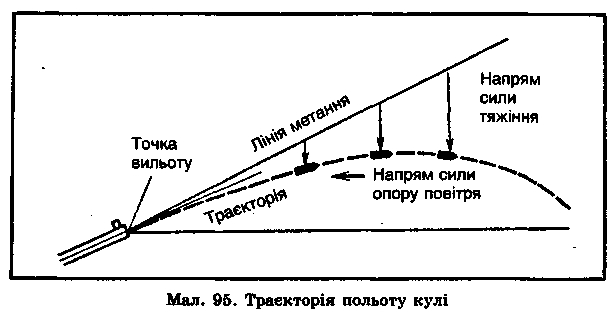
We know that neither a bullet nor a shell flydirect - immediately after leaving the barrel, they are affected by a lot of factors, the main one of which is gravity. And the farther the bullet flies, the more factors influence where it ends up.
</ img>
A primitive image of a bullet's flight path
To make it easier to prepare shooters andartillerymen, ballistic tables were created with which you can calculate deviations due to the influence of atmospheric phenomena and more. A whole science was born - ballistics. And so these scientists began to look for tools to make their work easier.
ENIAC was created in the middle of the last century(Electronic Numerical Integrator and Computer) - the world's first programmable computer. The huge contraption occupied the area of a small house (167 sq. m.) and weighed 30 tons. Everything this computer could do – calculate military ballistic tables.

</ img>
ENIAC and its programmers
A little time passed, and such a computer, which calculates the point where the bullet will hit, began to fit in a small sight on a soldier's rifle.
Background
You may have already heard about Tracking.Point (bought in 2018 by Talon Precision Optics), which makes computerized rifle scopes. I will not talk much about them - the main thing you need to know is that these sights are equipped with a variety of sensors and a ballistic calculator, which significantly improves the accuracy of shooting even for those who first picked up a weapon.
2014 Tracking Point sights promotional video:
For many years it was almost the onlya company that produces similar weapon accessories. However, times have changed, and many manufacturers have begun to present computerized sights with a variety of additions. Someone mounted shot counters and screens into weapons. Someone made a connection with a gun and a smart watch. Some implanted chips under their skin so that his weapons would only fire from his hands.
All of these were “pen tests” and mostly goods for geeks. However, earlier this year there was a quiet revolution - the US Army announced the winners of the NGSW and NGSW-FC tender.
American Revolution
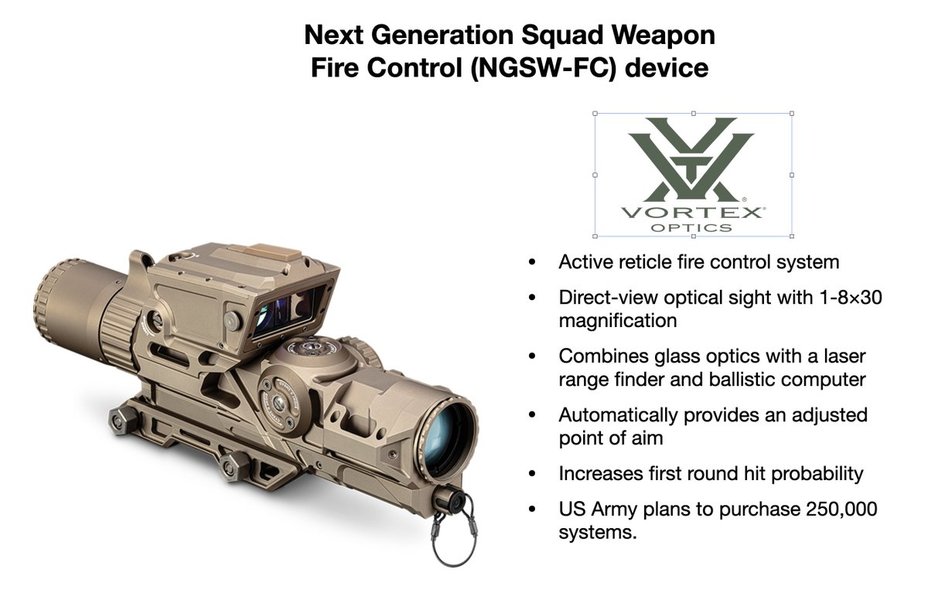
If NGSW (Next Generation Squad Weapon) -conditionally just a new rifle (and machine gun) for the American infantry, then NGSW-FC (Next Generation Squad Weapon - Fire Control) is a really interesting thing. This is the so-called "smart" sight for new weapons, equipped with a bunch of interesting features. First, it has a variable multiplicity. This means that it will be equally convenient to aim with it both at short and long distances. It has a built-in laser rangefinder, paired with a ballistic calculator that corrects the aiming point depending on the distance to the target. Also, this sight has atmospheric sensors that allow you to automatically make adjustments for more accurate shooting.
Most importantly, the sight has a modulewireless communication for image transmission. Thus, the picture will be transmitted, for example, to the shooter's smart glasses. This opens up opportunities for shooting from cover - a table behind the wall, and to hit the enemy, you just need to put your weapon around the corner. In turn, this will reduce combat losses and reduce ammunition consumption. After all, one shot - one hit.
</ img>
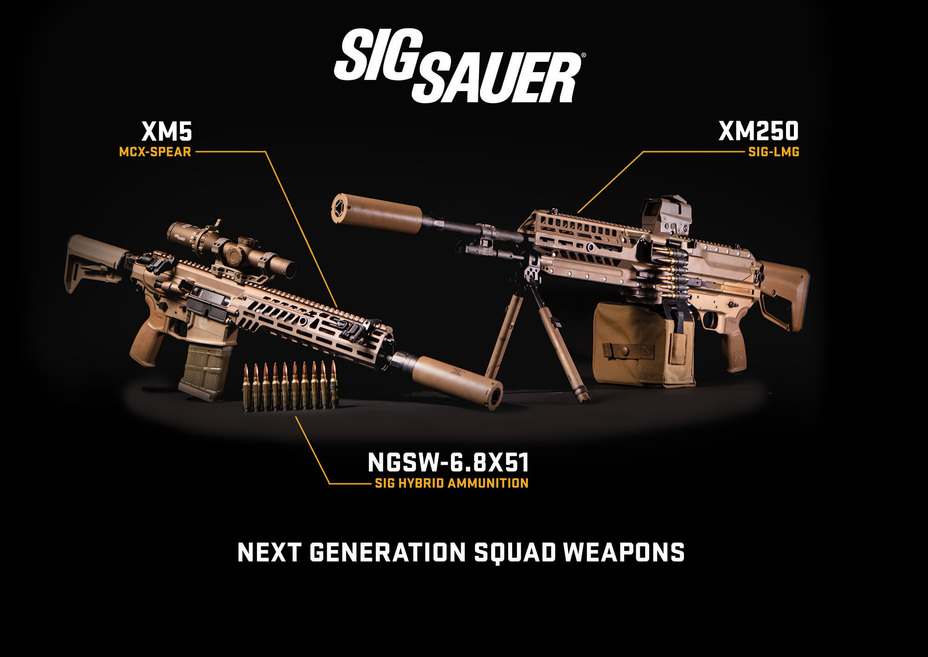
XM5 rifle and XM250 machine gun
By the way, the NGSW tender was won by Sig Sauer with the MCX-SPEAR XM5 rifle and the SIG-LMG XM250 machine gun. Vortex Optics won the NGSW-FC with the XM157 scope.
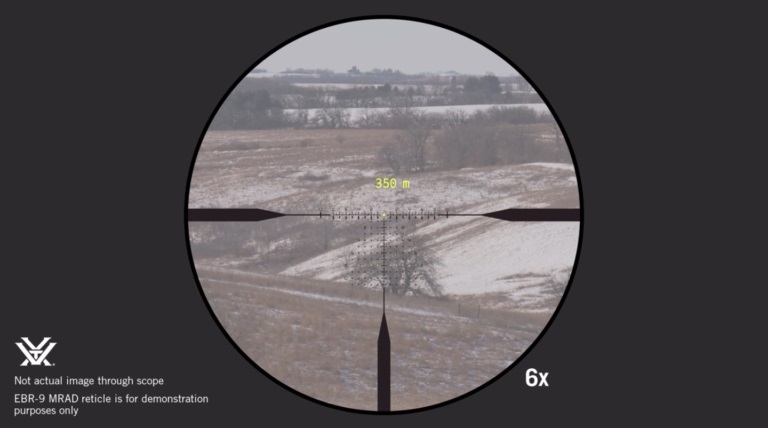
One of the key features of the XM157 is thatthat the sight will remain a sight under any conditions. If most of these developments have a display that requires power, then in the development of Vortex additional information is superimposed in the form of augmented reality of what the shooter sees in the optics. Therefore, you can use it even if you do not replace the battery (CR123A) in time.
</ img>
What does aiming look like with the Vortex XM157
How “smart” works and looks like aim
However, the above possibilities are far fromare full. The new sight for the American infantryman can do much more. For example, the shooter can mark targets, share them with others, receive target hints from peers or reconnaissance vehicles. We are unlikely to get a complete list of features, even if these sights go into service en masse. However, even what has already been voiced is impressive.
A few details about this sight from the manufacturer
If we add to this the information thatthe US army will equip its fighters with IVAS systems (Integrated Visual Augmentation System) - adapted for the military Microsoft HoloLens, then an ordinary US Army infantryman will wipe his nose at the most elite enemy units.

</ img>
IVAS system testing
After all, he will see well during the day, at night, fogor smoke will not become an obstacle, the soldier will navigate the battlefield thanks to prompts on the screen in front of his eyes, and in order to destroy the enemy he does not even have to leave the shelter.
Not only Americans
Since it was a tender other than Vortex'sother manufacturers also took part. They have also developed computerized sights in an all-in-one format and will, of course, offer them to other armies or bring them to the civilian market. In addition, Europeans and Asians will also want to equip their armies with small arms with smart sights. Therefore, the range of computerized sights and their capabilities will grow exponentially.
</ img>
Riflescope Vortex XM157
Issues of time and price
The advanced armies of the world already in this decadewill master weapons with a computer in sight, others will stretch this process for years. However, in the civilian market, such accessories will be available to everyone soon enough, and competition will reduce prices to relatively acceptable.