Zoologists from Curtin University used infrared sensors to observe heat exchange between
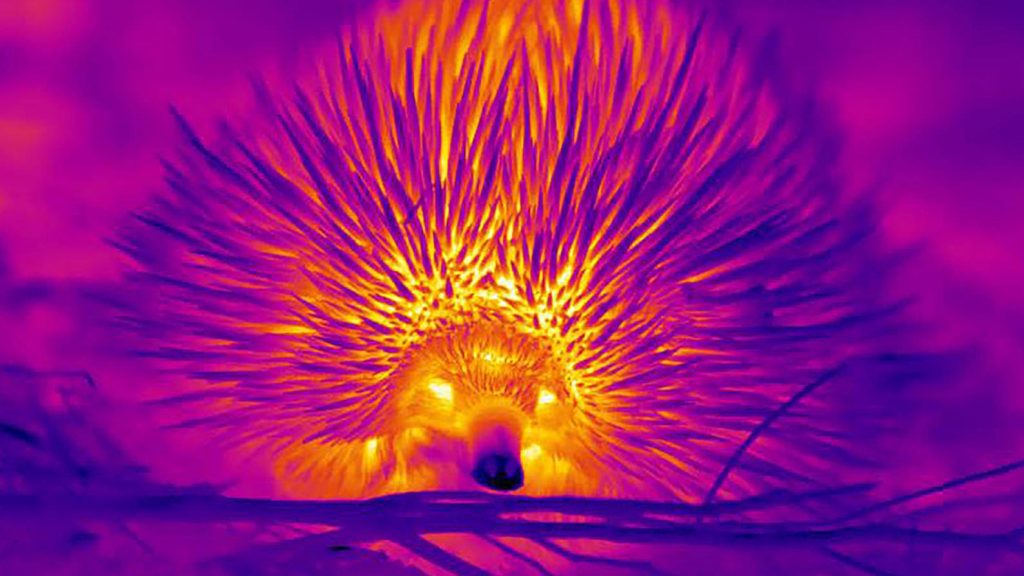 Echidna seen with a thermal imager. Image: Cooper, Withers, Biology Letters
For example, echidnas blow bubbles from their noses tomoisten the tip of the nose. When the moisture evaporates, it lowers the temperature of the animals' blood. In addition, the spikes that cover the body of the echidna provide flexible insulation to keep warm, but the animals also generate heat from exposed areas on the abdomen and legs.
Echidnas, unlike other knownmammals cannot pant, sweat, or lick themselves to avoid overheating. Therefore, animals had to develop alternative “cooling technologies.” They allow animals to remain active at much higher temperatures than previously thought, the study authors note.
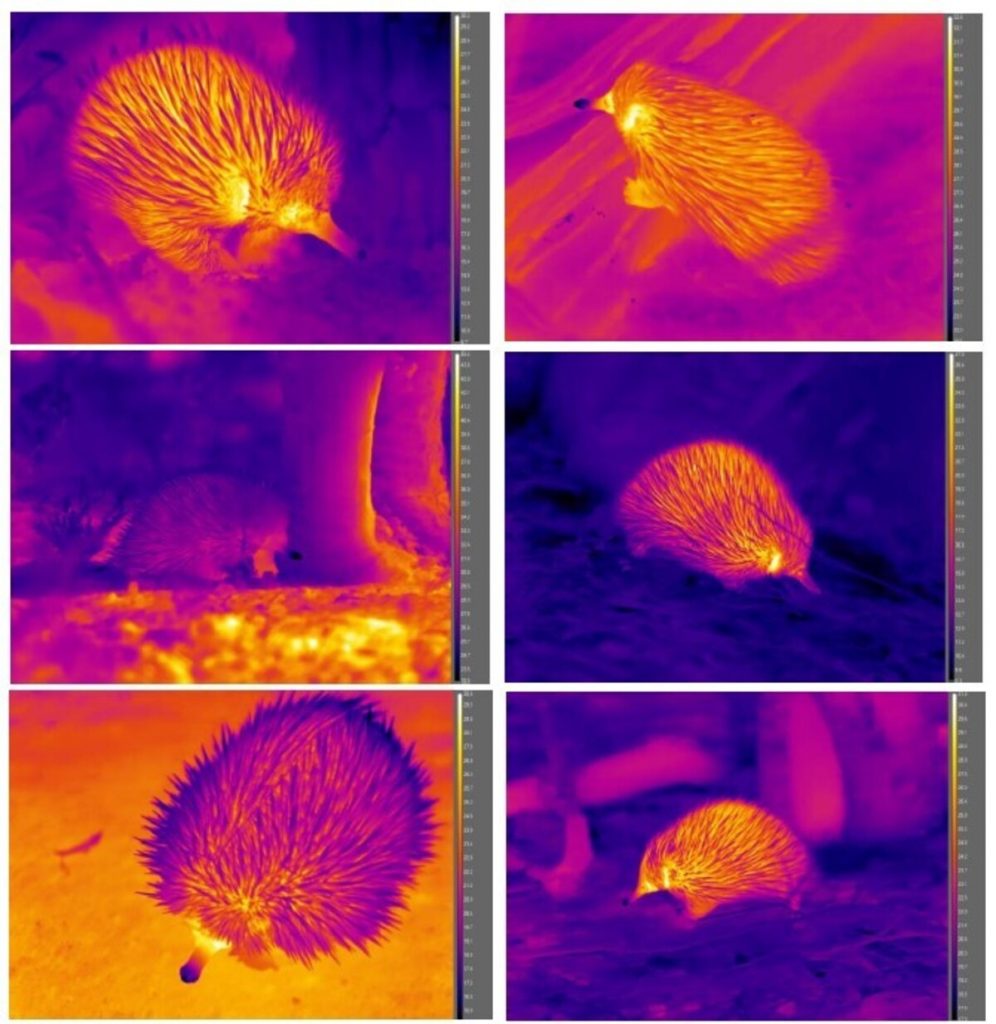 Echidna seen with a thermal imager. Image: Cooper, Withers, Biology Letters
Echidnas are one of two species of monotremes oroviparous mammals (together with platypuses), preserved to this day in Australia. Understanding the biology of these species will help to understand how the first mammals on Earth were arranged and functioned.
Read more:
Blazar, which was found 20 years ago, turned out to be an extreme object
TESS discovered a "new Earth": a stone planet with water is in the habitable zone
Look at the consequences of the collision in 1181 of two stars