In 2021, ESA's research division announced the selection of initiatives for the project "New ideas about
We tell what the teams have proposed and how it will help to use the technologies developed for the exploration of the Universe to save our planet.
Green steel based on "on-site" production
Traditional steel production depends onsupplies of material with a high iron content (high quality). The reserves of such high-quality ore around the world are quickly depleted, so it has to be transported long distances for processing. This increases the carbon footprint and affects the amount of emissions.
A company from Luxembourg, supported by ESA,plans to use the technologies of "production from local resources", which are actively developed when planning space missions to the Moon, Mars and other objects of the solar system. The main idea of this approach is to carry as few resources as possible from the Earth, but use those components that are on site.
Maana Electric is investigating whether the low iron ores still left on the European continent can be used to produce quality steel.
Main objective of the project:produce steel from low-grade material mined near construction sites. This will reduce supply chain costs and create mining operations that have less of an environmental impact.
According to the European Commission, 5.7% of allGreenhouse gas emissions in the European Union come from the steel industry - changes in this area will have a significant impact on emissions, the researchers say.
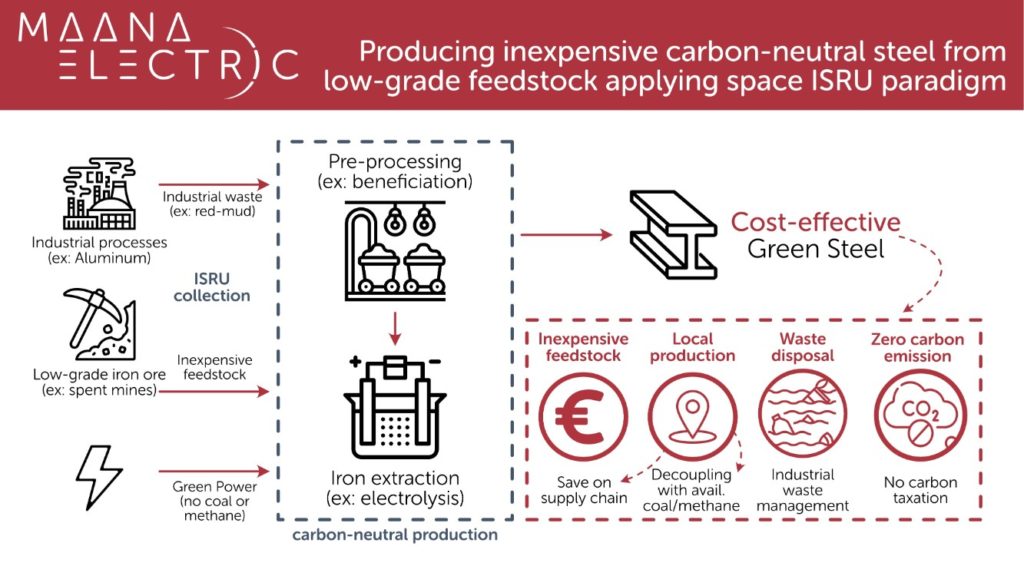 Scheme of green steel production. Image: Maana Electric
carbon dioxide syrup
Cultivation and food productionproduces up to a quarter of all emissions into the Earth's atmosphere and is, according to the UN, the main threat to biodiversity on Earth. At the same time, for example, even a partial replacement of meat with artificial protein can halve emissions and deforestation.
Artificial proteins are produced by bacteria and fungi.The problem is that growing such crops requires a nutrient medium, and its production, as a rule, leads to the emission of carbonaceous gases.
Researchers from Wageningen UniversityThe Netherlands is working to develop technology to convert atmospheric carbon dioxide into nutrients for people. Scientists have modified technology originally developed to recycle air on the ISS to capture and concentrate carbon dioxide directly from the atmosphere.
The collected carbon dioxide they will send tosystems containing enzymes that plants use to convert carbon dioxide into glucose during photosynthesis. Once released from the cell, enzymes have access to more surface area and can convert carbon dioxide into sugars much more efficiently for human use and artificial meat production.
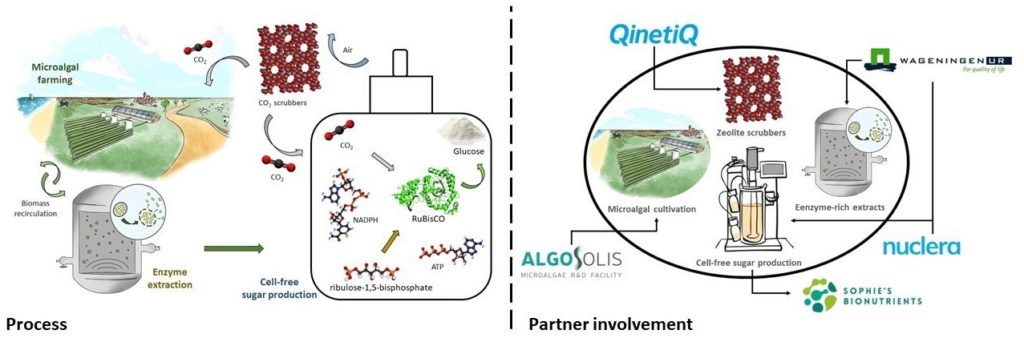
Production from carbon dioxide. Image: Wageningen University
Control of biodiversity change
Expanding the area of land used foragriculture is one of the main causes of biodiversity decline. Although the impact is not in doubt, there are currently no methods to investigate how different land uses affect native plants and animals.
Researchers at Biodiv Watch in the Netherlandsare using sensor technology developed for Earth observation from satellites, as well as AI and cloud computing, to map and analyze regional-scale plant biodiversity change in locations around the world.
Observing regions with differentland use and comparing them with the close natural environment, which is not yet affected by man, it will be possible to determine how agriculture, infrastructure and urban development change biodiversity.
With the data collected, the researchers plan to develop methods to assess the potential impact of new projects and optimize their placement.
The climate crisis is a serious problemwhich humanity is facing, according to the ESA. To survive in space, a variety of technologies have been developed, relying on limited resources and harsh conditions. Using similar solutions on Earth, challenges can be overcome.
Read more:
Chinese reusable spacecraft launched a mysterious object into orbit
An ancient stone from a cemetery, which is 1,500 years old, “broke” the history of the Celts
Scientists have seen what is on the territory of the Mayan capital. The find surprised them.