Who lived next to Homo sapiens?
- Homo denisovensis
Denisovan man, or Denisovan, is an extinct subspecies of people.
40 thousand years ago, the Denisovans inhabited an area that intersected in time and place with the territories in Asia where Neanderthals and modern people lived.
Having analyzed DNA methylation markers inDenisovan girl who lived 50 thousand years ago, scientists reconstructed the structural features of her skeleton. She was identified with 56 unique traits that are not typical for other representatives of the genus.Homo.
The reconstruction generally correctly predicts how the actual Tibetan Denisovan jaw is constructed. The Denisovans' face was wider than that ofHomo sapiensand Neanderthals, and the jaws were slightly longer.
In the mitochondrial genomes of Denisovans andNeanderthals from Denisova Cave revealed the contribution of another unknown population that shares a common ancestor with anatomically modern humans and Neanderthals, living about a million years ago, indicating that it is descended from a hominid migration out of Africa, different from the migration of the ancestors of Neanderthals and modern humans. ;and that it can be considered the fourth subspeciesHomo sapiens... On mtDNA, Denisovans oppose both Neanderthals and Sapiens.
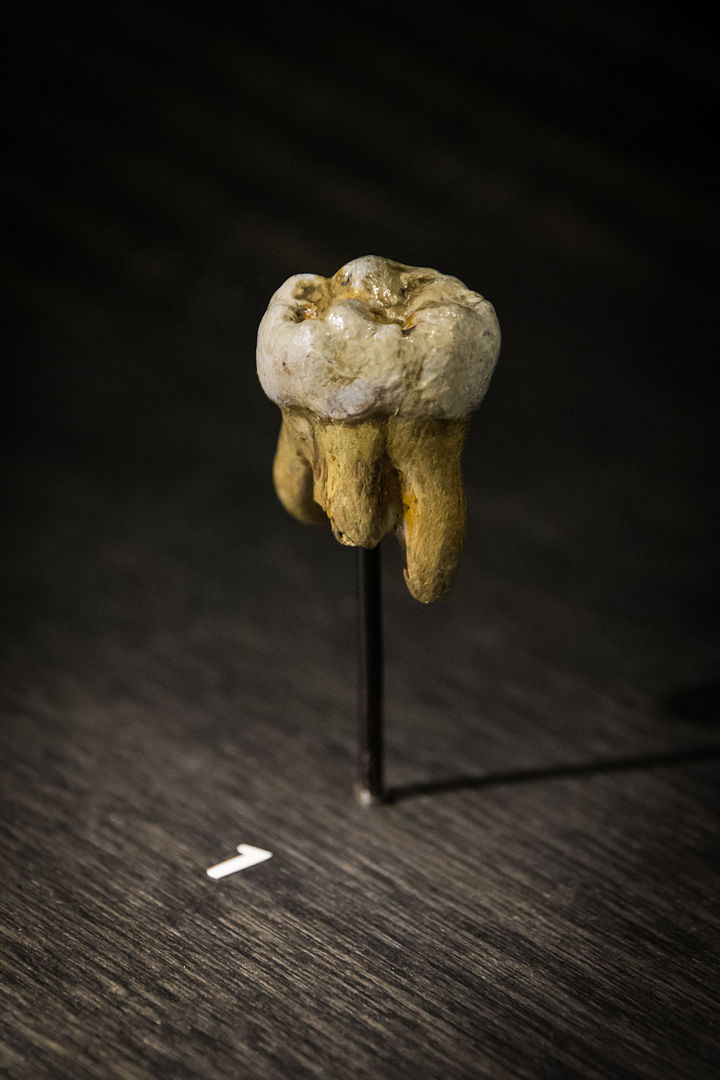 A copy of a Denisovs tooth
Later, when they were processedsequences related to the nuclear genome, it turned out that Denisovans are a sister group of Neanderthals and their evolutionary divergence occurred about 640 thousand years ago.
Based on DNA analysis, the researchers believe thatthe remains of the bone date back to the period 75–82 thousand years ago. The age of the finds found in the cave in layer 11 was determined using radiocarbon analysis, first at 40 thousand years, then calibrated to 48-50 thousand years.
According to a 2013 DNA study, Denisovansalong with the Neanderthals, they transferred part of the genome to modern humans; it was also established that Neanderthals interbred with Cro-Magnons and Denisovans, Cro-Magnons with Denisovans, in addition, Denisovans interbred with some fourth, previously unknown species of people.
Later research found two differentgroups of Denisovites: northern and southern. The DNA of the northern group is present in the genomes of modern Chinese, Japanese and Vietnamese, the DNA of the southern group is noticeable in the genomes of the Polynesians.
Alternative hypothesis, no hybridizationsbetween Denisovans, Neanderthals and modern humans did not happen, as this was prevented by differences in their Y chromosomes. The appearance of each other's gene sequences in them could occur not as a result of their hybridization, but from the polymorphism of the genes of their common ancestor, with which the lines of Denisovans, Neanderthals and modern humans split about 700 thousand years ago.
- Homo erectus
Homo erectus is a fossil species of humans that is considered to be the direct ancestor of modern humans. Occurred in the course of evolution fromHomo habilis, throughHomo ergaster... The species identity is disputed by various researchers.
A 2008 study of the X chromosome genome concluded that the Asian speciesHomo erectuscould very well interbreed withHomo sapiensand be the ancestor of modern humans along mixed lines (not direct male and not direct female).
It is assumed that erecti appeared inEast Africa 2 million years ago and 1.5–1 million years ago through the Middle East they spread widely across Eurasia up to China (Yuanmou man) and Europe, where Heidelberg man arose.
Erectus were relatively widespread throughout the Old World and were divided into a number of local subspecies. Previously they were considered only a subspeciesHomo ergaster, but erectus has significant differences fromthe last one. African erectus also includes Atlantropus and Rhodesian man. Heidelberg man is often considered a later and more advanced species, closely related to erectus.
There were also "pre-Heidelberg" erectus (Homo antecessor).Two subspecies lived in East Asia: the more primitive Javanese Pithecanthropus from Indonesia and the more progressive Sinanthropus from China (the Lantian man is also known from China, more archaic than Sinanthropus). The area of distribution usually did not go beyond the subtropical belt.
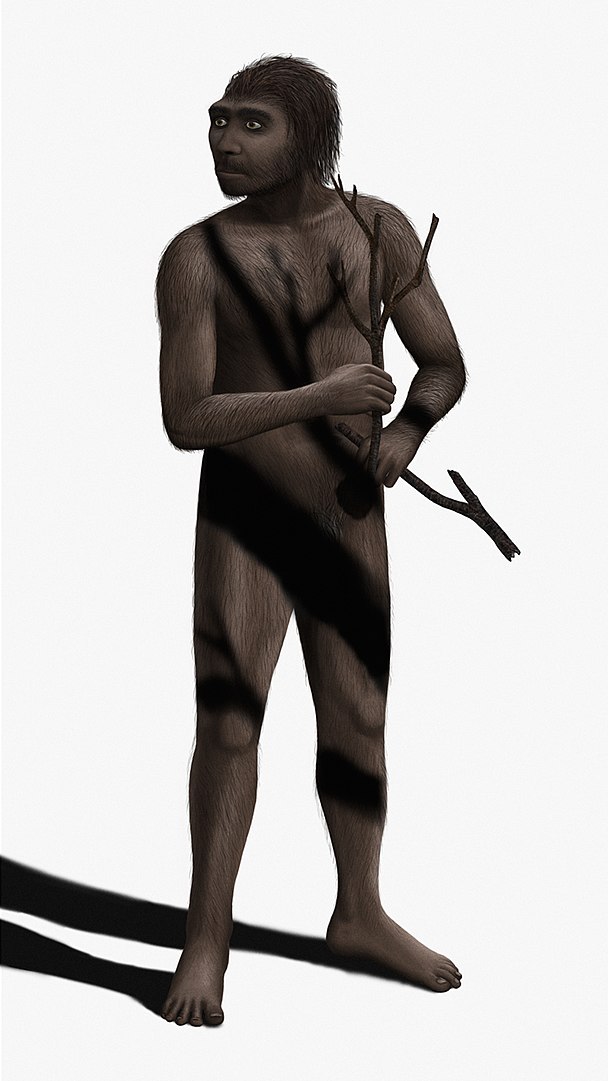 Reconstruction of appearance
Until recently, it was believed that erectusalmost disappeared about 400 thousand years ago, giving way to Neanderthals, Denisovans and Homo sapiens. However, recent finds indicate that they, on the outskirts of their range, could survive until the arrival of modern people. Scientists believe that the last Pithecanthropus on the island. Java (javanthropes) became extinct 107 thousand years ago.
The Floresian man is sometimes regarded as a variant of the erectus that has changed on Flores under the conditions of insular dwarfism (it died out, according to various estimates, from 90 to 12 thousand years ago).
- Homo georgicus
The Dmanisi hominid is an extinct form of hominin whose remains were discovered in Georgia. Previously known asHomo georgicus.
Proteome study from molar species D4163Homo erectusfrom Dmanisi and from dental enamel of molar ATD6-92 speciesHomo antecessorfrom Atapuerca (Spain) showed that the close lineage for subsequent middle and late Pleistocene hominins, including modern humans, Neanderthals and Denisovans, isH. antecessor, not the Dmanisi hominid.
Dmanisi hominids were previously given the species status (Homo georgicus- “Georgian Man”), but later the prevailing opinion was that they were a local variety of Homo erectus (Homo erectus georgicus), a transitional form betweenH. habilisAndH. ergaster, or a transitional form betweenH. habilisAndH. erectus,as David Lordkipanidze and co-authors believe. The stone tools of Dmanisi man are quite primitive, only slightly more advanced than the Olduvai tools of Homo habilis.
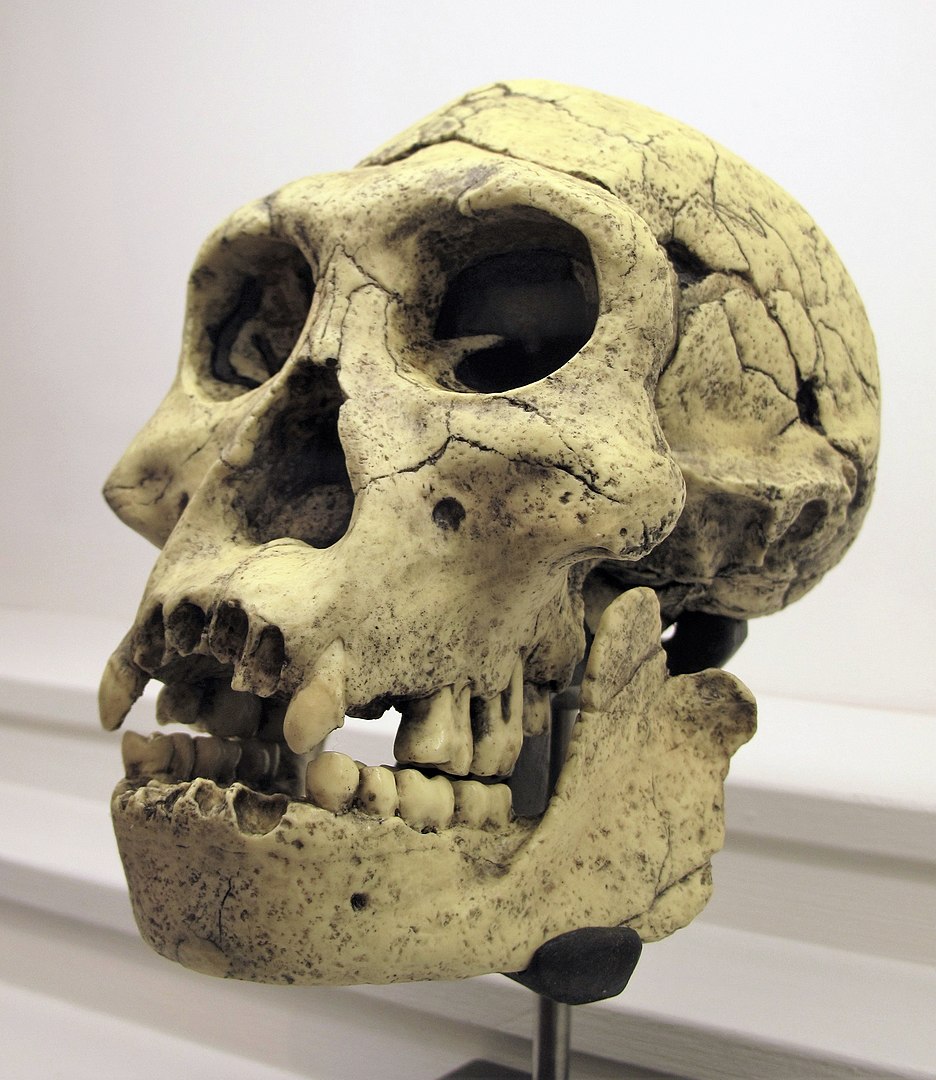
Contrary to previously expressed guesses, there are nothere were no signs that their owners were victims of large predators. In particular, some small bones were preserved entirely, which are almost never preserved in this form after a meal of a predatory animal.
In Dmanisi, not only human bones were found, but also quite a lot of fossil bones of extinct large and small animals (giant ostrichesPachystruthio dmanisensis, primitive deer, rhinoceroses, large predators) of the same period. Some bones have scratches left by stone tools.
One bone that belonged to a large herbivoreanimal, was gnawed by a large predator after people scraped off the meat from it. This finding may not be strong evidence that the people of Dmanisi already knew how to hunt large animals, but it may show that they got access to carcasses before their competitors - bears, hyenas, leopards and saber-toothed tigers.
- Homo ergaster
Homo ergaster - a fossil species of humans that appeared in Africa 1.8 million years ago as a result of evolutionHomo habilisorHomo rudolfensis. Considered as an intermediate link between Australopithecus andHomo erectus, sometimes described as Africansubspecies of Pithecanthropus, however, an increasing number of researchers are inclined to distinguish them from non-African representatives of the human race who lived between 1.8–1.5 million years ago - the time of existenceHomo ergaster.
A distinctive feature of the adult remains was their unusually high height - 180 cm - much greater than that of the later living Heidelberg people and Neanderthals.
Outside Africa presenceHomo ergastersupposed to be in Italy (Apulia). At the Apulian site, only flint tools dating back to 1.7 million years ago were discovered. As a transitional form betweenHomo ergasterAndHomo erectussometimes the Dmanisian hominid is also considered.

Compared to a skilled person, brain volumeof a working person increased noticeably and averaged 900 cm³, and in addition, its departments responsible for abstract thinking also increased, in particular the size of the frontal lobes increased.
Simultaneously with an increase in the frontal lobesthere was also an increase in the so-called Broca's zone, responsible for speech. She, judging by the endocranes (casts from the inner surface of the skull) in a working person was already more developed in comparison with a skilled person. And, perhaps, a working person already possessed the rudiments of speech.
When moving fromH. habilis to H. rudolfensisThere were two important changes:
- Body size increased dramatically. This is directly related to the second change.
- The share of animal food in the diet has increased. Traditionally this has been explained by the fact thatH. ergasterlearned to hunt large and medium game more effectively. Recently, however, arguments have been made thatH. ergasterwas still a scavenger and simply learned to compete more effectively with other scavengers.
How many early human species actually existed?
When scientists begin to figure out how many speciespeople existed on our planet, this is causing controversy and controversy, especially because researchers continue to discover new bone fossils that are identified as the remains of ancient people belonging to previously unknown species. Their number is growing, and it is almost impossible to establish precise quantitative data of species in the population.
There is some overwhelming evidencethe existence of Homo erectus, but, as it turned out, this species actually consists of several, including Homo georgicus and Homo ergaster. According to researchers, it is all about determining the species and the extent to which variations within a species are accepted.
What is a View?
Type - basic structural unitbiological systematics of living organisms. Systematic unit, a group of organisms with common morphophysiological, biochemical and behavioral characteristics, capable of mutual crossing, which produces fertile offspring in a series of generations, naturally distributed within a certain area and similarly changing under the influence of environmental factors.
For example, to produce a mule, you needmating horse and donkey, however the mules themselves cannot reproduce successfully with each other. Therefore, although horses and donkeys are biologically similar, they are not the same species.
However, recent decades have spawned controversy on this topic: life can also spread asexually, as microbes do, forming new species.
One of the options formed in connection withsuch circumstances, - the definition of organisms of the same species with similar anatomical features. But it also has its drawbacks: there are significant morphological differences between the sexes and even individuals of the same species in different parts of the world, which makes this option very subjective.
To tell the difference between species, somebiologists prefer to use DNA, and with current advances in technology, they can do so with even greater precision. But, unfortunately, they do not have the DNA of every ancient person, for example, the Homo erectus genome has never been sequenced.
Is modern man a separate species or not?
Taking all this into consideration, some expertsargue that the concept of a species doesn't really exist. Others say that a single definition of a species is almost impossible to achieve, but it is still worth the effort so that we can talk about evolution in a meaningful way.
If we agree with the assertion that humans are everything that appeared after they separated from the ancient chimpanzees about 6-7 million years ago, then we get a fairly diverse group.
Smithsonian National Natural Museumhistory has listed at least 20 human species recognized by most scientists. It includes Homo sapiens, Neanderthals, the Hobbit-sized Indonesian people, Homo erectus, and Homo naledi.
It is very foolish to expect that people who lived 5 million yearsback, they will be like us. If the Smithsonian Institution says there are 20, then you can be sure that the variety is actually much greater.
John Stewart, evolutionary paleoecologist at Bournemouth University in the UK
Read more
Large numbers of gray whales start starving and dying in the Pacific
A third of those who have recovered from COVID-19 return to the hospital. Every eighth - dies
Abortion and science: what will happen to the children who will give birth