XPeng on Monday, October 10, flew a prototype of its
The developers claim that the car canaccelerate to a speed of 130 km / h. It is controlled by an eight-rotor design and can carry two passengers at the same time. Unlike airplanes and helicopters, vertical take-off and landing (eVTOL) systems should, in theory, provide fast and affordable travel from point to point within the city without specially equipped take-off and landing areas.
The tested model - XPeng X2 - has a case made ofcarbon fiber and eight rotors mounted on four arms (two rotors per arm). It measures 4.97m long, 4.78m wide and 1.36m high, but the wings can be folded down to reduce its width to 1.83m. The company says this eVTOL has a curb weight of 560kg , and the maximum takeoff weight is 760 kg.
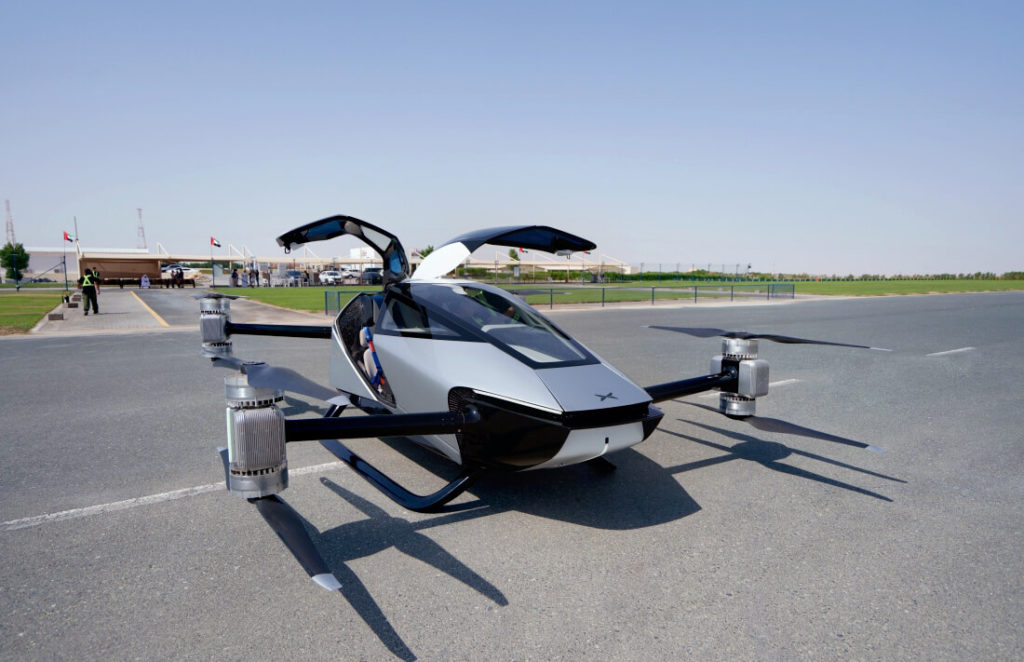
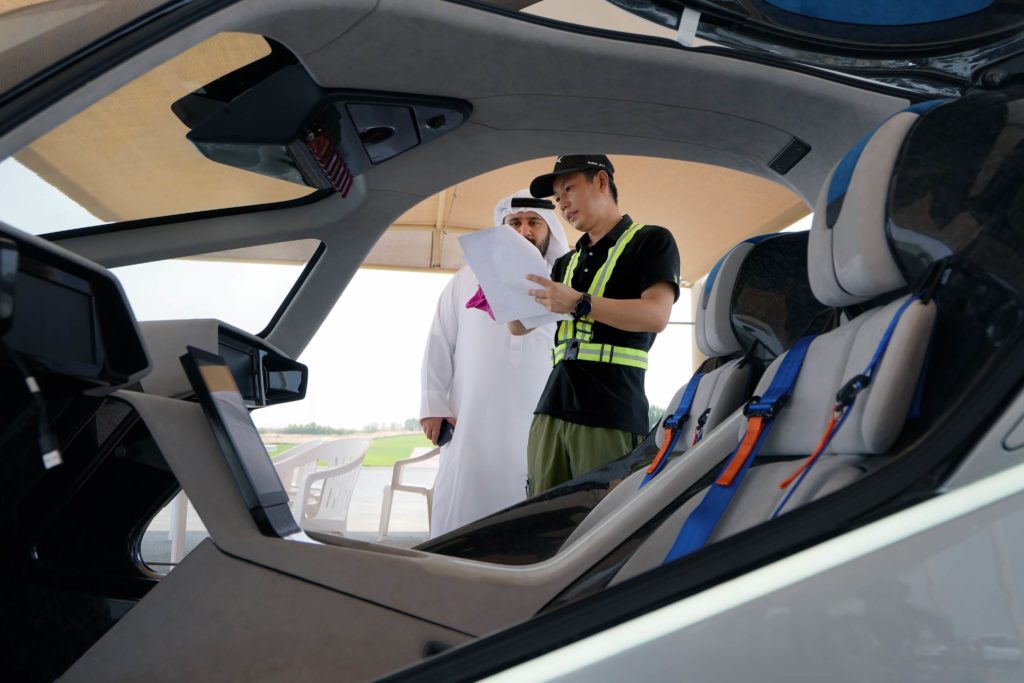
XPeng X2. Photo: XPENG AEROHT
XPeng is not the only company thatengaged in the development of flying cars. Dozens of eVTOL projects are being developed around the world. However, only a few have successfully demonstrated the ability to carry passengers on board.
Self-driving cars could theoreticallycarry passengers around the city high above traffic jams. But the sector is still facing major challenges, including battery life (the X2 can only fly for 35 minutes on a single charge), air traffic control and security, and infrastructure issues. However, according to XPeng's report, the company plans to start "small deliveries" of the X2 in 2024.
Read more:
An unknown species of winged insect "hidden" in amber for more than 35 million years
Gas leak from Nord Stream was shown from space
See how Jupiter and the Moon approached in the night sky
Cover image: XPENG AEROHT