By measuring electric fields near swarming honey bees, the researchers found that the insects could
Biologists made the discovery by measuring the electric fields around honey bee (Apis mellifera) hives. Perhaps this influence of insects will be included in the development of future climate models.
Крошечные тела насекомых могут накапливать a positive charge while feeding—either from air molecules rubbing against their rapidly beating wings (honey bees can flap their wings more than 230 times per second) or from landing on electrically charged surfaces. Previously, scientists believed that the impact of these tiny charges was insignificant.
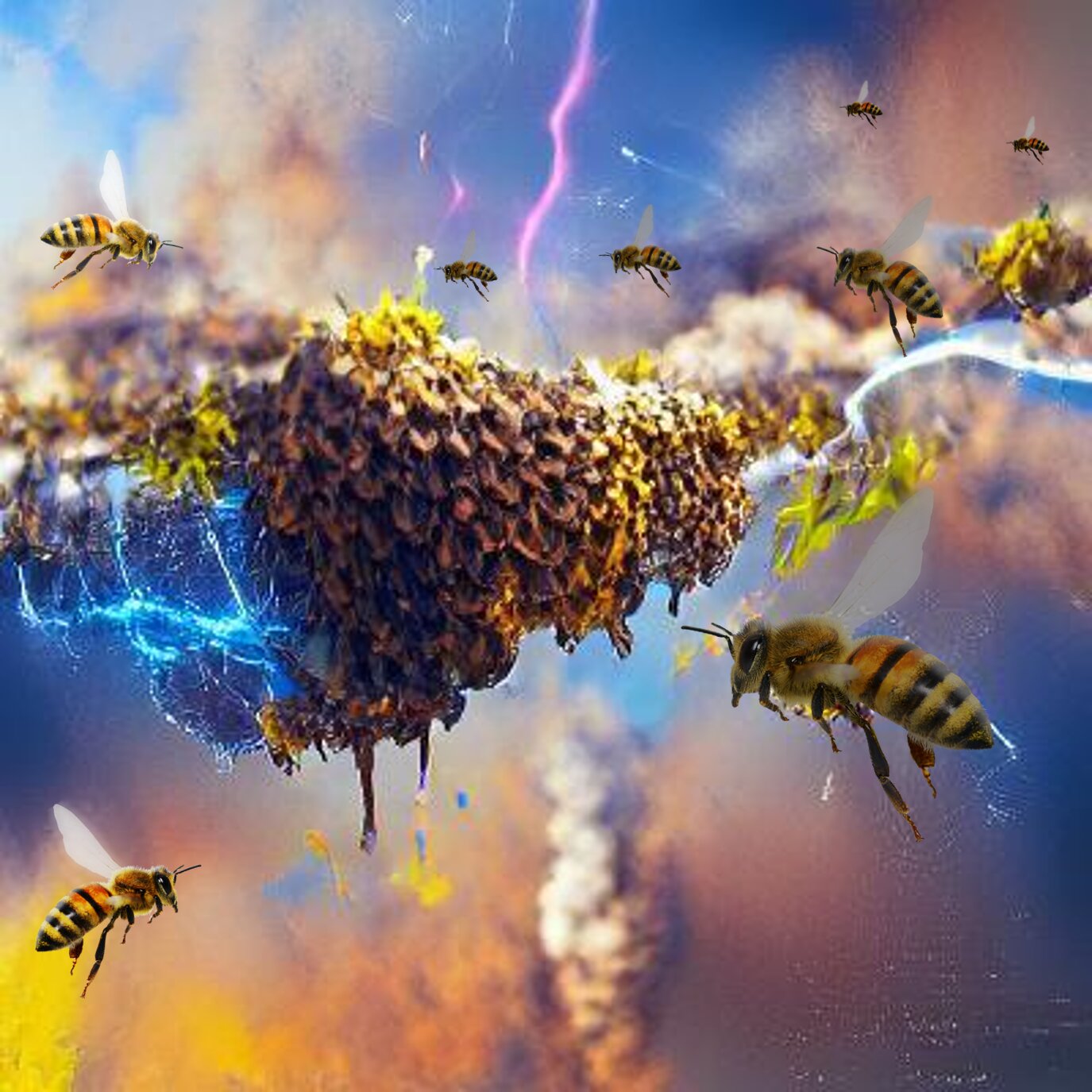 Photo: Ellard Hunting
However, scientists have found that a new studyshowed that insects can generate huge amounts of electricity. Bees, for example, change atmospheric electricity by 100-1000 volts per meter. So they increase the strength of the electric field, which usually occurs at ground level. Scientists note that how swarms of insects affect atmospheric electricity depends on their density and size.
Read more:
Starlink signal hacked to be used as an alternative to GPS
NASA revealed the origin of Haumea - the most mysterious planet in the solar system
Physicists Break Standard Quantum Limit With 'Quantum Horror'
On the cover: illustration by Ellard Hunting