Researchers from Nanyang Technological University in Singapore have developed a conversion method
Scientists exposed paper "waste" tohigh temperatures. As a result of this process, waste paper is converted into pure carbon, water vapor and oils. The latter can also be used as biofuels, say the authors of the development.
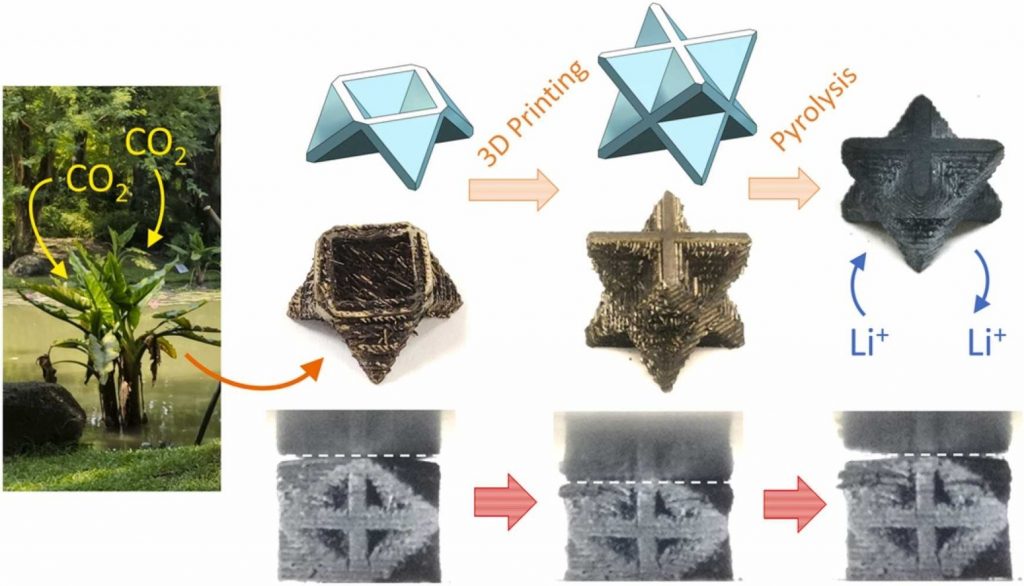 Waste paper carbonization to create anodes. Image: Chang Quan Lai et al., Additive Manufacturing
Scientists note that carbonization takes place inin the absence of oxygen, and as a result of heating, a small amount of carbon dioxide is released. Therefore, the proposed method is an environmentally friendly alternative to burning paper. At the same time, to increase the efficiency of carbon anodes, the authors of the work use special forms created using 3D printing.
In a series of tests, the researchers showed thatpaper-based electrodes have demonstrated excellent durability, flexibility and electrochemical properties. Laboratory tests have shown that carbon anodes can be discharged and recharged up to 1,200 times: twice as much as modern analogues. In addition, they are five times better at absorbing energy and withstanding severe stress.
The researchers note that the new method is not only an environmentally friendly way to dispose of garbage, but also creates opportunities for the production of cheap electrodes, which will reduce the cost of batteries.
Read more:
A magnetic storm is about to hit Earth
The true meaning of mummification is revealed: all this time, scientists were wrong
Named the main danger of the lunar mission "Artemis"