The filter contains sheets of steel foil, on which 59 million holes with a diameter of 10 microns are applied. In order to
In the test run, the modified filterset to purify water from fine powder from a 3D printer. This test confirmed the effectiveness of the device. Now the installation is being tested for wastewater treatment in real conditions.
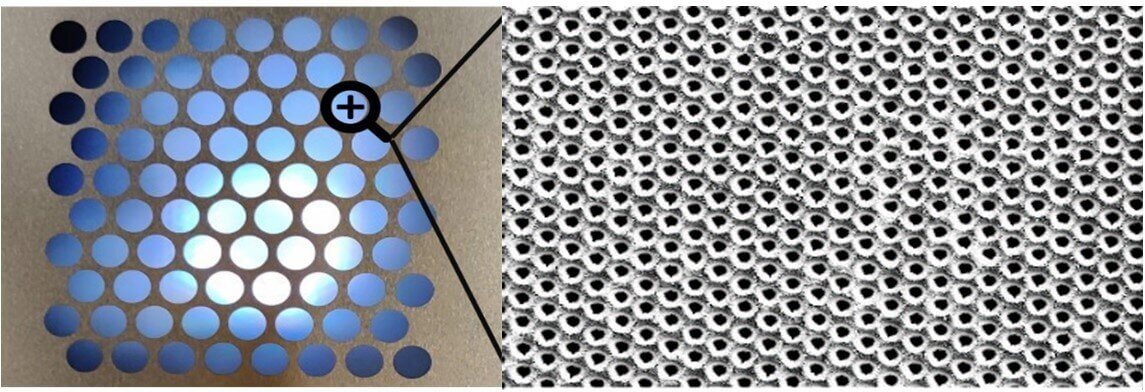 Source: Fraunhofer Institute for Laser Technology
“Basically, our task was toto drill as many small holes as possible in the steel foil in the shortest possible time,” explains Andrea Lanfermann, project leader at the Fraunhofer Institute for Laser Technology.
Creating millions of holes in sequencerequires a lot of time. To optimize the process, the developers used a multi-beam installation. It allows you to form a matrix of identical beams using a special optical system. To create the filter, the scientists used an ultra-short pulse laser that simultaneously drills holes with 144 beams.
Engineers are now researching howa multi-beam installation can be built into an industrial machine. Scientists also plan to improve the drilling technology to increase the speed of the process by 20-50 times.
Read more:
Nuclear fusion no longer needs millions of degrees: how the new method works
Scientists Finally Understand How Soft Liquid Droplets Destroy Hard Surfaces
Diamond planets: where are the gems in space and where to look for them